Gao Jinlai, Shen Zhangguo, Deng Zaixing, Mei Lina
Department of Pathology, Huzhou Maternity and Child Health Care Hospital, Huzhou, China.
School of Information Engineering, Huzhou University, Huzhou, China.
Front Oncol. 2021 Nov 16;11:738080. doi: 10.3389/fonc.2021.738080. eCollection 2021.
It is critical to develop a reliable and cost-effective prognostic tool for colorectal cancer (CRC) stratification and treatment optimization. Tumor-stroma ratio (TSR) may be a promising indicator of poor prognosis in CRC patients. As a result, we conducted a systematic review on the predictive value of TSR in CRC.
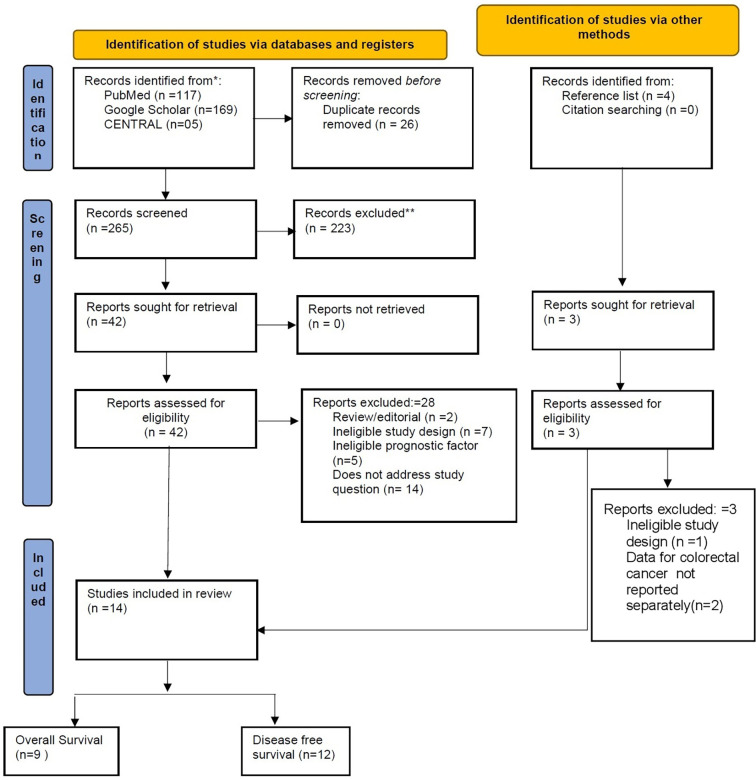
This study was carried out according to Preferred Reporting Items for Systematic Reviews and Meta-Analyses (PRISMA) 2020 guideline. An electronic search was completed using commonly used databases PubMed, CENTRAL, Cochrane Central Register of Controlled Trials, and Google scholar till the last search up to May 30, 2021. STATA version 13 was used to analyze the data.
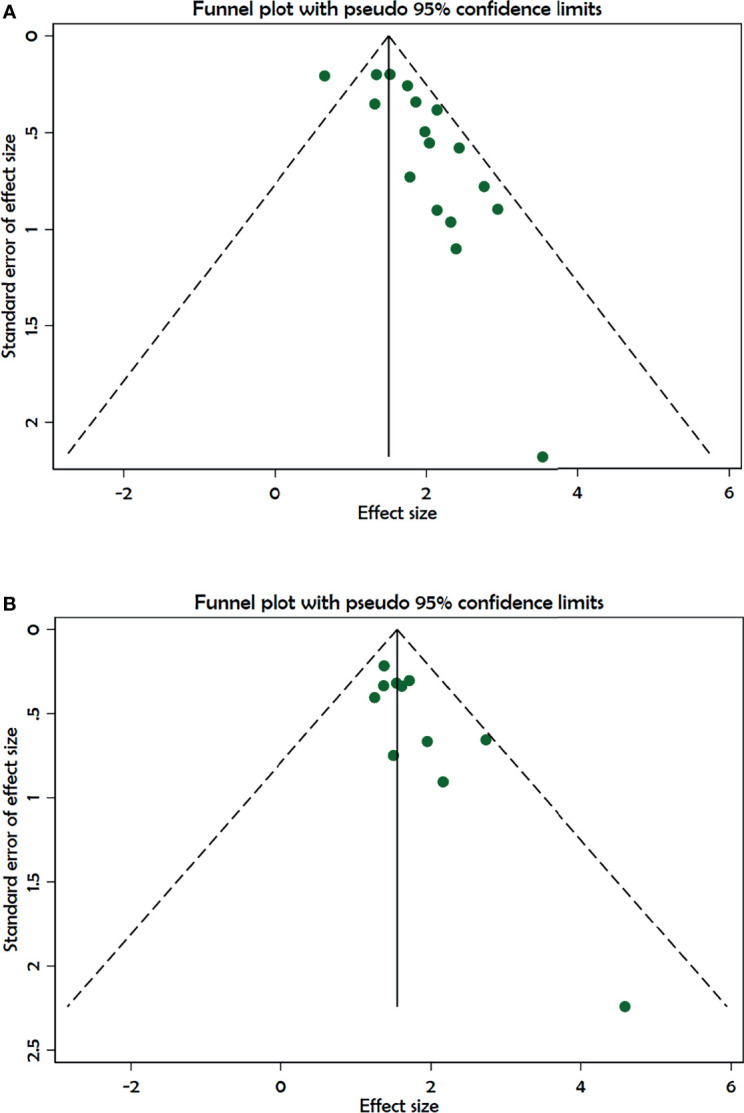
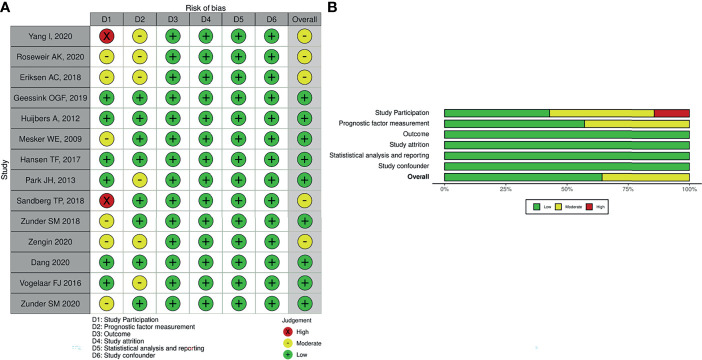
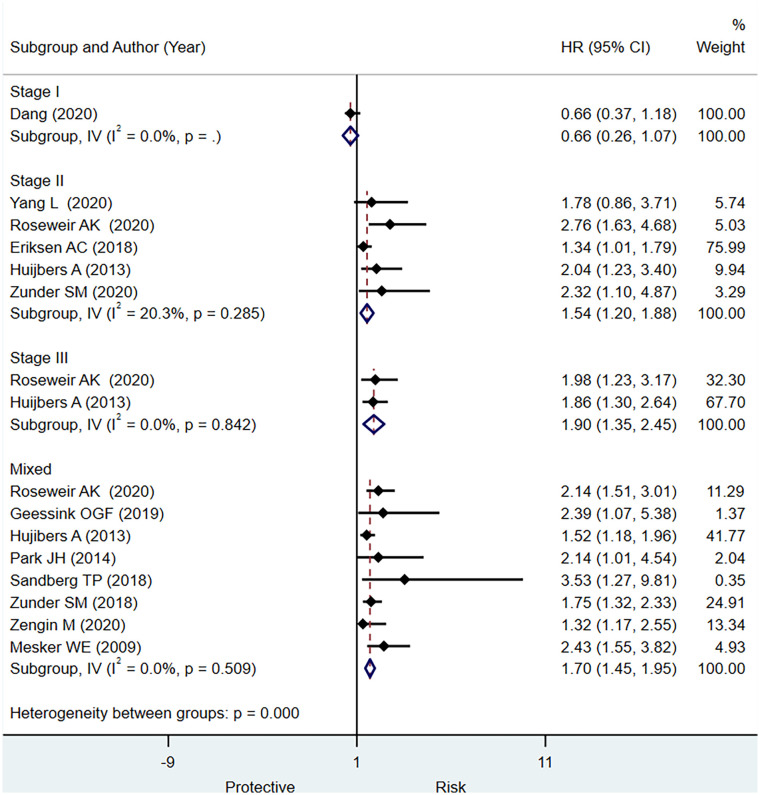
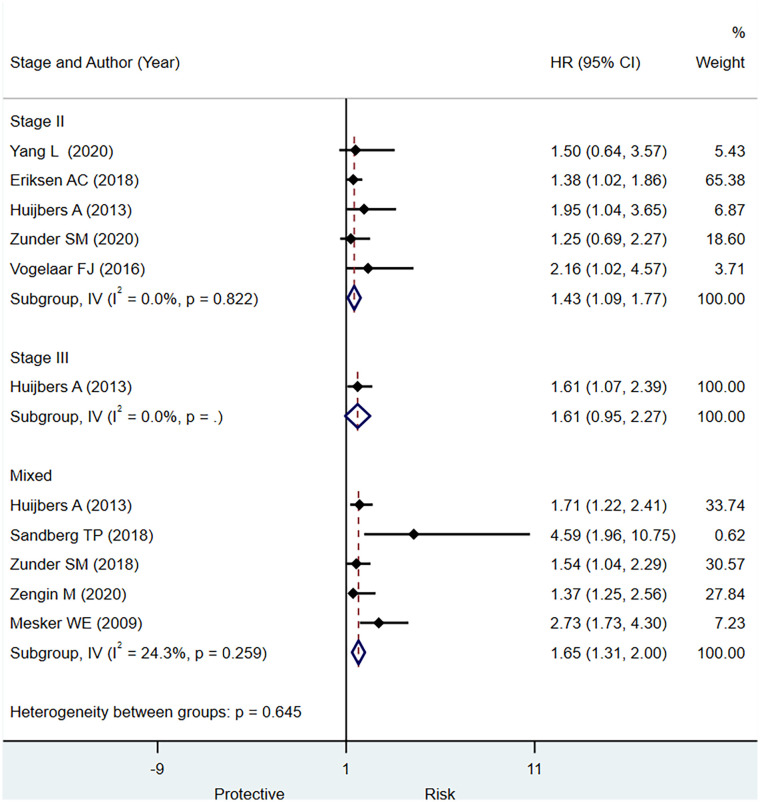
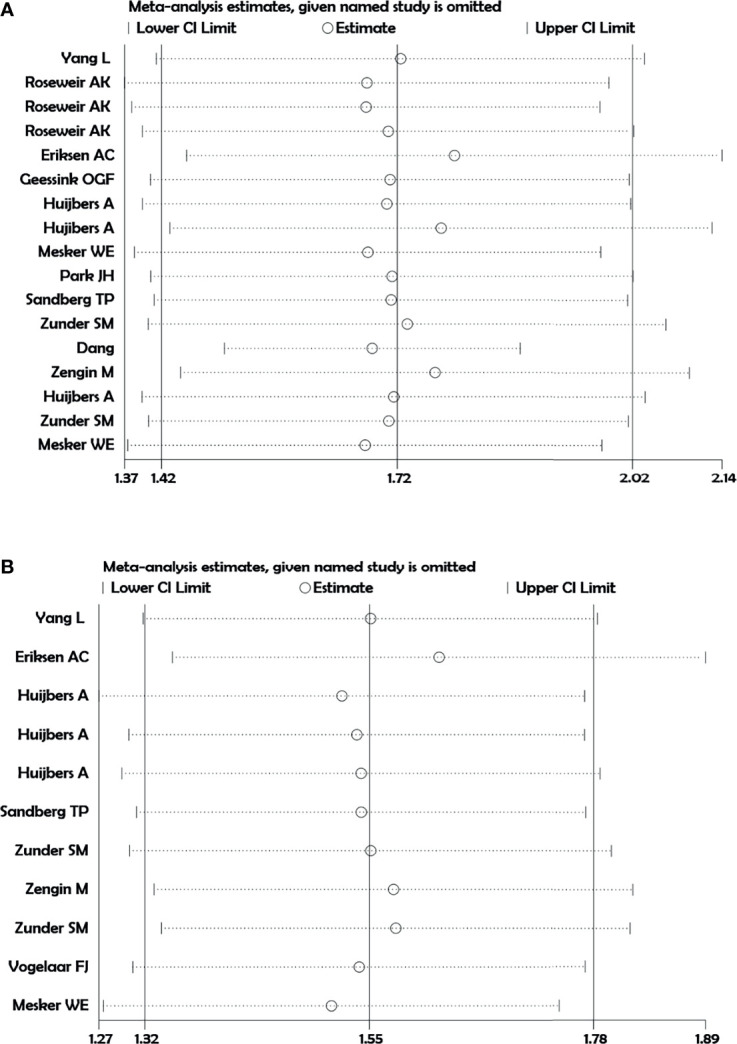
A total of 13 studies [(12 for disease-free survival (DFS) and nine studies for overall survival (OS)] involving 4,857 patients met the inclusion criteria for the systematic review in the present study. In individuals with stage II CRC, stage III CRC, or mixed stage CRC, we observed a significantly higher pooled hazard ratio (HR) in those with a low TSR/greater stromal content (HR, 1.54; 95% CI: 1.20 to 1.88), (HR, 1.90; 95% CI: 1.35 to 2.45), and (HR, 1.70; 95% CI: 1.45 to 1.95), respectively, for predicting DFS. We found that a low TSR ratio had a statistically significant predictive relevance for stage II (HR, 1.43; 95% CI: 1.09 to 1.77) and mixed stages of CRC (HR, 1.65; 95% CI: 1.31 to 2.0) for outcome OS.
In patients with CRC, low TSR was found to be a prognostic factor for a worse prognosis (DFS and OS).
开发一种可靠且经济高效的预后工具用于结直肠癌(CRC)分层和治疗优化至关重要。肿瘤-基质比(TSR)可能是CRC患者预后不良的一个有前景的指标。因此,我们对TSR在CRC中的预测价值进行了系统评价。
本研究按照系统评价和Meta分析的首选报告项目(PRISMA)2020指南进行。使用常用数据库PubMed、CENTRAL、Cochrane对照试验中央注册库和谷歌学术完成电子检索,直至2021年5月30日的最后一次检索。使用STATA 13版分析数据。
本系统评价纳入标准的共有13项研究(12项关于无病生存期(DFS),9项关于总生存期(OS)),涉及4857例患者。在II期CRC、III期CRC或混合期CRC患者中,我们观察到TSR低/基质含量高的患者预测DFS的合并危险比(HR)显著更高,分别为(HR,1.54;95%CI:1.20至1.88)、(HR,1.90;95%CI:1.35至2.45)和(HR,1.70;95%CI:1.45至1.95)。我们发现低TSR比值对II期CRC(HR,1.43;95%CI:1.09至1.77)和混合期CRC的OS结局(HR,1.65;95%CI:1.31至2.0)具有统计学显著预测相关性。
在CRC患者中,低TSR被发现是预后较差(DFS和OS)的一个预后因素。