Division of Life Science, The Hong Kong University of Science and Technology, Clear Water Bay, Hong Kong, China.
Molecular Neuroscience Center, The Hong Kong University of Science and Technology, Clear Water Bay, Hong Kong, China.
Proc Natl Acad Sci U S A. 2021 Jan 5;118(1). doi: 10.1073/pnas.2020810118. Epub 2020 Dec 18.
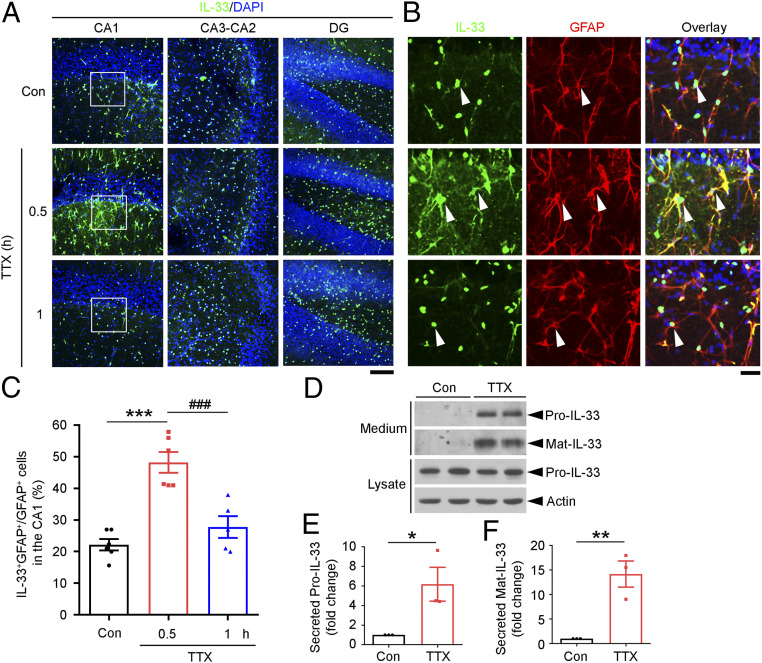
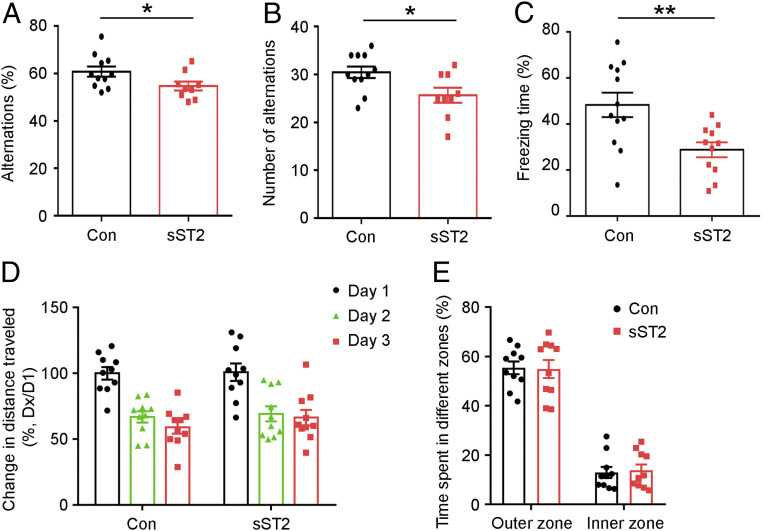
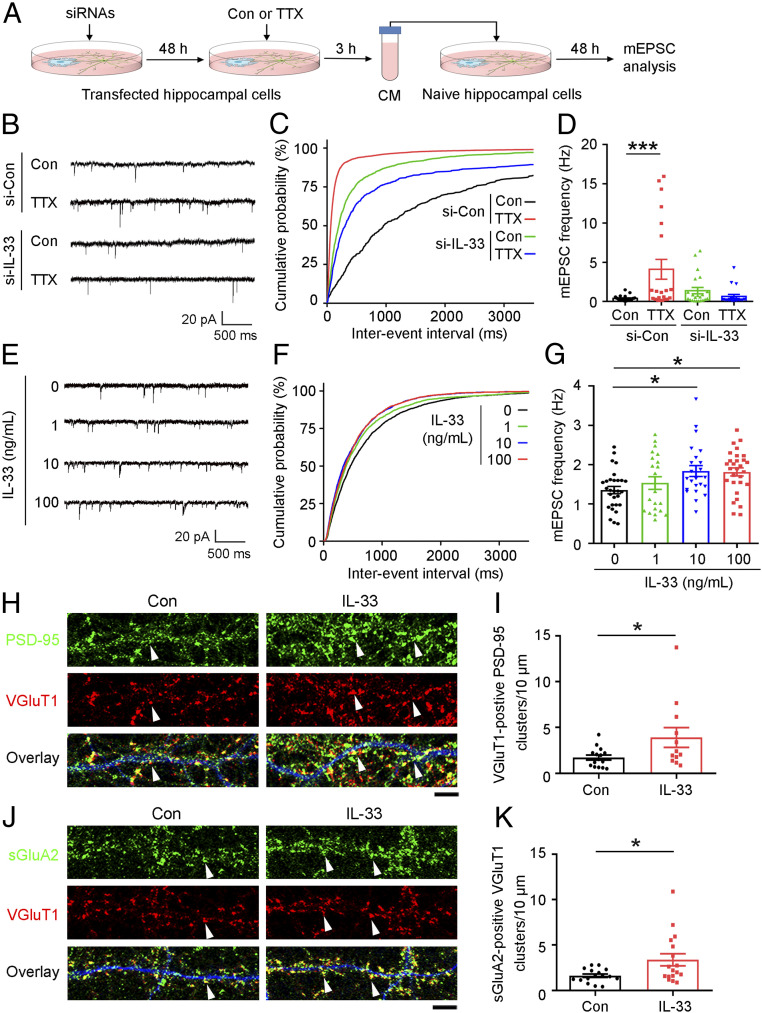
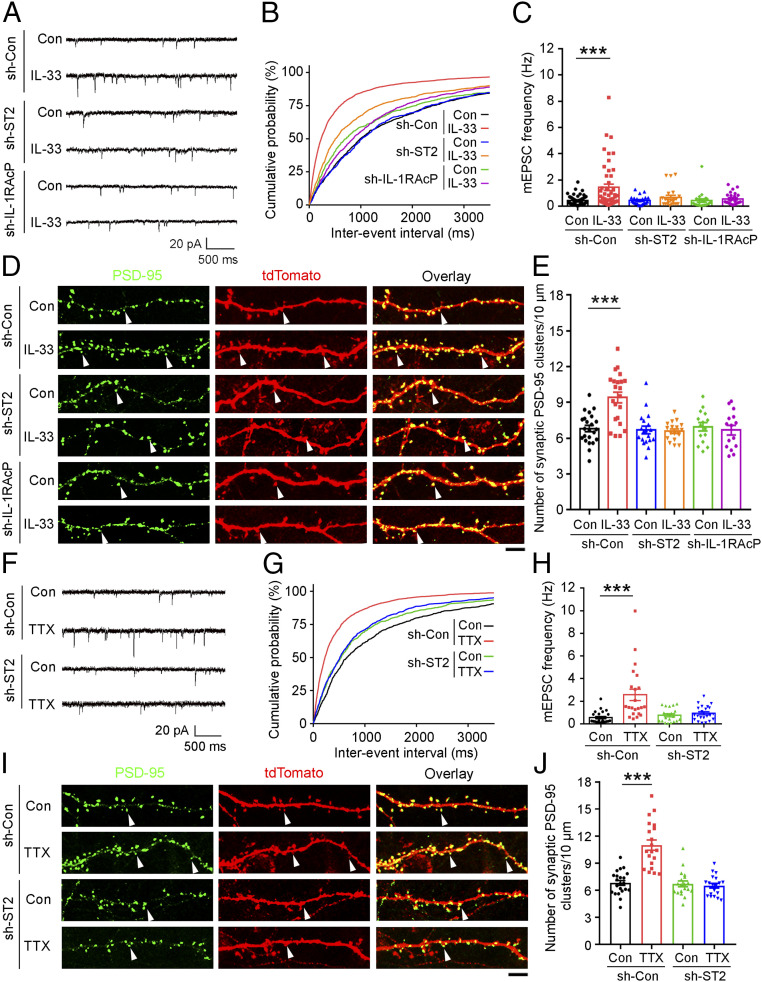
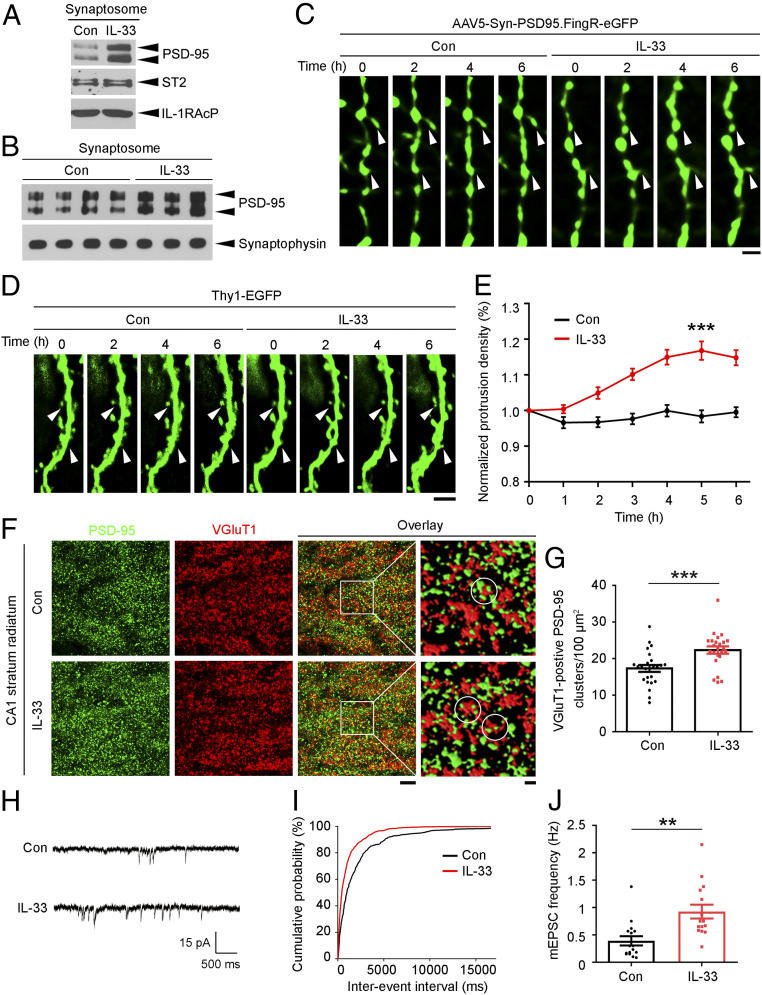
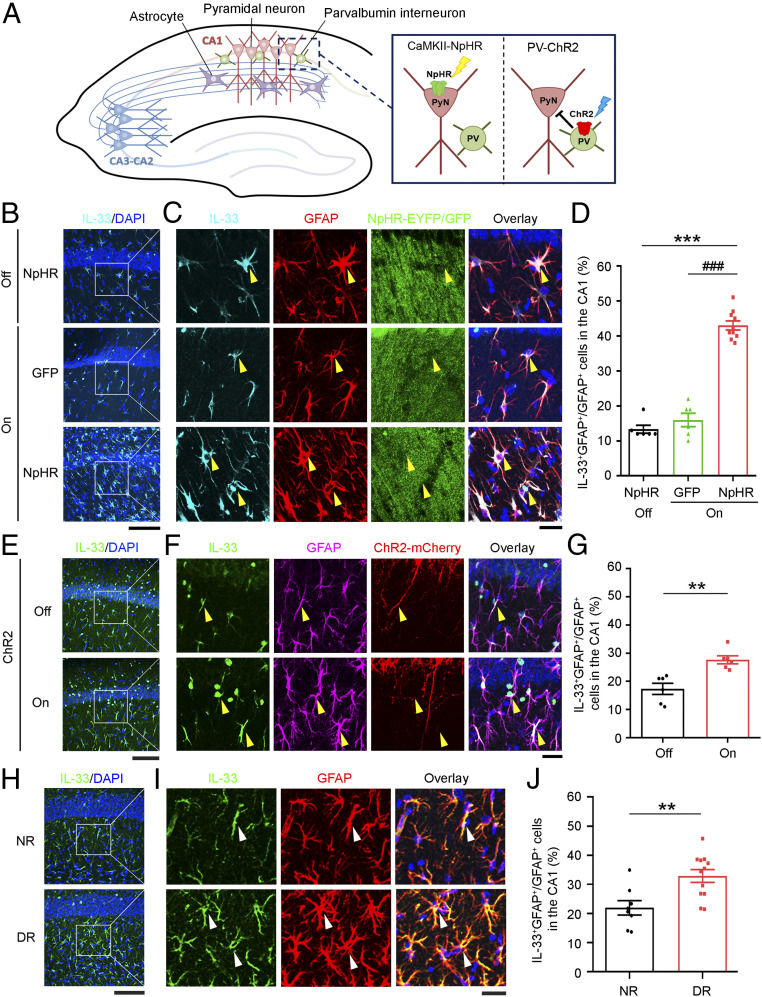
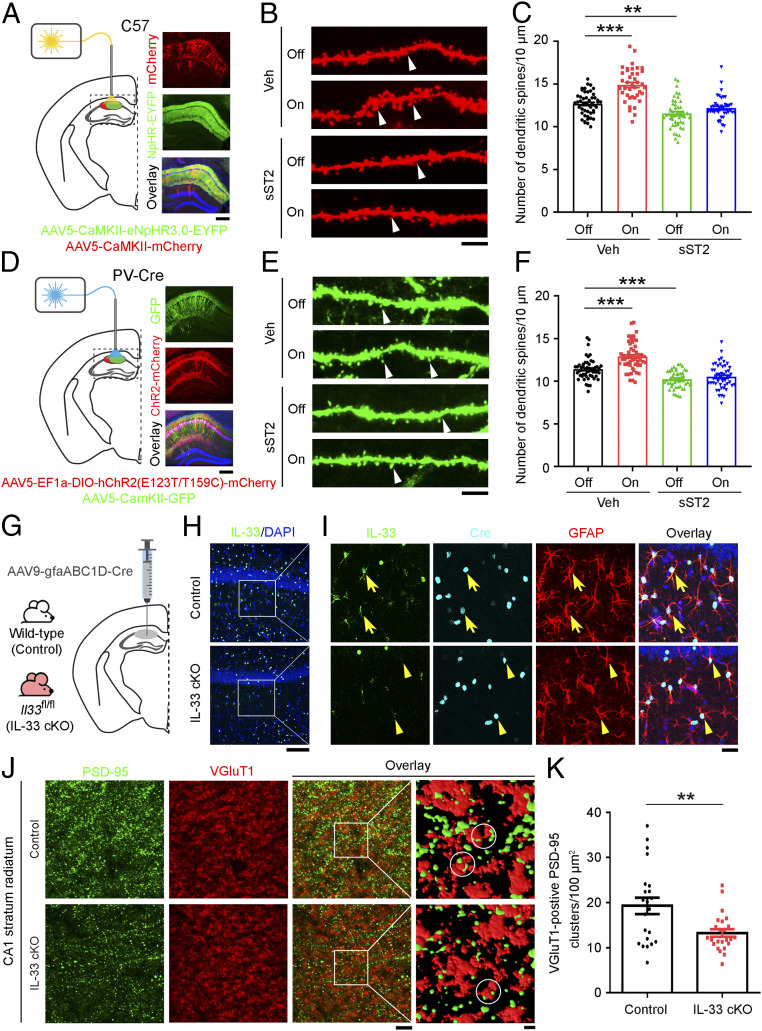
Hippocampal synaptic plasticity is important for learning and memory formation. Homeostatic synaptic plasticity is a specific form of synaptic plasticity that is induced upon prolonged changes in neuronal activity to maintain network homeostasis. While astrocytes are important regulators of synaptic transmission and plasticity, it is largely unclear how they interact with neurons to regulate synaptic plasticity at the circuit level. Here, we show that neuronal activity blockade selectively increases the expression and secretion of IL-33 (interleukin-33) by astrocytes in the hippocampal cornu ammonis 1 (CA1) subregion. This IL-33 stimulates an increase in excitatory synapses and neurotransmission through the activation of neuronal IL-33 receptor complex and synaptic recruitment of the scaffold protein PSD-95. We found that acute administration of tetrodotoxin in hippocampal slices or inhibition of hippocampal CA1 excitatory neurons by optogenetic manipulation increases IL-33 expression in CA1 astrocytes. Furthermore, IL-33 administration in vivo promotes the formation of functional excitatory synapses in hippocampal CA1 neurons, whereas conditional knockout of IL-33 in CA1 astrocytes decreases the number of excitatory synapses therein. Importantly, blockade of IL-33 and its receptor signaling in vivo by intracerebroventricular administration of its decoy receptor inhibits homeostatic synaptic plasticity in CA1 pyramidal neurons and impairs spatial memory formation in mice. These results collectively reveal an important role of astrocytic IL-33 in mediating the negative-feedback signaling mechanism in homeostatic synaptic plasticity, providing insights into how astrocytes maintain hippocampal network homeostasis.
海马体突触可塑性对于学习和记忆的形成非常重要。 自稳态突触可塑性是一种特定形式的突触可塑性,当神经元活动发生长时间变化时,会诱导其发生,以维持网络的自稳态。 虽然星形胶质细胞是突触传递和可塑性的重要调节者,但它们如何与神经元相互作用以在回路水平上调节突触可塑性在很大程度上仍不清楚。 在这里,我们发现神经元活动阻断选择性地增加海马体 CA1 区星形胶质细胞中 IL-33(白细胞介素 33)的表达和分泌。 这种 IL-33 通过激活神经元 IL-33 受体复合物和 PSD-95 支架蛋白的突触募集,刺激兴奋性突触和神经递质的增加。 我们发现,在海马体切片中急性给予河豚毒素或通过光遗传学操作抑制海马体 CA1 兴奋性神经元,会增加 CA1 星形胶质细胞中的 IL-33 表达。 此外,体内给予 IL-33 可促进海马体 CA1 神经元中功能性兴奋性突触的形成,而 CA1 星形胶质细胞中 IL-33 的条件性敲除会减少其中的兴奋性突触数量。 重要的是,通过脑室内给予其诱饵受体,体内阻断 IL-33 及其受体信号会抑制 CA1 锥体神经元中的自稳态突触可塑性,并损害小鼠的空间记忆形成。 这些结果共同揭示了星形胶质细胞 IL-33 在介导自稳态突触可塑性的负反馈信号机制中的重要作用,为星形胶质细胞如何维持海马体网络的自稳态提供了新的见解。