Department of Internal Medicine, Chung-Ang University Hospital, Chung-Ang University College of Medicine, Seoul, Republic of Korea.
Department of Radiology, Chung-Ang University Hospital, Seoul, Republic of Korea.
PLoS One. 2021 Jan 14;16(1):e0245547. doi: 10.1371/journal.pone.0245547. eCollection 2021.
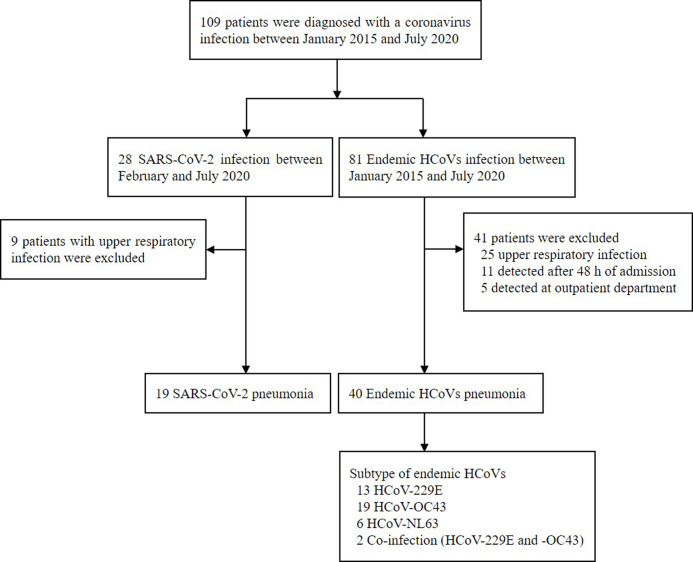
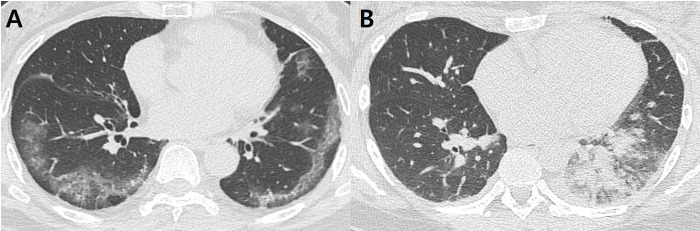
Endemic human coronaviruses (HCoVs) and severe acute respiratory syndrome coronavirus 2 (SARS-CoV-2) are members of the family Coronaviridae. Comparing the findings of the infections caused by these viruses would help reveal the novel characteristics of SARS-CoV-2 and provide insight into the unique pathogenesis of SARS-CoV-2 infection. This study aimed to compare the clinical and radiological characteristics of SARS-CoV-2 and endemic HCoVs infection in adult hospitalized patients with community-acquired pneumonia (CAP). This study was performed at a university-affiliated tertiary hospital in the Republic of Korea, between January 1, 2015, and July 31, 2020. A total of 109 consecutive patients who were over 18 years of age with confirmed SARS-CoV-2 and endemic HCoVs were enrolled. Finally, 19 patients with SARS-CoV-2 CAP were compared to 40 patients with endemic HCoV CAP. Flu-like symptoms such as cough, sore throat, headache, myalgia, and prolonged fever were more common in SARS-CoV-2 CAP, whereas clinical findings suggestive of bacterial pneumonia such as dyspnea, leukocytosis with left shift, and increased C-reactive protein were more common in endemic HCoV CAP. Bilateral peripherally distributed ground-glass opacities (GGOs) were typical radiologic findings in SARS-CoV-2 CAP, whereas mixed patterns of GGOs, consolidations, micronodules, and pleural effusion were observed in endemic HCoV CAP. Coinfection was not observed in patients with SARS-CoV-2 CAP, but was observed in more than half of the patients with endemic HCoV CAP. There were distinctive differences in the clinical and radiologic findings between SARS-CoV-2 and endemic HCoV CAP. Further investigations are required to elucidate the mechanism underlying this difference. Follow-up observations are needed to determine if the presentation of SARS-CoV-2 CAP changes with repeated infection.
地方性人类冠状病毒(HCoV)和严重急性呼吸综合征冠状病毒 2(SARS-CoV-2)是冠状病毒科的成员。比较这两种病毒感染的结果有助于揭示 SARS-CoV-2 的新特征,并深入了解 SARS-CoV-2 感染的独特发病机制。本研究旨在比较成人社区获得性肺炎(CAP)中 SARS-CoV-2 和地方性 HCoV 感染的临床和影像学特征。该研究在韩国的一家大学附属医院进行,时间为 2015 年 1 月 1 日至 2020 年 7 月 31 日。共纳入了 109 例年龄在 18 岁以上、确诊为 SARS-CoV-2 和地方性 HCoV 的连续患者。最终,将 19 例 SARS-CoV-2 CAP 患者与 40 例地方性 HCoV CAP 患者进行比较。SARS-CoV-2 CAP 中更常见流感样症状,如咳嗽、咽痛、头痛、肌痛和持续发热,而地方性 HCoV CAP 中更常见提示细菌性肺炎的临床症状,如呼吸困难、白细胞增多伴左移和 C 反应蛋白升高。SARS-CoV-2 CAP 的典型影像学表现为双侧外周分布的磨玻璃影(GGO),而地方性 HCoV CAP 则表现为 GGO、实变、微结节和胸腔积液混合模式。SARS-CoV-2 CAP 患者未观察到合并感染,但在超过一半的地方性 HCoV CAP 患者中观察到合并感染。SARS-CoV-2 和地方性 HCoV CAP 在临床和影像学表现上存在明显差异。需要进一步研究阐明这种差异的机制。需要进行随访观察以确定 SARS-CoV-2 CAP 的表现是否随重复感染而改变。