Bai Xiang, Wang Hanchen, Ma Liya, Xu Yongchao, Gan Jiefeng, Fan Ziwei, Yang Fan, Ma Ke, Yang Jiehua, Bai Song, Shu Chang, Zou Xinyu, Huang Renhao, Zhang Changzheng, Liu Xiaowu, Tu Dandan, Xu Chuou, Zhang Wenqing, Wang Xi, Chen Anguo, Zeng Yu, Yang Dehua, Wang Ming-Wei, Holalkere Nagaraj, Halin Neil J, Kamel Ihab R, Wu Jia, Peng Xuehua, Wang Xiang, Shao Jianbo, Mongkolwat Pattanasak, Zhang Jianjun, Liu Weiyang, Roberts Michael, Teng Zhongzhao, Beer Lucian, Sanchez Lorena E, Sala Evis, Rubin Daniel L, Weller Adrian, Lasenby Joan, Zheng Chuansheng, Wang Jianming, Li Zhen, Schönlieb Carola, Xia Tian
Department of Radiology, Tongji Hospital and Medical College, Huazhong University of Science and Technology, Wuhan, China.
School of Artificial Intelligence and Automation, Huazhong University of Science and Technology, Wuhan, China.
Nat Mach Intell. 2021 Dec;3(12):1081-1089. doi: 10.1038/s42256-021-00421-z. Epub 2021 Dec 15.
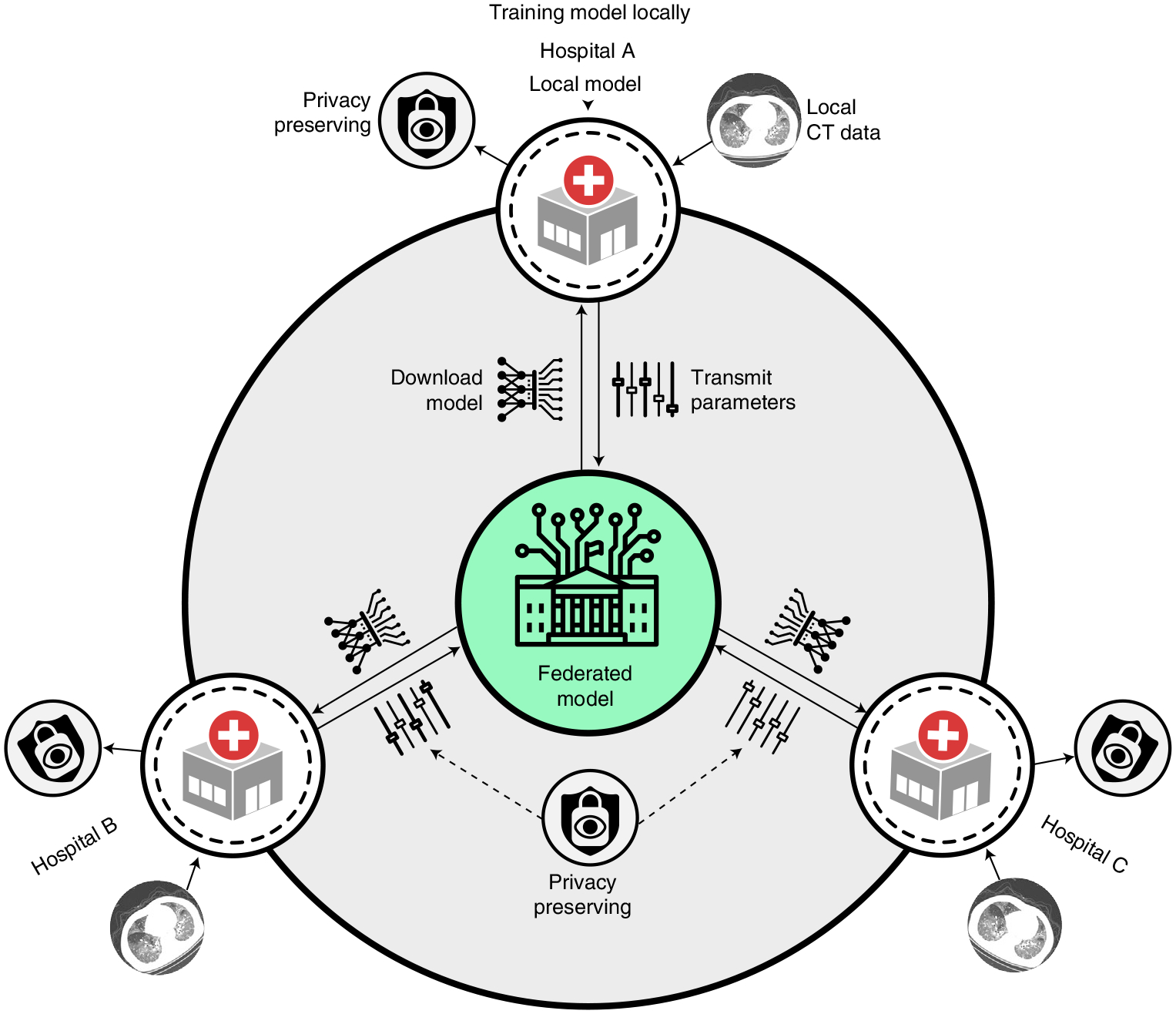
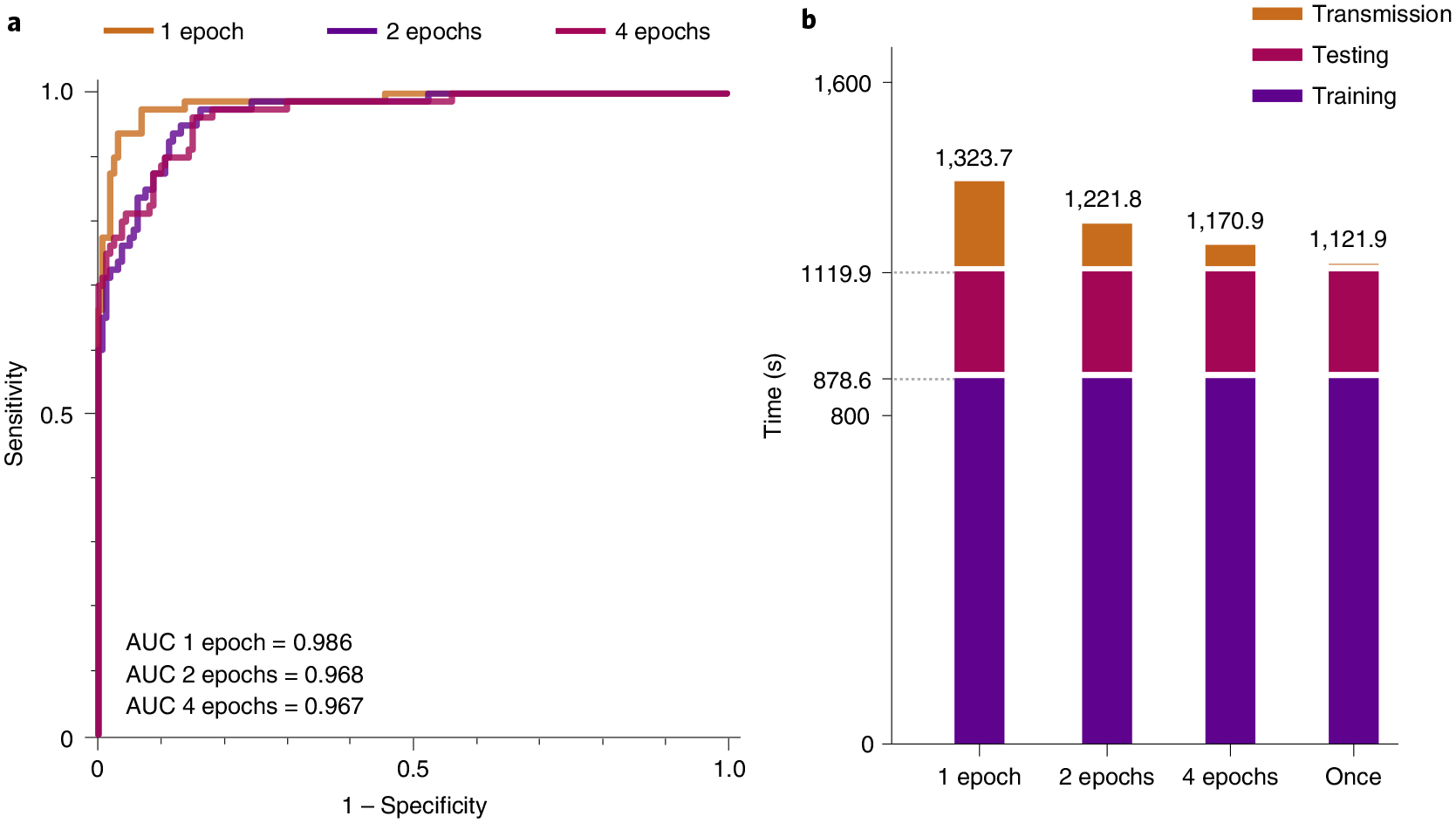
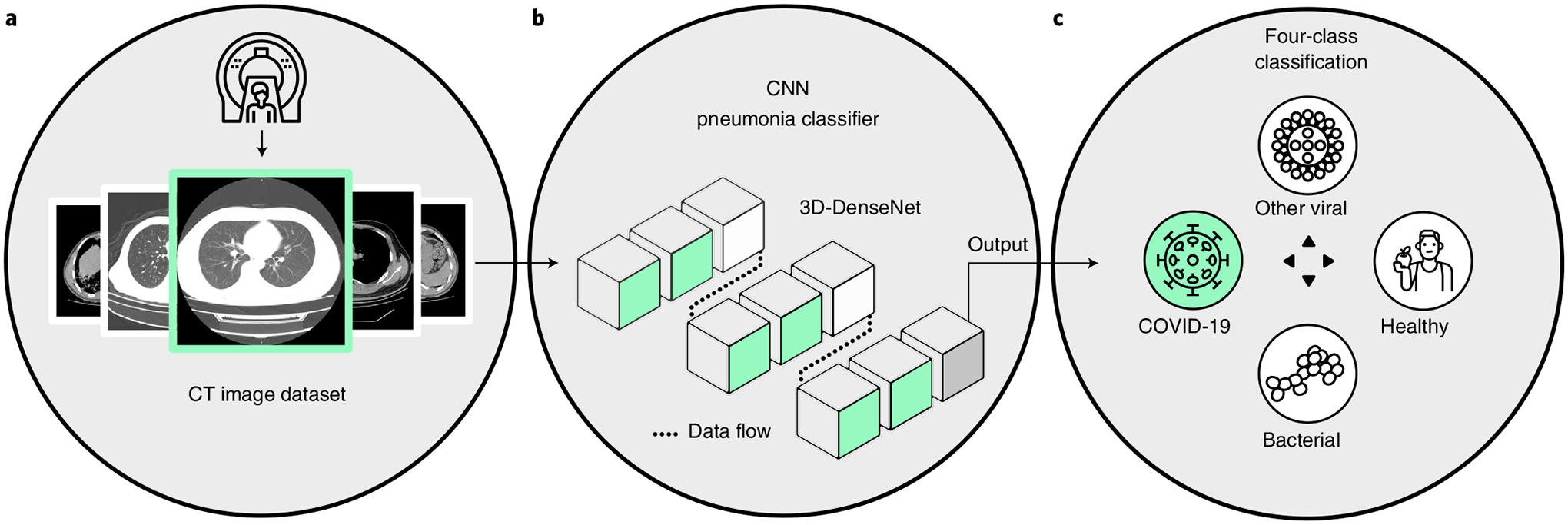
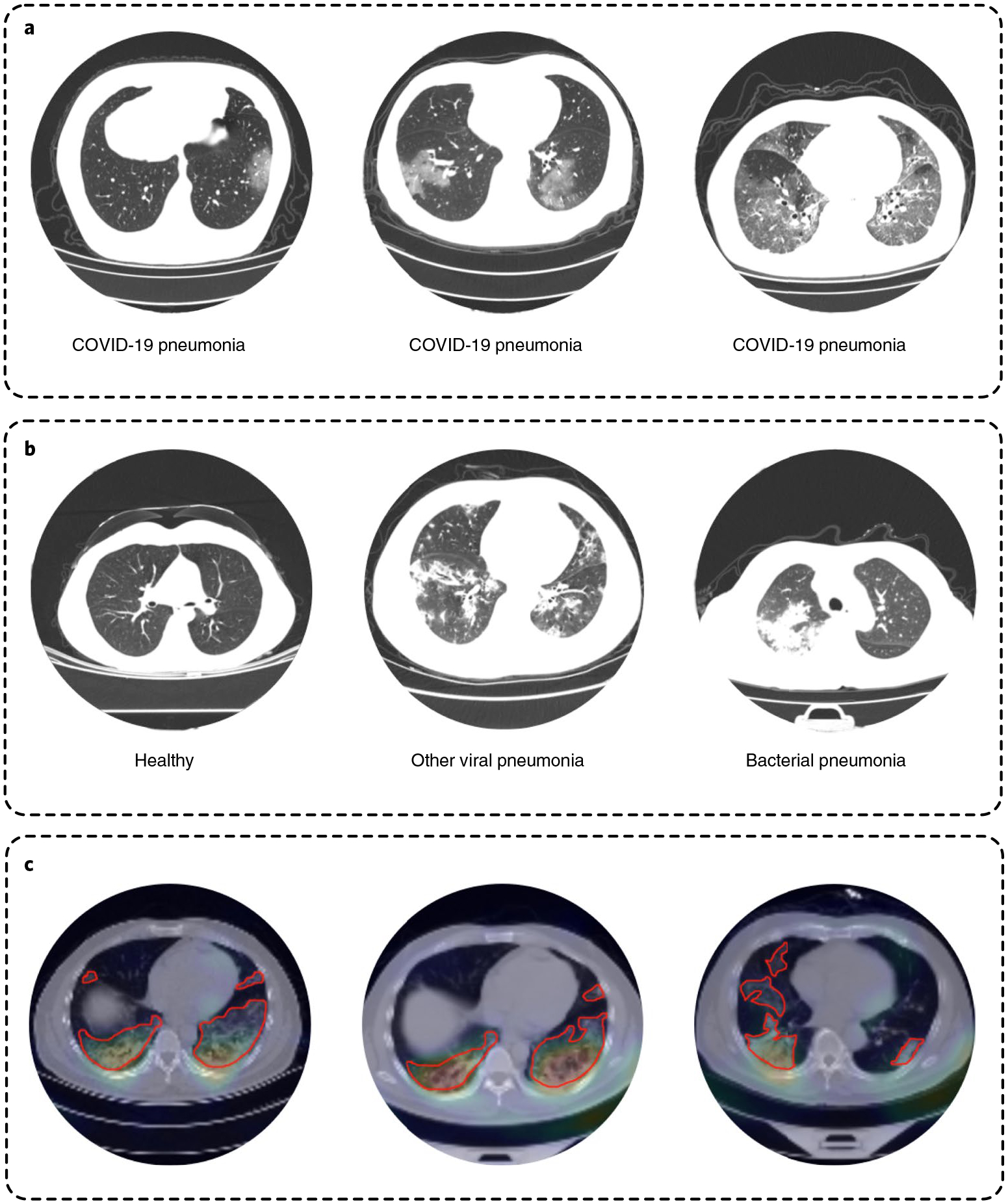
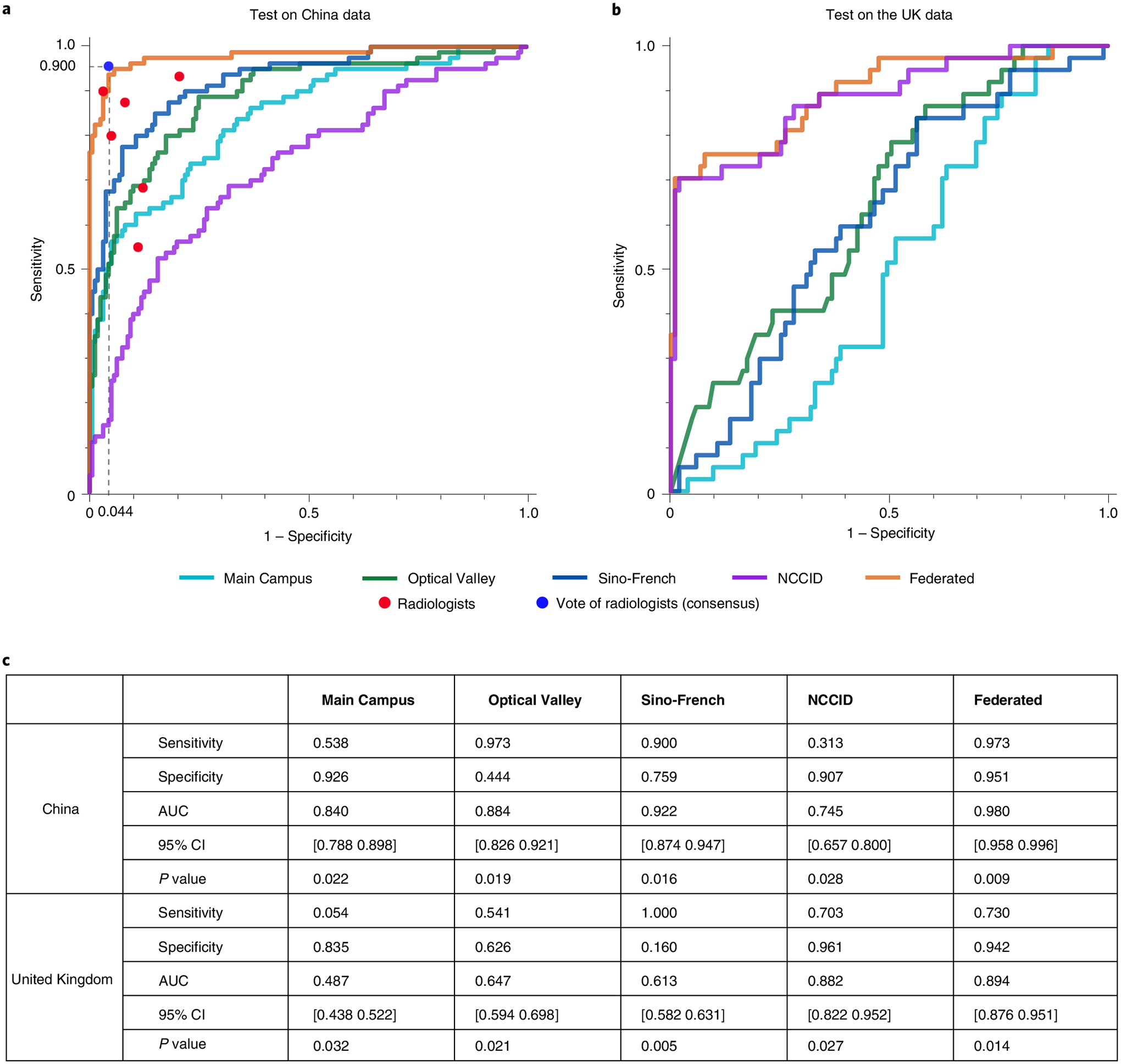
Artificial intelligence provides a promising solution for streamlining COVID-19 diagnoses; however, concerns surrounding security and trustworthiness impede the collection of large-scale representative medical data, posing a considerable challenge for training a well-generalized model in clinical practices. To address this, we launch the Unified CT-COVID AI Diagnostic Initiative (UCADI), where the artificial intelligence (AI) model can be distributedly trained and independently executed at each host institution under a federated learning framework without data sharing. Here we show that our federated learning framework model considerably outperformed all of the local models (with a test sensitivity/specificity of 0.973/0.951 in China and 0.730/0.942 in the United Kingdom), achieving comparable performance with a panel of professional radiologists. We further evaluated the model on the hold-out (collected from another two hospitals without the federated learning framework) and heterogeneous (acquired with contrast materials) data, provided visual explanations for decisions made by the model, and analysed the trade-offs between the model performance and the communication costs in the federated training process. Our study is based on 9,573 chest computed tomography scans from 3,336 patients collected from 23 hospitals located in China and the United Kingdom. Collectively, our work advanced the prospects of utilizing federated learning for privacy-preserving AI in digital health.
人工智能为简化新冠病毒诊断提供了一个很有前景的解决方案;然而,围绕安全性和可信度的担忧阻碍了大规模代表性医学数据的收集,这给在临床实践中训练一个具有良好泛化能力的模型带来了巨大挑战。为解决这一问题,我们发起了统一CT-COVID人工智能诊断计划(UCADI),在该计划中,人工智能(AI)模型可以在联邦学习框架下在每个主机机构进行分布式训练和独立执行,而无需数据共享。在此我们表明,我们的联邦学习框架模型显著优于所有本地模型(在中国测试灵敏度/特异性为0.973/0.951,在英国为0.730/0.942),与一组专业放射科医生的表现相当。我们还在保留数据(从另外两家没有联邦学习框架的医院收集)和异质数据(使用造影剂获取)上对该模型进行了评估,为模型做出的决策提供了可视化解释,并分析了联邦训练过程中模型性能与通信成本之间的权衡。我们的研究基于从中国和英国的23家医院收集的3336例患者的9573份胸部计算机断层扫描。总体而言,我们的工作推进了在数字健康中利用联邦学习实现隐私保护人工智能的前景。