Health Systems Evaluation and Evidence, Alberta Health Services, 10301 Southport Lane SW, Calgary, Alberta, Canada.
Department of Family Medicine, University of Alberta, Edmonton, Alberta, Canada.
BMC Geriatr. 2021 Jan 14;21(1):56. doi: 10.1186/s12877-020-01979-w.
Medication adherence is challenging for older adults due to factors such as the number of medications, dosing schedule, and the duration of drug therapy. The objective of this study was to examine the effectiveness of an in-home electronic medication dispensing system (MDS) on improving medication adherence and health perception in older adults with chronic conditions.
A pilot Randomized Controlled Trial (RCT) was conducted using a two-arm parallel assignment model. The intervention group used an MDS as their medication management method. The control group continued to use their current methods of medication management. Block randomization was used to assign participants into the intervention or control group. The inclusion criteria included 1) English speaking 2) age 50 and over 3) diagnosed with one or more chronic condition(s) 4) currently taking five or more oral medications 5) City of Calgary resident. Participants were recruited from a primary care clinic in Alberta, Canada. The study was open-label where knowledge about group assigned to participants after randomization was not withheld. Medication adherence was captured over a continuous, six-month period and analyzed using Intention-to-Treat (ITT) analysis.
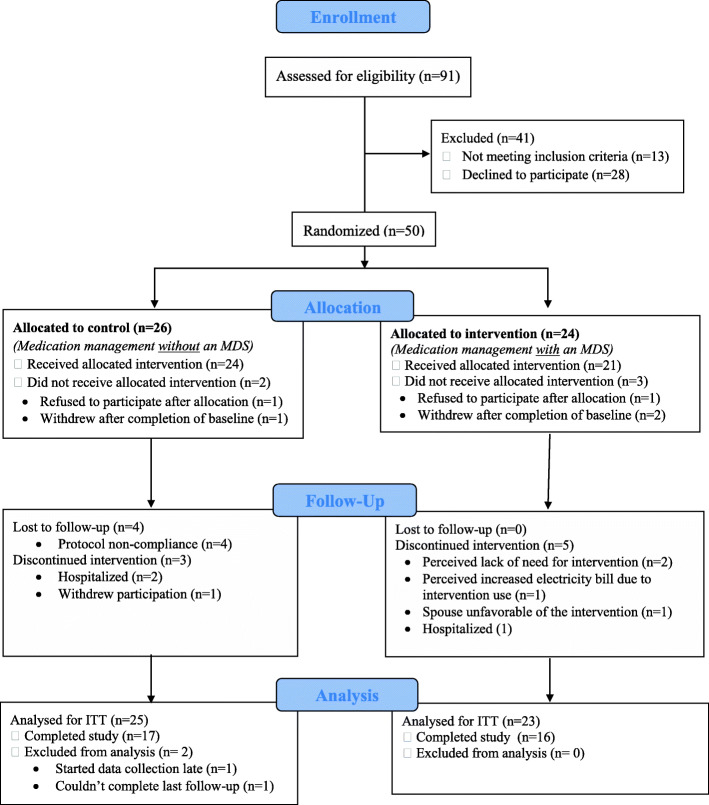
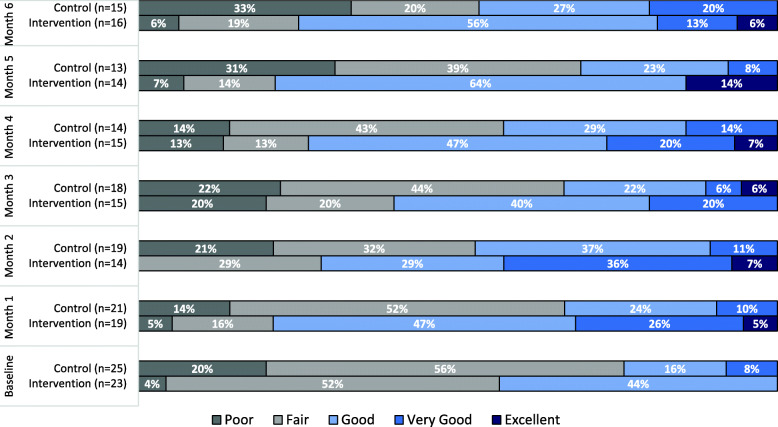
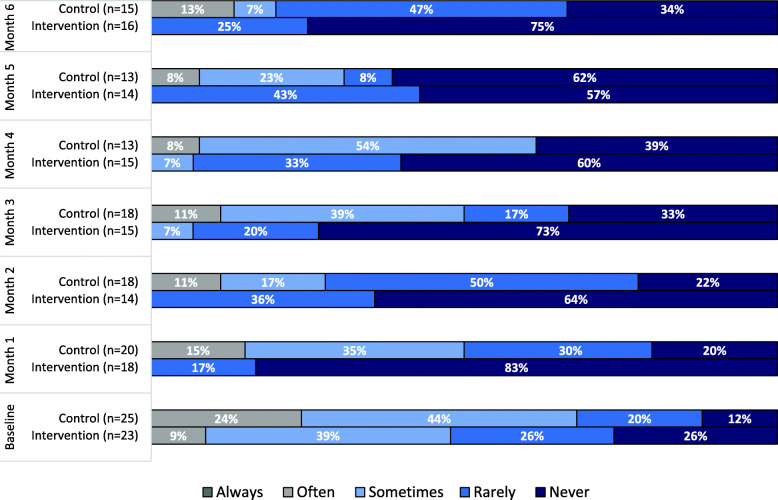
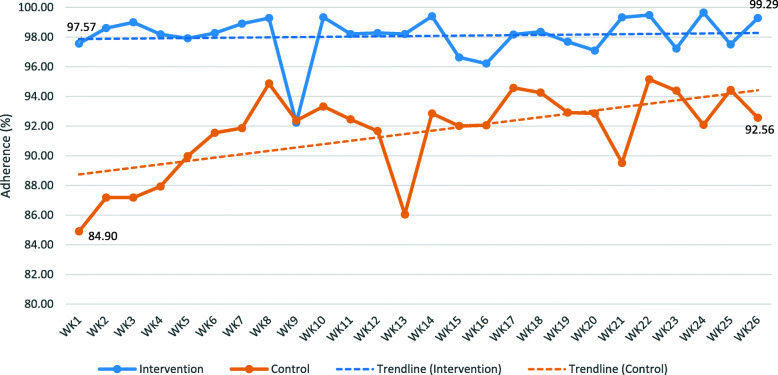
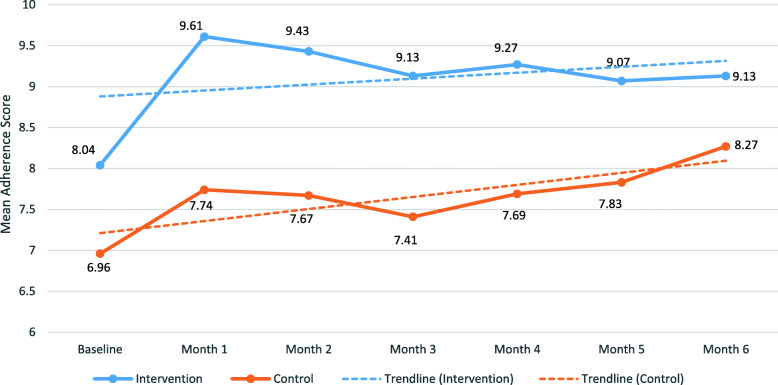
A total of 91 participants were assessed for eligibility and 50 were randomized into the two groups. The number of participants analyzed for ITT was 23 and 25 in the intervention and control group, respectively. Most of the demographic characteristics were comparable in the two groups except the mean age of the intervention group, which was higher compared to the control group (63.96 ± 7.86 versus 59.52 ± 5.93, p-value = 0.03). The average recorded adherence over 26 weeks was significantly higher in the intervention group than the control group (98.35% ± 2.15% versus 91.17% ± 9.76%, p < 0.01). The self-rated medication adherence in the intervention group also showed a significant increase from baseline to 6-month (Z=-2.65, p < 0.01). The control group showed a non-significant increase (Z=-1.79, p = 0.07).
The MDS can be an effective, long-term solution to medication non-adherence in older adults experiencing chronic conditions and taking multiple medications. The technology induces better consistency and improvement in medication taking behaviour than simple, non-technological intervention.
Registered with ClinicalTrials.gov on April 09, 2020 with identifier NCT04339296 .
由于药物数量、剂量安排和药物治疗持续时间等因素,老年人服药依从性是一个挑战。本研究的目的是检验家庭电子药物配给系统(MDS)在改善患有慢性病的老年人服药依从性和健康感知方面的有效性。
采用双臂平行分配模型进行试点随机对照试验(RCT)。干预组使用 MDS 作为其药物管理方法。对照组继续使用他们当前的药物管理方法。采用区组随机化将参与者分配到干预组或对照组。纳入标准包括 1)会说英语 2)年龄 50 岁及以上 3)诊断为一种或多种慢性病 4)目前服用五种或以上口服药物 5)卡尔加里市居民。参与者是从加拿大阿尔伯塔省的一个初级保健诊所招募的。研究是开放标签的,即参与者在随机分组后不隐瞒分组信息。在连续的六个月内进行药物依从性评估,并采用意向治疗(ITT)分析进行分析。
共有 91 名参与者接受了资格评估,其中 50 名被随机分配到两组。分别有 23 名和 25 名参与者在干预组和对照组中进行了 ITT 分析。两组的大多数人口统计学特征相似,除了干预组的平均年龄高于对照组(63.96±7.86 与 59.52±5.93,p 值=0.03)。在 26 周的时间里,干预组的平均记录服药依从性明显高于对照组(98.35%±2.15%与 91.17%±9.76%,p<0.01)。干预组自我报告的服药依从性也从基线到 6 个月时显著增加(Z=-2.65,p<0.01)。对照组的变化没有统计学意义(Z=-1.79,p=0.07)。
MDS 可以为患有慢性病和服用多种药物的老年人提供一种有效的、长期的药物不依从解决方案。该技术比简单的非技术干预更能诱导更好的一致性和改善药物服用行为。
2020 年 4 月 9 日在 ClinicalTrials.gov 注册,标识符为 NCT04339296。