Dalian Medical University, Dalian, 116044, Liaoning Province, China.
Department of Orthopedics, Northern Jiangsu People's Hospital, Yangzhou, 225001, China.
J Orthop Surg Res. 2021 Jan 14;16(1):54. doi: 10.1186/s13018-020-02189-1.
Femoral neck fractures are still unsolved problems nowadays; sliding hip screw (SHS) and cannulated compression screw (CCS) are the most commonly used devices. We evaluated the clinical outcomes and complications in the treatment of femoral neck fractures between SHS and CCS in this meta-analysis to find which is better.
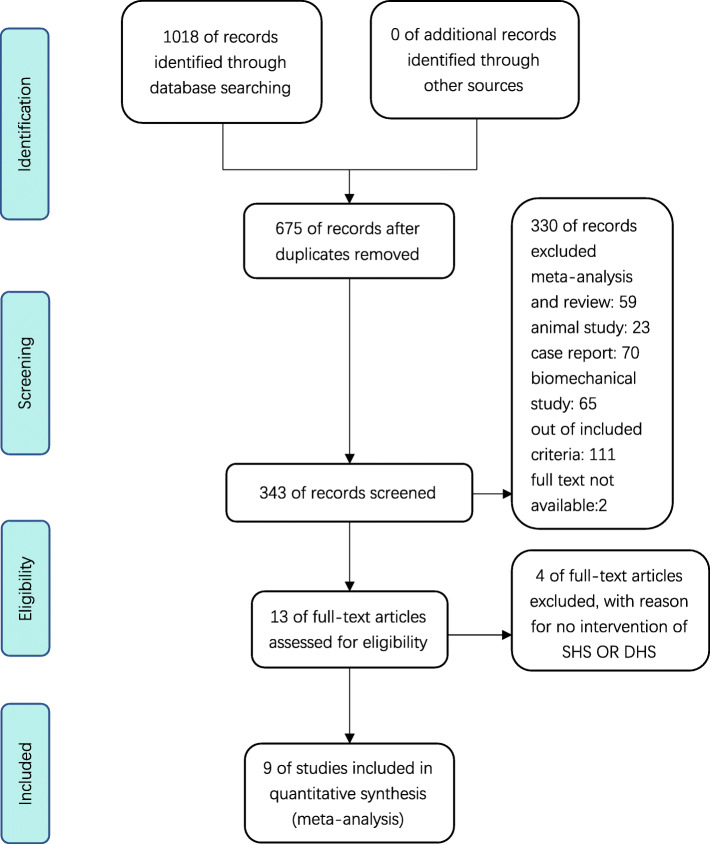
We searched PubMed, Embase, Cochrane library up to 24 August 2020 and retrieved any studies comparing sliding hip screw and cannulated compression screw in treatment of femoral neck fractures; the main outcomes and complications were extracted from the studies which were included.
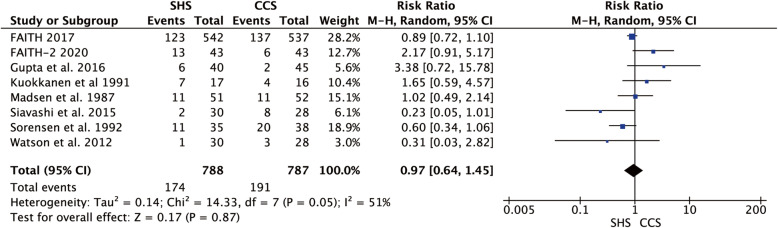
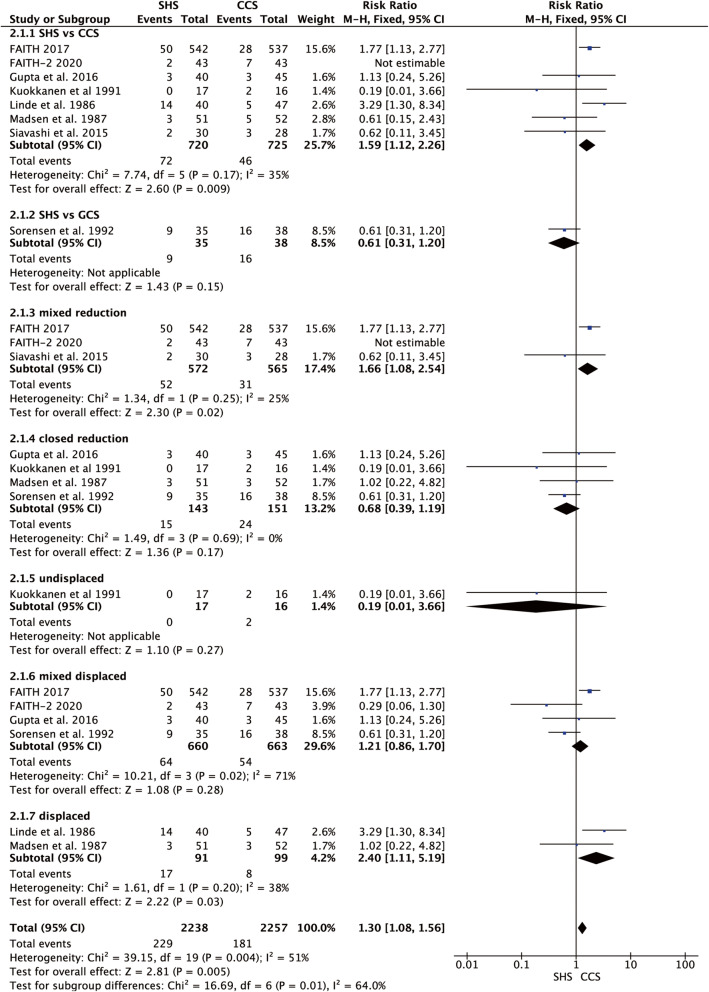
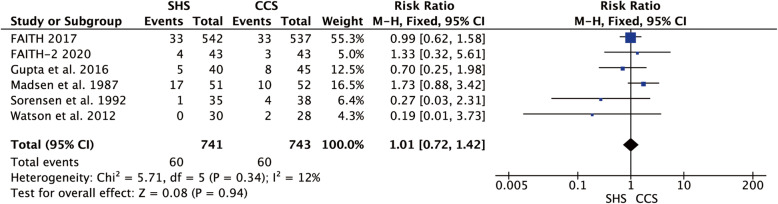
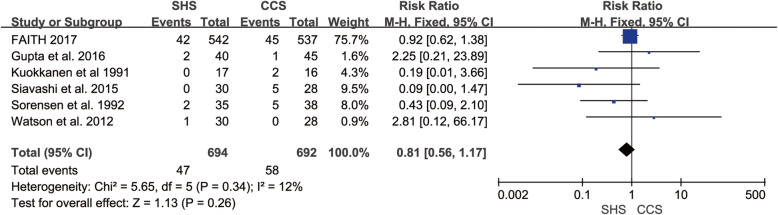
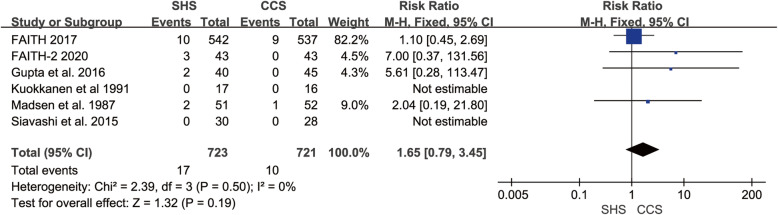
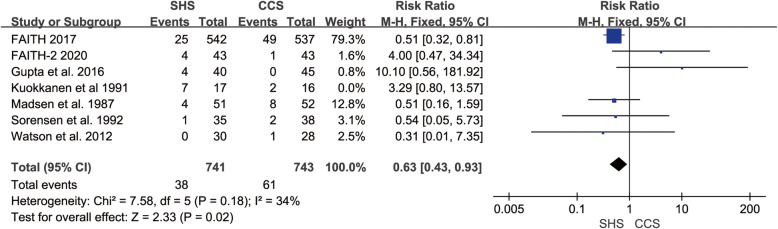
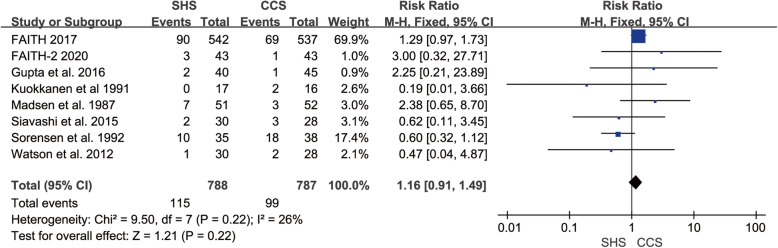
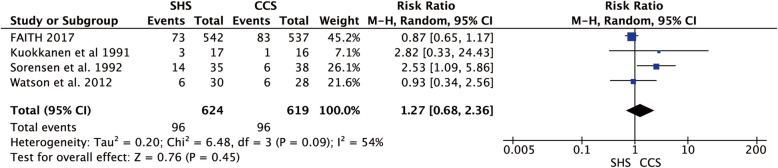
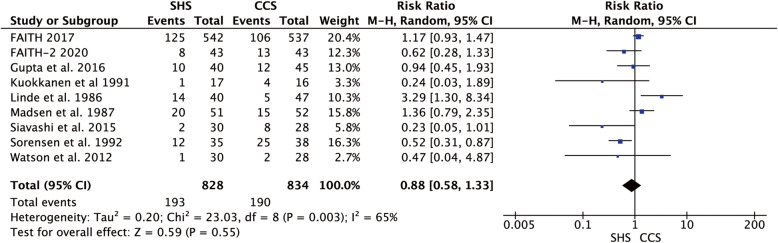
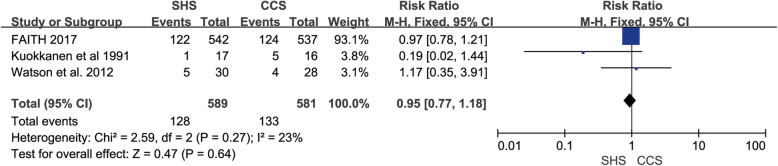
Nine studies involving 1662 patients (828 patients in the SHS group and 834 patients in the CCS group) were included in this study. SHS had higher rate of avascular necrosis (RR = 1.30, 95% CI 1.08-1.56, p = 0.005), and CCS had higher rate of implant removal (RR = 0.63, 95% CI 0.43-0.93, p = 0.02). No significant statistical difference in non-union, implant failure, infection, replacement, mortality, orthopedic complications, non-orthopedic complications, and total revision between SHS and CCS group.
Both devices have their pros and cons; SHS had a higher rate of avascular necrosis, and CCS had a higher rate of implant removal rate. No significant statistical difference in non-union, implant failure, infection, replacement, mortality, orthopedic complications, non-orthopedic complications, and total revision between SHS and CCS group.
股骨颈骨折至今仍是一个未解决的问题;滑动髋螺钉(SHS)和空心加压螺钉(CCS)是最常用的两种固定装置。本研究通过荟萃分析评估 SHS 和 CCS 治疗股骨颈骨折的临床疗效和并发症,以明确哪种方法更优。
我们检索了 PubMed、Embase 和 Cochrane 图书馆,检索时间截至 2020 年 8 月 24 日,纳入了比较 SHS 和 CCS 治疗股骨颈骨折的研究;从纳入的研究中提取主要结局和并发症数据。
共纳入 9 项研究,共 1662 例患者(SHS 组 828 例,CCS 组 834 例)。SHS 组的患者发生股骨头坏死的风险更高(RR=1.30,95%CI 1.08-1.56,p=0.005),而 CCS 组的患者发生内固定物取出的风险更高(RR=0.63,95%CI 0.43-0.93,p=0.02)。两组患者的骨折不愈合、内固定物失效、感染、翻修、死亡率、骨科并发症、非骨科并发症和总翻修率无统计学差异。
两种装置各有优缺点;SHS 组的患者股骨头坏死发生率较高,CCS 组的患者内固定物取出率较高。两组患者的骨折不愈合、内固定物失效、感染、翻修、死亡率、骨科并发症、非骨科并发症和总翻修率无统计学差异。