Department of Pharmacology and Therapeutics, Faculty of Veterinary Medicine, Damanhour University, Damanhour, 22511, ElBeheira, Egypt.
Pesticides Chemistry and Toxicology, Plant Protection Department, Faculty of Agriculture, Damanhour University, Damanhour, Egypt.
Sci Rep. 2021 Jan 14;11(1):1310. doi: 10.1038/s41598-020-79479-5.
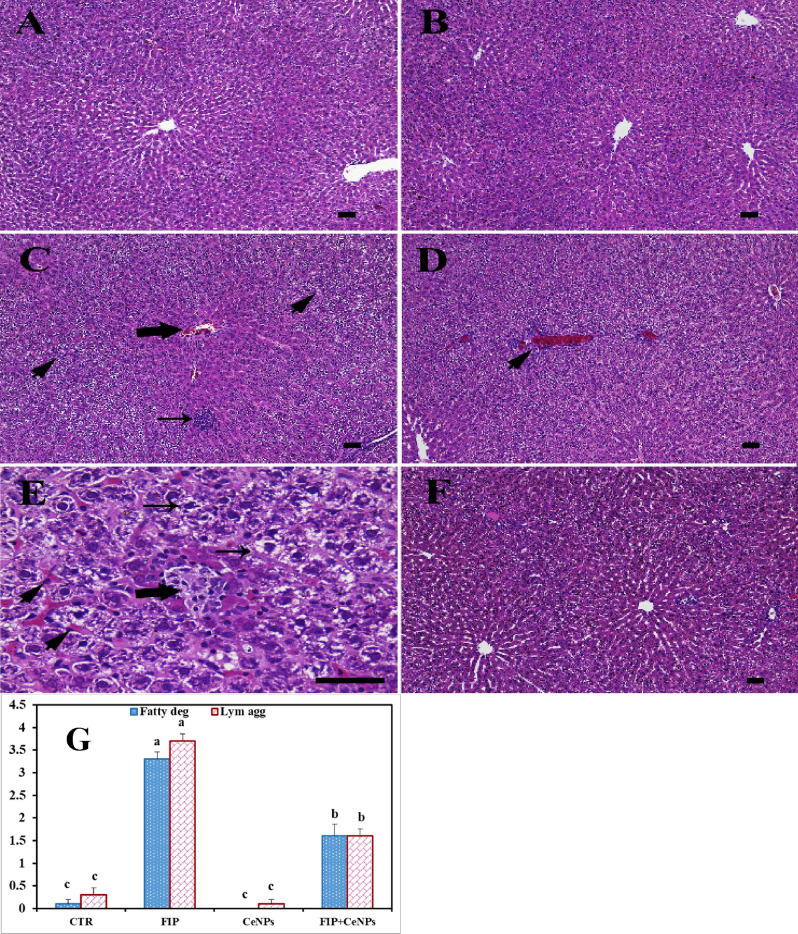
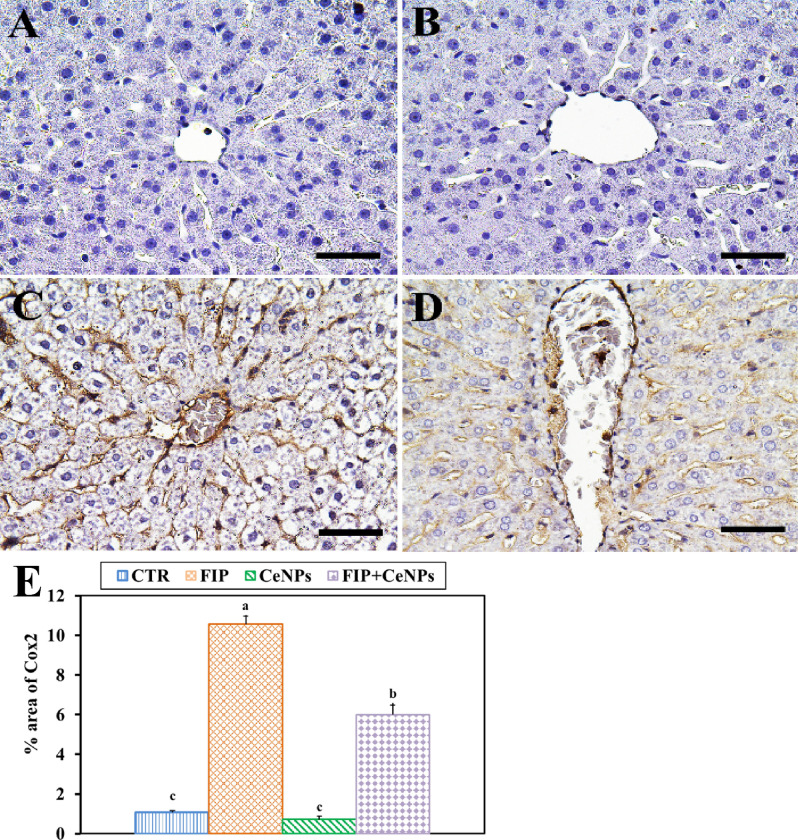
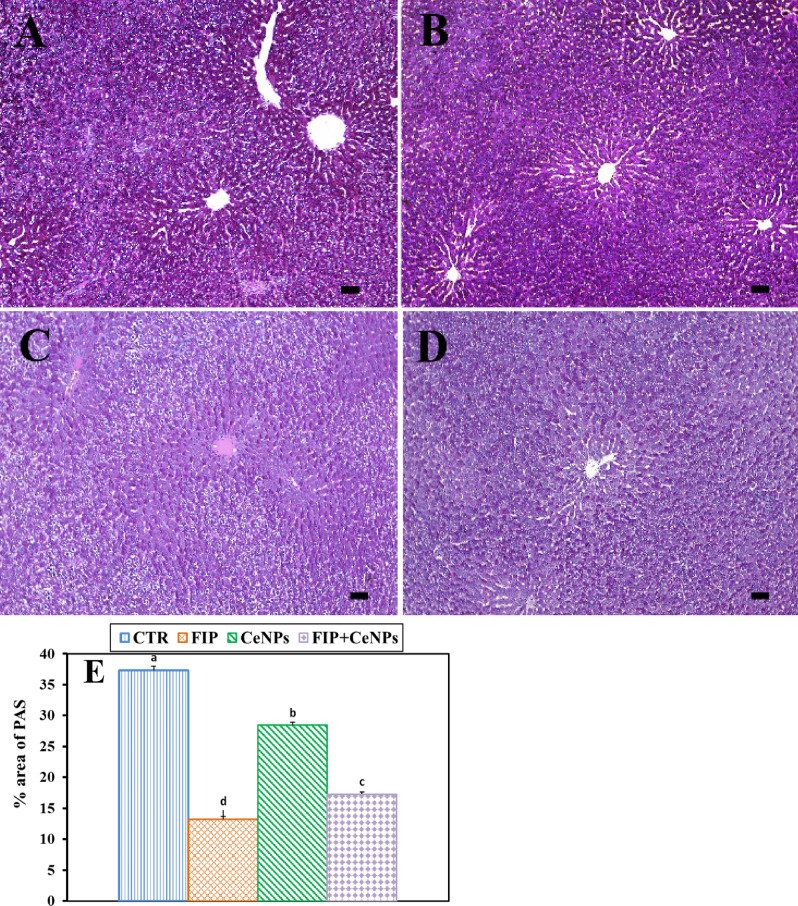
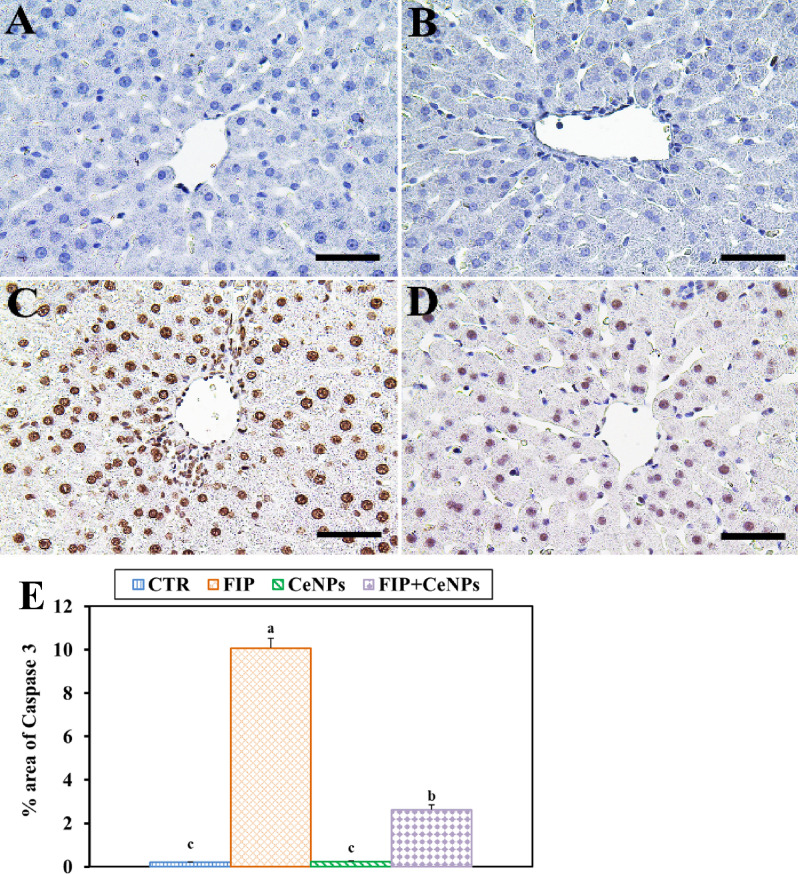
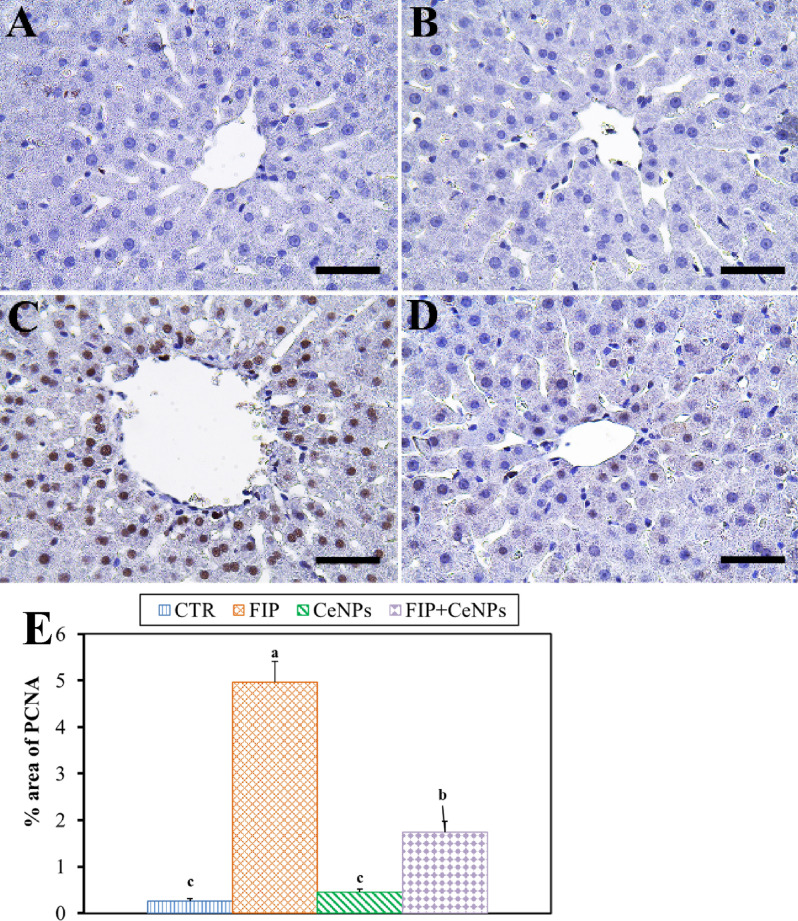
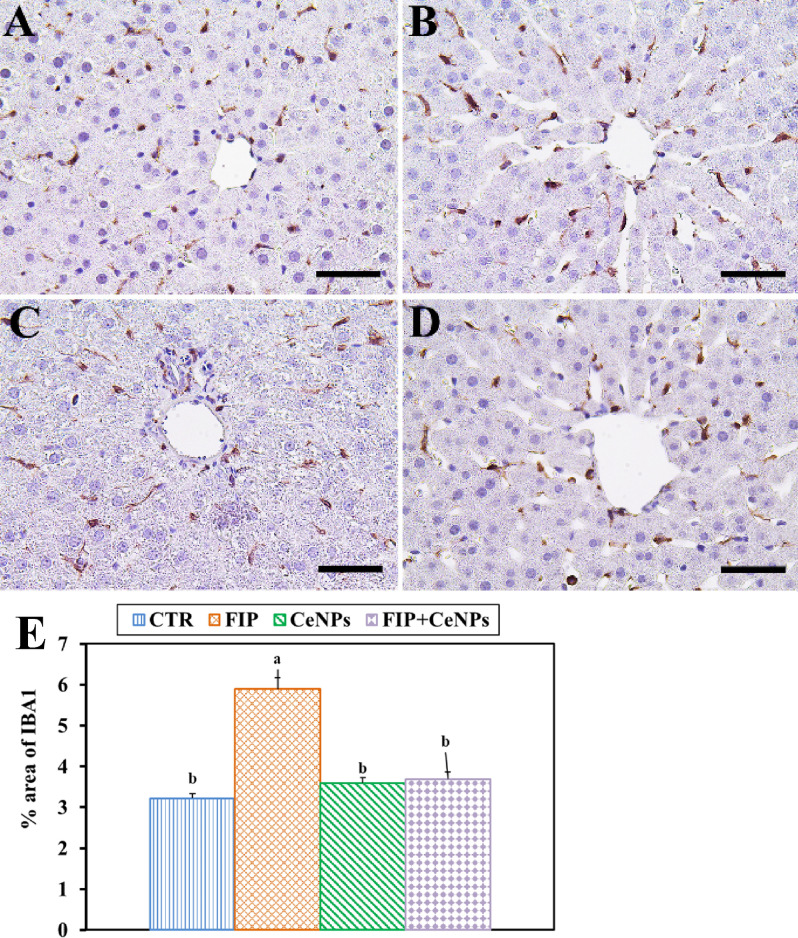
Fipronil (FIP) is a phenylpyrazole insecticide that is commonly used in agricultural and veterinary fields for controlling a wide range of insects, but it is a strong environmentally toxic substance. Exposure to FIP has been reported to increase the hepatic fat accumulation through altered lipid metabolism, which ultimately can contribute to nonalcoholic fatty liver disease (NAFLD) development. The present study aimed to examine the function of cerium oxide nanoparticles (CeNPs) in protecting against hepatotoxicity and lipogenesis induced by FIP. Twenty-eight male albino rats were classified into four groups: FIP (5 mg/kg/day per os), CTR, CeNPs (35 mg/kg/day p.o.), and FIP + CeNPs (5 (FIP) + 35 (CeNPs) mg/kg/day p.o.) for 28 consecutive days. Serum lipid profiles, hepatic antioxidant parameters and pathology, and mRNA expression of adipocytokines were assessed. The results revealed that FIP increased cholesterol, height-density lipoprotein, triacylglyceride, low-density lipoprotein (LDL-c), and very-low-density lipoprotein (VLDL-c) concentrations. It also increased nitric oxide (NO) and malondialdehyde (MDA) hepatic levels and reduced glutathione peroxidase (GPx) and superoxide dismutase (SOD) enzyme activities. Additionally, FIP up-regulated the fatty acid-binding protein (FABP), acetyl Co-A carboxylase (ACC1), and peroxisome proliferator-activated receptor-alpha (PPAR-α). Immunohistochemically, a strong proliferation of cell nuclear antigen (PCNA), ionized calcium-binding adapter molecule 1 (Iba-1), cyclooxygenase-2 (COX-2) reactions in the endothelial cells of the hepatic sinusoids, and increased expression of caspase3 were observed following FIP intoxication. FIP also caused histological changes in hepatic tissue. The CeNPs counteracted the hepatotoxic effect of FIP exposure. So, this study recorded an ameliorative effect of CeNPs against FIP-induced hepatotoxicity.
氟虫腈(FIP)是一种苯并吡唑类杀虫剂,常用于农业和兽医领域,以控制多种昆虫,但它是一种强烈的环境毒物。据报道,暴露于 FIP 会通过改变脂质代谢导致肝脂肪堆积增加,从而导致非酒精性脂肪性肝病(NAFLD)的发展。本研究旨在研究氧化铈纳米颗粒(CeNPs)在保护 FIP 诱导的肝毒性和脂肪生成中的作用。将 28 只雄性白化大鼠分为四组:FIP(5mg/kg/天经口)、对照(CTR)、CeNPs(35mg/kg/天经口)和 FIP+CeNPs(5(FIP)+35(CeNPs)mg/kg/天经口),连续 28 天。评估血清脂质谱、肝抗氧化参数和病理学以及脂肪细胞因子的 mRNA 表达。结果表明,FIP 增加了胆固醇、高密度脂蛋白、三酰甘油、低密度脂蛋白(LDL-c)和极低密度脂蛋白(VLDL-c)的浓度。它还增加了肝脏中一氧化氮(NO)和丙二醛(MDA)的水平,降低了谷胱甘肽过氧化物酶(GPx)和超氧化物歧化酶(SOD)的酶活性。此外,FIP 上调了脂肪酸结合蛋白(FABP)、乙酰辅酶 A 羧化酶(ACC1)和过氧化物酶体增殖物激活受体-α(PPAR-α)。免疫组化显示,FIP 中毒后,肝窦内皮细胞的细胞核抗原(PCNA)、离子钙结合衔接分子 1(Iba-1)、环氧化酶-2(COX-2)反应强烈增殖,caspase3 表达增加。FIP 还导致肝组织的组织学变化。CeNPs 拮抗了 FIP 暴露的肝毒性作用。因此,本研究记录了 CeNPs 对 FIP 诱导的肝毒性的改善作用。