Experimental Center of Clinical Research, The First Affiliated Hospital of Anhui University of Chinese Medicine, Hefei, Anhui 230031, P.R. China.
School of Basic Medical Science, Anhui Medical University, Hefei, Anhui 230032, P.R. China.
Int J Mol Med. 2021 Mar;47(3). doi: 10.3892/ijmm.2021.4850. Epub 2021 Jan 15.
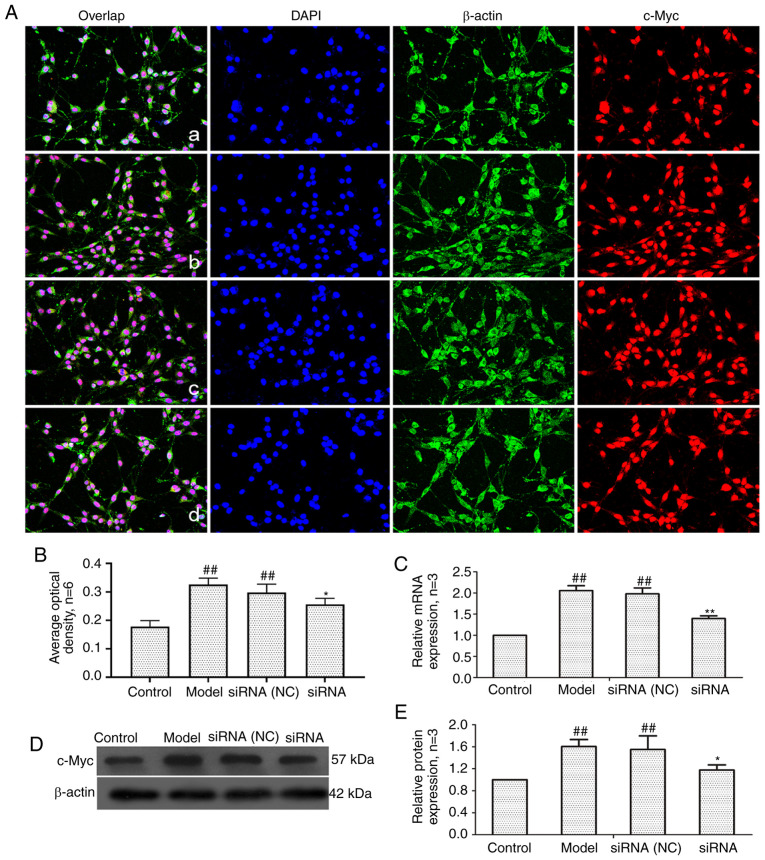
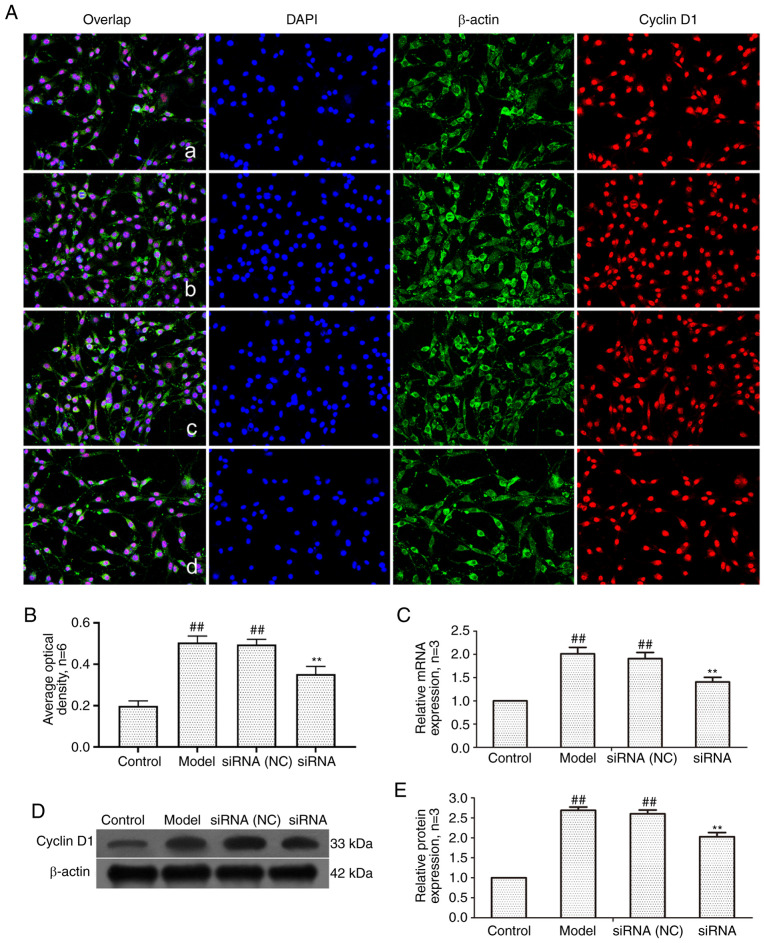
Rheumatoid arthritis (RA) is an autoimmune disease that occurs in approximately 1.0% of the general population. In RA patients, physical disability and joint damage are the major prognostic factors, which are associated with a reduction in the quality of life and early mortality. At present, the exact molecular mechanism of RA remains elusive. Long noncoding RNAs (lncRNAs) have been revealed to play a regulatory role in the pathogenesis of RA. To reveal the function of lncRNAs in rheumatoid arthritis, lncRNAS56464.1 was screened to verify its targeting of the microRNA (miR)‑152‑3p/Wnt pathway and its effect on the proliferation of fibroblast‑like synoviocytes (FLS). In the present study, based on the competing endogenous RNA (ceRNA) theory, siRNA was designed for transfection into FLS to calculate the lncRNAS56464.1 interference efficiency and then the effect of lncRNAS56464.1 interference on FLS proliferation was detected by MTT assay. Then, lncRNAS56464.1 targeting of the miR‑152‑3p/Wnt pathway was detected by a dual‑luciferase reporter assay. In addition, RT‑qPCR, immunofluorescence and western blotting techniques were employed to detect the expression of lncRNAS56464.1, miR‑152‑3p and some key genes of the Wnt signaling pathway in FLS after lncRNAS56464.1 interference. The results revealed that lncRNAS56464.1 could combine with miR‑152‑3p and promoted the proliferation of FLS. In addition, lncRNAS56464.1 interference could not only decrease the proliferation of FLS and the expression of Wnt1, β‑catenin, c‑Myc, cyclin D1, and p‑GSK‑3β/GSK‑3β, but it also increased the expression of SFRP4. The present data indicated that lncRNAS56464.1 could target the miR‑152‑3p/Wnt pathway to induce synovial cell proliferation and then participate in the pathogenesis of RA.
类风湿关节炎(RA)是一种自身免疫性疾病,约发生在普通人群的 1.0%。在 RA 患者中,身体残疾和关节损伤是主要的预后因素,与生活质量下降和早期死亡有关。目前,RA 的确切分子机制仍不清楚。长链非编码 RNA(lncRNA)已被证明在 RA 的发病机制中发挥调节作用。为了揭示 lncRNA 在类风湿关节炎中的功能,筛选出 lncRNAS56464.1,验证其对 microRNA(miR)-152-3p/Wnt 通路的靶向作用及其对成纤维样滑膜细胞(FLS)增殖的影响。在本研究中,基于竞争内源性 RNA(ceRNA)理论,设计 siRNA 转染 FLS,计算 lncRNAS56464.1 干扰效率,然后通过 MTT 检测 lncRNAS56464.1 干扰对 FLS 增殖的影响。然后,通过双荧光素酶报告基因检测 lncRNAS56464.1 对 miR-152-3p/Wnt 通路的靶向作用。此外,采用 RT-qPCR、免疫荧光和 Western blot 技术检测 lncRNAS56464.1、miR-152-3p 和 FLS 中 Wnt 信号通路关键基因在 lncRNAS56464.1 干扰后的表达。结果表明,lncRNAS56464.1 可与 miR-152-3p 结合,促进 FLS 增殖。此外,lncRNAS56464.1 干扰不仅可以降低 FLS 的增殖和 Wnt1、β-catenin、c-Myc、cyclin D1 和 p-GSK-3β/GSK-3β 的表达,还可以增加 SFRP4 的表达。本研究数据表明,lncRNAS56464.1 可以靶向 miR-152-3p/Wnt 通路诱导滑膜细胞增殖,进而参与 RA 的发病机制。