Probst Thomas, Haid Barbara, Schimböck Wolfgang, Reisinger Andrea, Gasser Marion, Eichberger-Heckmann Heidrun, Stippl Peter, Jesser Andrea, Humer Elke, Korecka Nicole, Pieh Christoph
Department for Psychotherapy and Biopsychosocial Health, Danube University Krems, Krems an der Donau, Austria.
Austrian Federal Association for Psychotherapy, Vienna, Austria.
Clin Psychol Psychother. 2021 Jul;28(4):988-1000. doi: 10.1002/cpp.2553. Epub 2021 Jan 15.
First, to investigate how psychotherapists and patients experience the change from in-person to remote psychotherapy or vice versa during COVID-19 regarding the therapeutic interventions used. Second, to explore the influence of therapeutic orientations on therapeutic interventions in in-person versus remote psychotherapy.
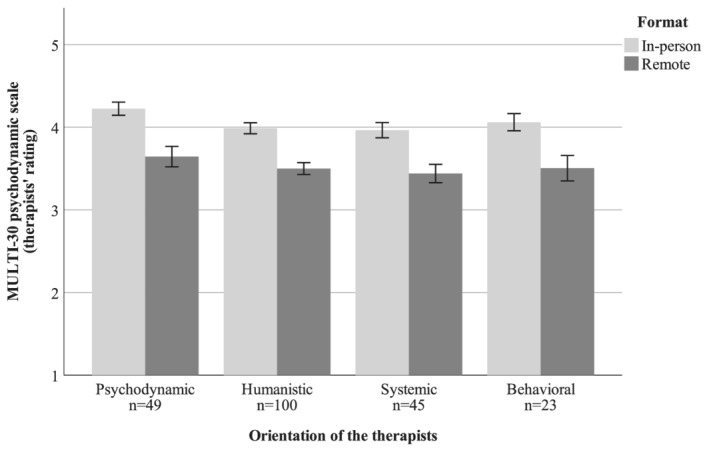
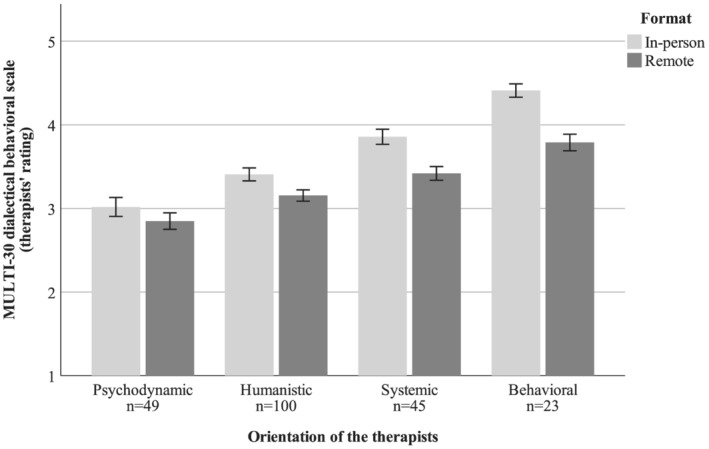
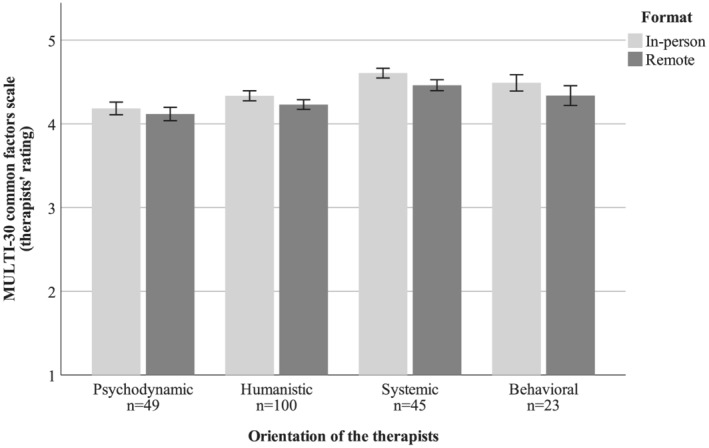
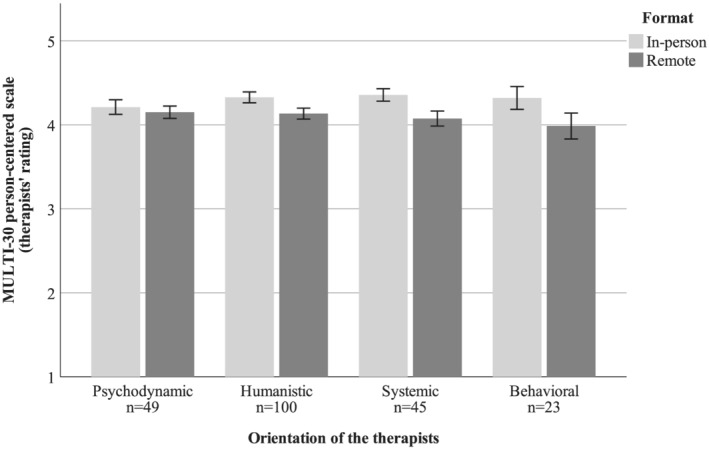
Psychotherapists (N = 217) from Austria were recruited, who in turn recruited their patients (N = 133). The therapeutic orientation of the therapists was psychodynamic (22.6%), humanistic (46.1%), systemic (20.7%) or behavioural (10.6%). All the data were collected remotely via online surveys. Therapists and patients completed two versions of the 'Multitheoretical List of Therapeutic Interventions' (MULTI-30) (version 1: in-person; version 2: remote) to investigate differences between in-person and remote psychotherapy in the following therapeutic interventions: psychodynamic, common factors, person-centred, process-experiential, interpersonal, cognitive, behavioural and dialectical-behavioural.
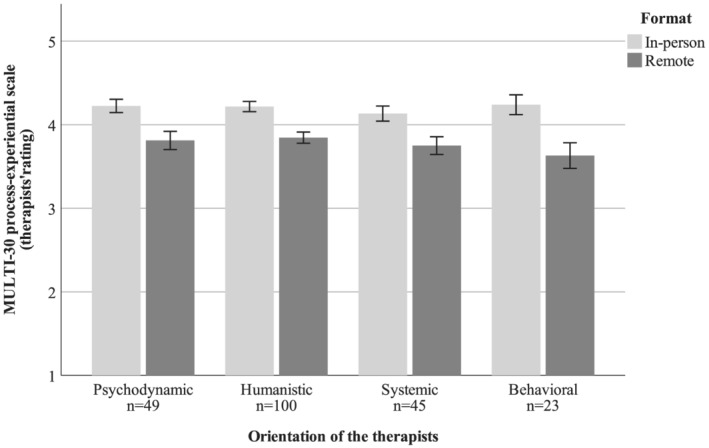
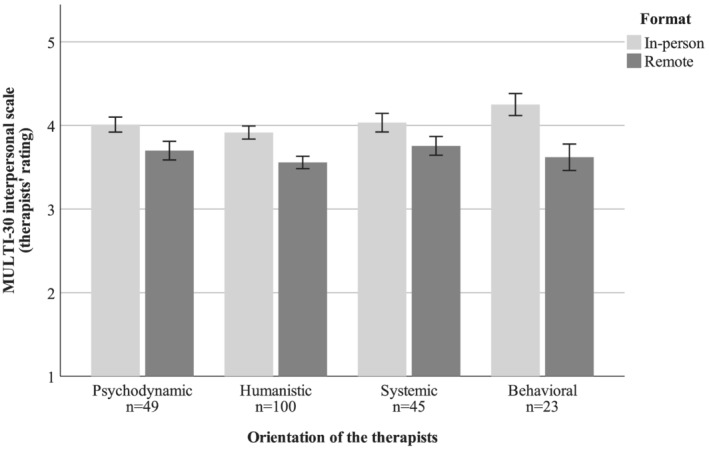
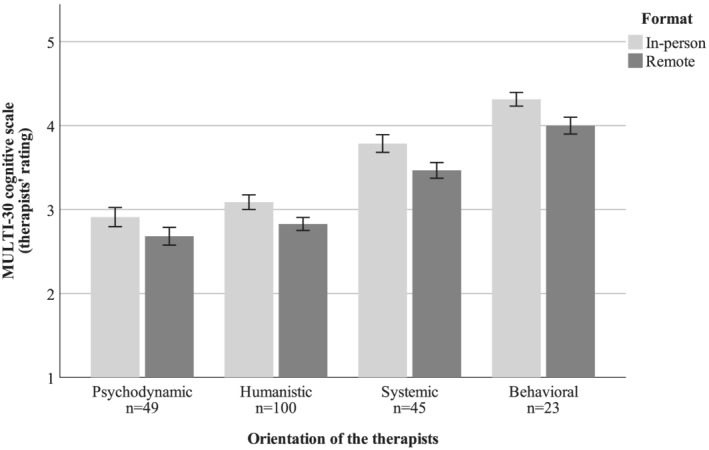
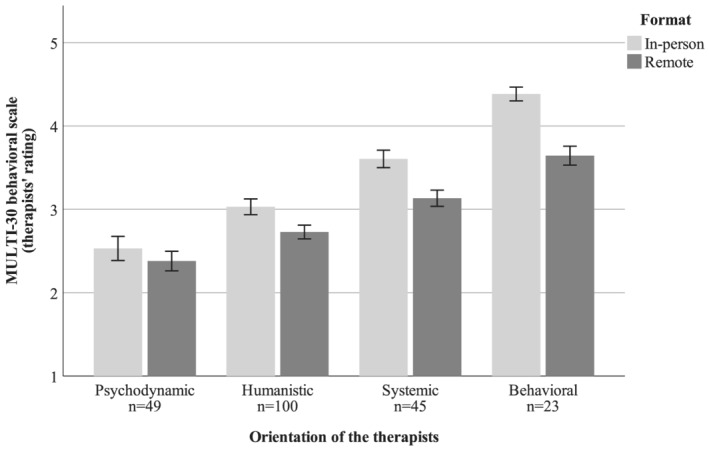
Therapists rated all examined therapeutic interventions as more typical for in-person than for remote psychotherapy. For patients, three therapeutic interventions (psychodynamic, process-experiential, cognitive interventions) were more typical for in-person than for remote psychotherapy after correcting for multiple testing. For two therapeutic interventions (behavioural, dialectical-behavioural), differences between the four therapeutic orientations were more consistent for in-person than for remote psychotherapy.
Therapeutic interventions differed between in-person and remote psychotherapy and differences between therapeutic orientations in behavioural-oriented interventions become indistinct in remote psychotherapy.
第一,调查在新冠疫情期间,心理治疗师和患者如何体验从面对面心理治疗到远程心理治疗的转变,反之亦然,涉及所使用的治疗干预措施。第二,探讨治疗取向对面对面心理治疗与远程心理治疗中治疗干预措施的影响。
招募了来自奥地利的心理治疗师(N = 217),这些治疗师进而招募了他们的患者(N = 133)。治疗师的治疗取向为心理动力学(22.6%)、人本主义(46.1%)、系统式(20.7%)或行为主义(10.6%)。所有数据均通过在线调查远程收集。治疗师和患者完成了两个版本的“治疗干预多理论清单”(MULTI - 30)(版本1:面对面;版本2:远程),以调查在以下治疗干预措施方面面对面心理治疗和远程心理治疗之间的差异:心理动力学、共同因素、以人为中心、过程体验、人际、认知、行为和辩证行为。
治疗师将所有检查的治疗干预措施评定为在面对面心理治疗中比在远程心理治疗中更典型。对于患者,在进行多重检验校正后,三种治疗干预措施(心理动力学、过程体验、认知干预)在面对面心理治疗中比在远程心理治疗中更典型。对于两种治疗干预措施(行为、辩证行为),四种治疗取向之间的差异在面对面心理治疗中比在远程心理治疗中更一致。
面对面心理治疗和远程心理治疗中的治疗干预措施存在差异,并且在远程心理治疗中,行为导向干预措施中治疗取向之间的差异变得不明显。