Dipartimento Scienze dell'Invecchiamento, Neurologiche, Ortopediche e della Testa-Collo, Fondazione Policlinico Universitario A. Gemelli IRCCS - UOC Neurologia, Rome, Italy.
Università Cattolica del Sacro Cuore, Largo Francesco Vito, 1, 00168, Rome, Italy.
Neurol Sci. 2021 Apr;42(4):1237-1245. doi: 10.1007/s10072-021-05045-0. Epub 2021 Jan 15.
The COVID-19 outbreak highly impacted the acute ischemic stroke care management. The primary end point of the study was to evaluate the impact of the COVID-19 outbreak and the following lockdown measures on our hub-and-spoke network; the secondary end point was to evaluate if the impact of the COVID-19 outbreak was different in hub-and-spoke centers.
This was a retrospective multicenter observational study conducted at the Stroke Units of Policlinico Gemelli, Ospedale San Filippo Neri, Ospedale di Belcolle, and Ospedale San Camillo de Lellis. We collected clinical reports of all consecutive patients admitted with diagnosis of acute ischemic stroke or transient ischemic attack (TIA) during the phase 1 of the lockdown period (11 March 2020-4 May 2020). As controls, we used all consecutive patients admitted for acute ischemic stroke or TIA in the same period of the previous year.
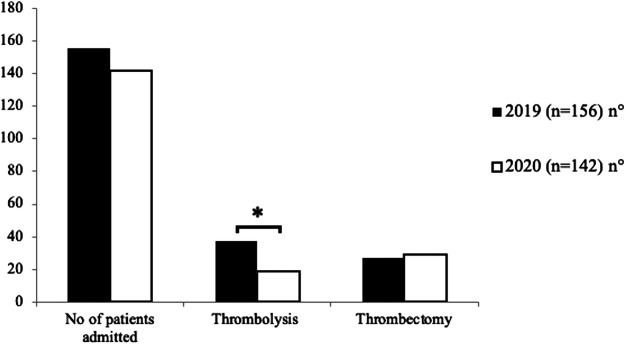
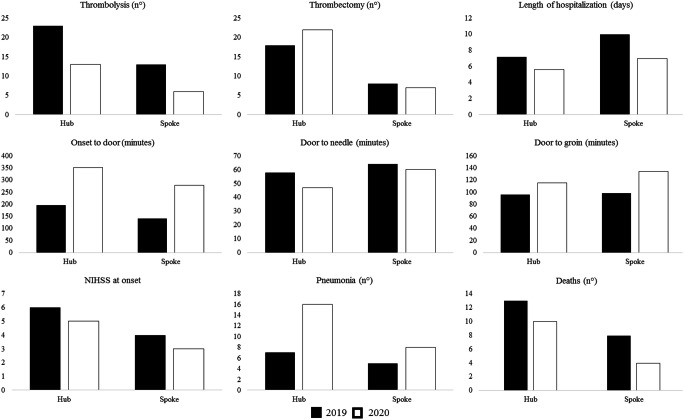
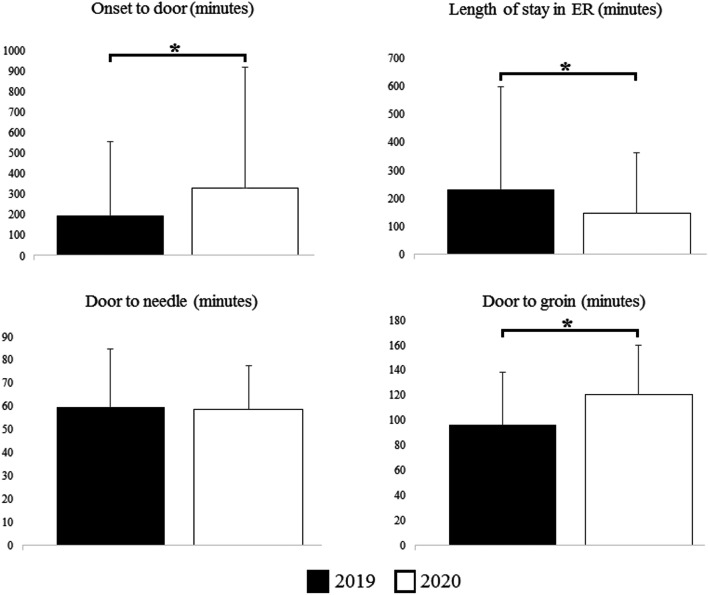
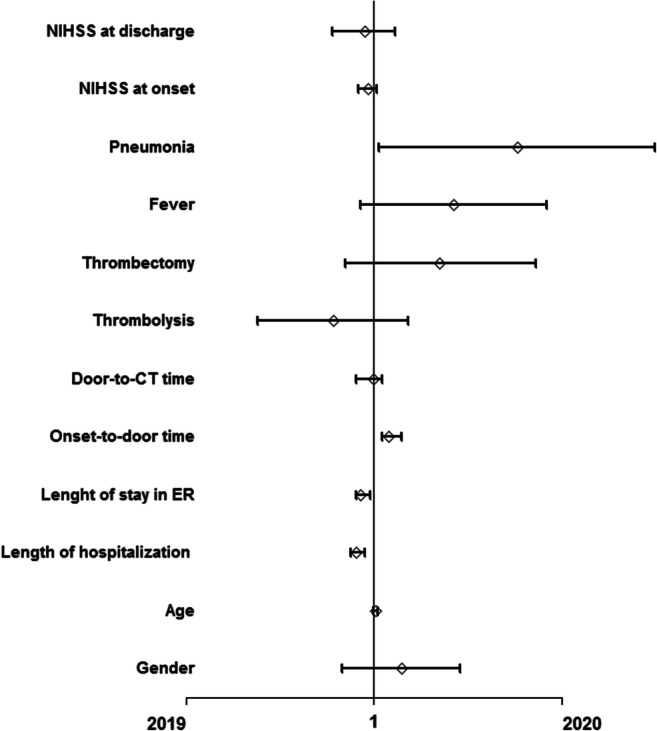
A total of 156 and 142 clinical reports were collected in 2019 and 2020, respectively. During the COVID-19 outbreak, we observed a reduction of number of thrombolysis, a reduction of the length of hospitalization, and an increase of pneumonia. Regarding performance indicators, we observed an increase in onset-to-door time and in door-to-groin time. We did not observe any statistically significant interaction between year (2019 vs 2020) and facility of admission (hub vs spoke) on all variables analyzed.
Our observational study, involving hub-and-spoke stroke network of a wide regional area, indicates that the COVID-19 outbreak impacted on the acute stroke management. This impact was equally observed in hub as well as in spoke centers.
COVID-19 疫情对急性缺血性脑卒中的护理管理产生了重大影响。本研究的主要终点是评估 COVID-19 疫情及随后的封锁措施对我们的中枢-卫星网络的影响;次要终点是评估 COVID-19 疫情对中枢-卫星中心的影响是否不同。
这是一项在 Policlinico Gemelli、Ospedale San Filippo Neri、Ospedale di Belcolle 和 Ospedale San Camillo de Lellis 的卒中病房进行的回顾性多中心观察性研究。我们收集了在封锁期第一阶段(2020 年 3 月 11 日至 5 月 4 日)期间连续诊断为急性缺血性脑卒中或短暂性脑缺血发作(TIA)的所有患者的临床报告。作为对照,我们使用了前一年同期连续入院的所有急性缺血性脑卒中或 TIA 患者。
2019 年和 2020 年分别收集了 156 份和 142 份临床报告。在 COVID-19 疫情期间,我们观察到溶栓数量减少、住院时间缩短和肺炎增加。关于绩效指标,我们观察到发病至入院时间和入院至腹股沟穿刺时间的增加。在所有分析的变量中,我们都没有观察到年份(2019 年与 2020 年)和入院机构(中枢与卫星)之间的任何统计学显著交互作用。
我们的观察性研究涉及一个广泛地区的中枢-卫星卒中网络,表明 COVID-19 疫情对急性卒中管理产生了影响。这种影响在中枢和卫星中心都同样观察到。