Department of General Psychology, University of Padova, Via Venezia 8 - 35131, Padua, Italy.
Scuola Internazionale Superiore di Studi Avanzati, Trieste, Italy.
Appetite. 2021 May 1;160:105122. doi: 10.1016/j.appet.2021.105122. Epub 2021 Jan 14.
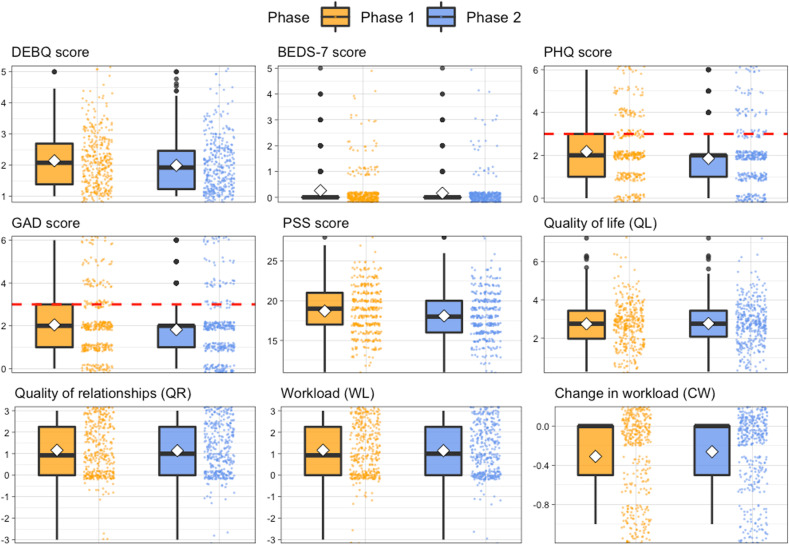
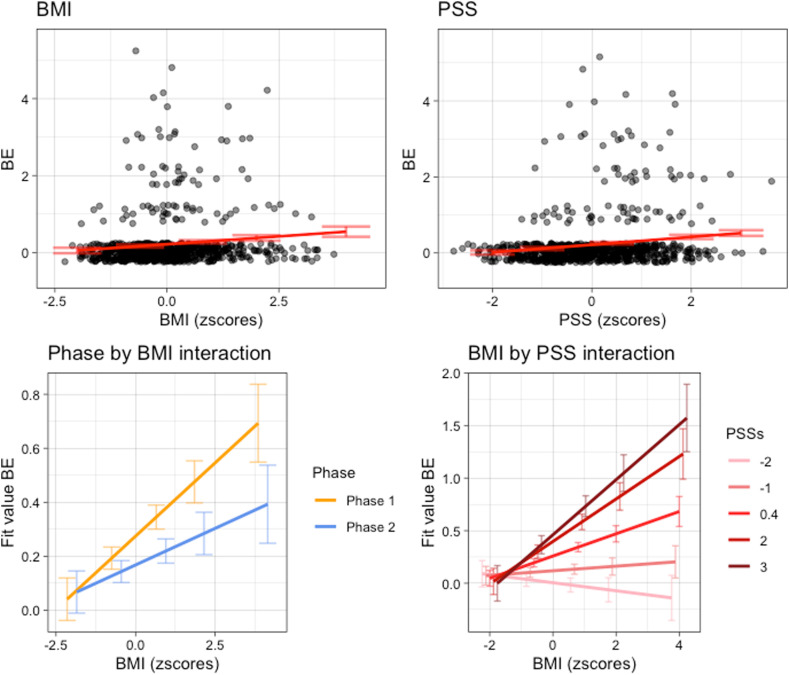
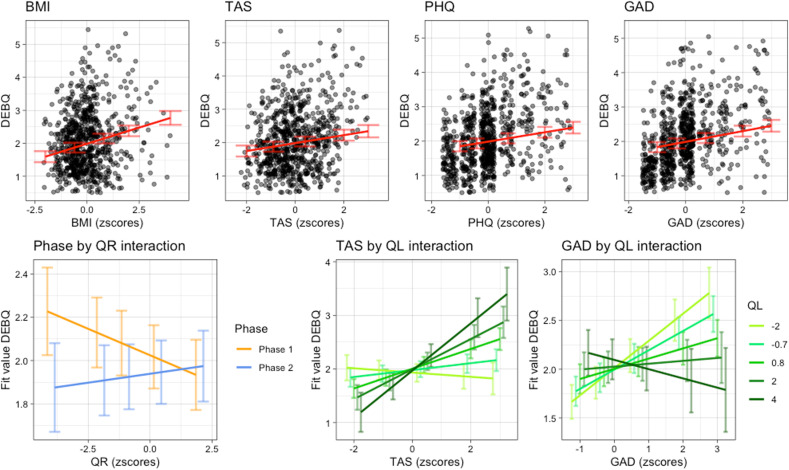
Due to the spread of COVID 2019, the Italian government imposed a lockdown on the national territory. Initially, citizens were required to stay at home and not to mix with others outside of their household (Phase 1); eventually, some of these restrictions were lifted (Phase 2). To investigate the impact of lockdown on emotional and binge eating, an online survey was conducted to compare measures of self-reported physical (BMI), psychological (Alexithymia), affective (anxiety, stress, and depression) and social (income, workload) state during Phase 1 and Phase 2. Data from 365 Italian residents showed that increased emotional eating was predicted by higher depression, anxiety, quality of personal relationships, and quality of life, while the increase of bingeing was predicted by higher stress. Moreover, we showed that higher alexithymia scores were associated by increased emotional eating and higher BMI scores were associated with both increased emotional eating and binge eating. Finally, we found that from Phase 1 to Phase 2 binge and emotional eating decreased. These data provide evidence of the negative effects of isolation and lockdown on emotional wellbeing, and, relatedly, on eating behaviour.
由于 2019 年 COVID-19 的传播,意大利政府对全国范围内实行封锁。最初,公民被要求待在家里,不得与家庭以外的人接触(第 1 阶段);最终,这些限制中的一些被放宽(第 2 阶段)。为了调查封锁对情绪性暴食和 binge eating 的影响,我们进行了一项在线调查,比较了第 1 阶段和第 2 阶段自我报告的身体(BMI)、心理(述情障碍)、情感(焦虑、压力和抑郁)和社会(收入、工作量)状态的措施。来自 365 名意大利居民的数据表明,较高的抑郁、焦虑、人际关系质量和生活质量预测了情绪性暴食的增加,而较高的压力则预测了 binge eating 的增加。此外,我们还发现,较高的述情障碍分数与情绪性暴食增加有关,而较高的 BMI 分数与情绪性暴食和 binge eating 增加有关。最后,我们发现从第 1 阶段到第 2 阶段 binge eating 和情绪性暴食都减少了。这些数据提供了隔离和封锁对情绪健康的负面影响的证据,并且与饮食行为有关。