• 文献检索
  • 文档翻译
  • 深度研究
  • 学术资讯
  • Suppr Zotero 插件Zotero 插件
  • 邀请有礼
  • 套餐&价格
  • 历史记录
应用&插件
Suppr Zotero 插件Zotero 插件浏览器插件Mac 客户端Windows 客户端微信小程序
定价
高级版会员购买积分包购买API积分包
服务
文献检索文档翻译深度研究API 文档MCP 服务
关于我们
关于 Suppr公司介绍联系我们用户协议隐私条款
关注我们

Suppr 超能文献

核心技术专利:CN118964589B侵权必究
粤ICP备2023148730 号-1Suppr @ 2026

文献检索

告别复杂PubMed语法,用中文像聊天一样搜索,搜遍4000万医学文献。AI智能推荐,让科研检索更轻松。

立即免费搜索

文件翻译

保留排版,准确专业,支持PDF/Word/PPT等文件格式,支持 12+语言互译。

免费翻译文档

深度研究

AI帮你快速写综述,25分钟生成高质量综述,智能提取关键信息,辅助科研写作。

立即免费体验

应对新冠疫情的智能技术驱动方法:综述

Smart technologies driven approaches to tackle COVID-19 pandemic: a review.

作者信息

Khan Hameed, Kushwah K K, Singh Saurabh, Urkude Harshika, Maurya Muni Raj, Sadasivuni Kishor Kumar

机构信息

Department of Computer Science, GRKIST, Jabalpur, Madhya Pradesh India.

Department of Applied Physics, Jabalpur Engineering College, Jabalpur, Madhya Pradesh 482001 India.

出版信息

3 Biotech. 2021 Feb;11(2):50. doi: 10.1007/s13205-020-02581-y. Epub 2021 Jan 11.

DOI:10.1007/s13205-020-02581-y
PMID:33457174
原文链接:https://pmc.ncbi.nlm.nih.gov/articles/PMC7799428/
Abstract

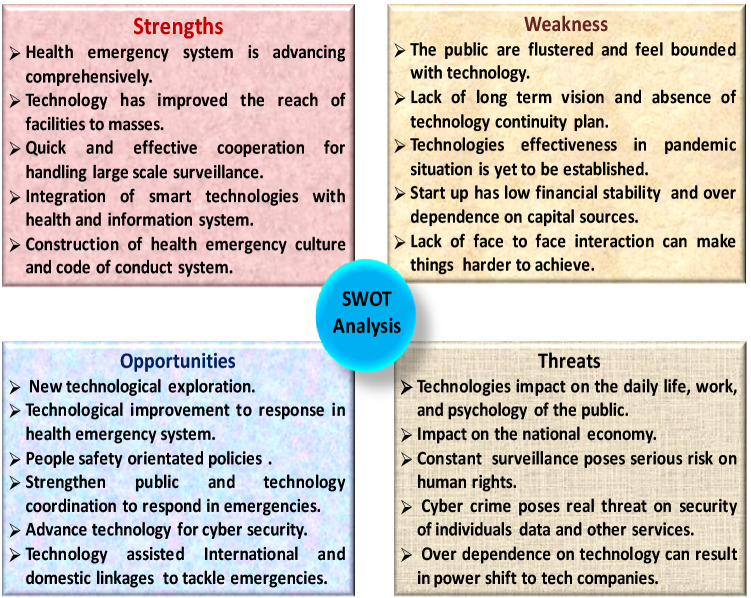
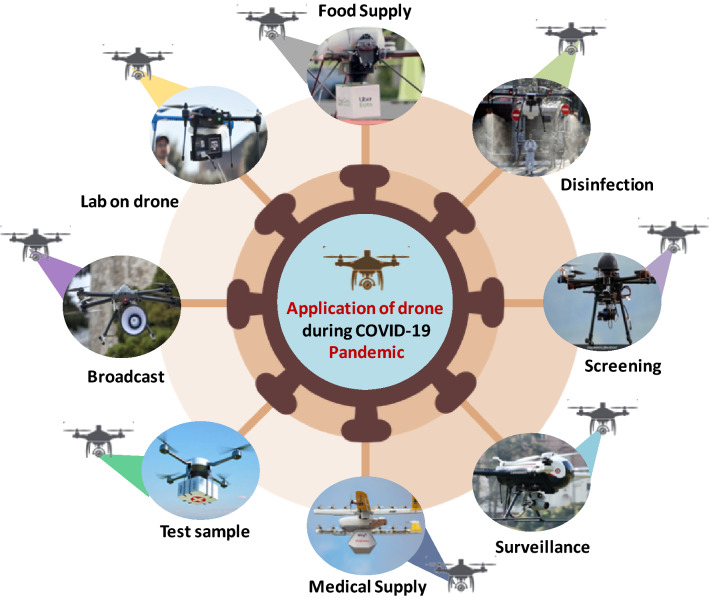
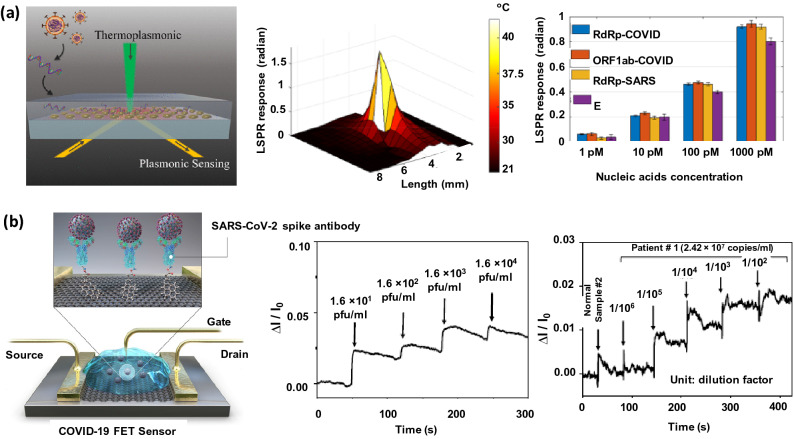
The novel coronavirus infection (COVID-19) is not diminishing without vaccine, but it impinges on human safety and economy can be minimized by adopting smart technology to combat pandemic situation. The implementation of new innovations and novel tactics has proven to be effective in curbing the risk of COVID-19. The present study covers the role of smart technology in mitigating the spread of COVID-19 with specific focus on advancement in the field of drone, robotics, artificial intelligence (AI), mask, and sensor technology. The findings shed light on the robotics and drone technology-driven approaches that have been applied for assisting health system, surveillance, and disinfection process, etc. The AI technology strategies and framework is highlighted in terms of bulk data computing, predicting infection threats, providing medical assistance, and analyzing diagnosis results. Besides this, the technological shift in mask and sensor technology during the pandemic have been illustrated, which includes fabrication method like 3D printing and optical sensing, respectively. Furthermore, the strength, weakness, opportunities, and possible threats that have been shaped by the rigorous implementation of these technologies are also covered in detail.

摘要

新型冠状病毒感染(COVID-19)在没有疫苗的情况下不会自行消退,但通过采用智能技术应对疫情,可以将其对人类安全和经济的影响降至最低。新创新和新策略的实施已被证明在降低COVID-19风险方面是有效的。本研究涵盖了智能技术在减轻COVID-19传播方面的作用,特别关注无人机、机器人技术、人工智能(AI)、口罩和传感器技术领域的进展。研究结果揭示了机器人技术和无人机技术驱动的方法在协助卫生系统、监测和消毒过程等方面的应用。人工智能技术的策略和框架在大数据计算、预测感染威胁、提供医疗援助和分析诊断结果方面得到了突出体现。除此之外,还阐述了疫情期间口罩和传感器技术的技术转变,分别包括3D打印和光学传感等制造方法。此外,还详细介绍了这些技术的严格实施所形成的优势、劣势、机遇和可能的威胁。

https://cdn.ncbi.nlm.nih.gov/pmc/blobs/1466/7801589/1dd6bd3ac446/13205_2020_2581_Fig7_HTML.jpg
https://cdn.ncbi.nlm.nih.gov/pmc/blobs/1466/7801589/8a3b20b1039e/13205_2020_2581_Fig1_HTML.jpg
https://cdn.ncbi.nlm.nih.gov/pmc/blobs/1466/7801589/5ac69c5c533e/13205_2020_2581_Fig2_HTML.jpg
https://cdn.ncbi.nlm.nih.gov/pmc/blobs/1466/7801589/ca9fce903993/13205_2020_2581_Fig3_HTML.jpg
https://cdn.ncbi.nlm.nih.gov/pmc/blobs/1466/7801589/70bd51d5f6ec/13205_2020_2581_Fig4_HTML.jpg
https://cdn.ncbi.nlm.nih.gov/pmc/blobs/1466/7801589/f98180478d44/13205_2020_2581_Fig5_HTML.jpg
https://cdn.ncbi.nlm.nih.gov/pmc/blobs/1466/7801589/9d6a13cd582d/13205_2020_2581_Fig6_HTML.jpg
https://cdn.ncbi.nlm.nih.gov/pmc/blobs/1466/7801589/1dd6bd3ac446/13205_2020_2581_Fig7_HTML.jpg
https://cdn.ncbi.nlm.nih.gov/pmc/blobs/1466/7801589/8a3b20b1039e/13205_2020_2581_Fig1_HTML.jpg
https://cdn.ncbi.nlm.nih.gov/pmc/blobs/1466/7801589/5ac69c5c533e/13205_2020_2581_Fig2_HTML.jpg
https://cdn.ncbi.nlm.nih.gov/pmc/blobs/1466/7801589/ca9fce903993/13205_2020_2581_Fig3_HTML.jpg
https://cdn.ncbi.nlm.nih.gov/pmc/blobs/1466/7801589/70bd51d5f6ec/13205_2020_2581_Fig4_HTML.jpg
https://cdn.ncbi.nlm.nih.gov/pmc/blobs/1466/7801589/f98180478d44/13205_2020_2581_Fig5_HTML.jpg
https://cdn.ncbi.nlm.nih.gov/pmc/blobs/1466/7801589/9d6a13cd582d/13205_2020_2581_Fig6_HTML.jpg
https://cdn.ncbi.nlm.nih.gov/pmc/blobs/1466/7801589/1dd6bd3ac446/13205_2020_2581_Fig7_HTML.jpg

相似文献

1
Smart technologies driven approaches to tackle COVID-19 pandemic: a review.应对新冠疫情的智能技术驱动方法:综述
3 Biotech. 2021 Feb;11(2):50. doi: 10.1007/s13205-020-02581-y. Epub 2021 Jan 11.
2
Harnessing the Power of Smart and Connected Health to Tackle COVID-19: IoT, AI, Robotics, and Blockchain for a Better World.利用智能互联健康的力量应对新冠疫情:物联网、人工智能、机器人技术和区块链打造更美好的世界。
IEEE Internet Things J. 2021 Apr 19;8(16):12826-12846. doi: 10.1109/JIOT.2021.3073904. eCollection 2021 Aug 15.
3
Role of Drone Technology Helping in Alleviating the COVID-19 Pandemic.无人机技术在缓解新冠疫情中的作用。
Micromachines (Basel). 2022 Sep 25;13(10):1593. doi: 10.3390/mi13101593.
4
Assimilation of 3D printing, Artificial Intelligence (AI) and Internet of Things (IoT) for the construction of eco-friendly intelligent homes: An explorative review.3D打印、人工智能(AI)和物联网(IoT)在环保智能住宅建设中的融合:探索性综述。
Heliyon. 2024 Aug 26;10(17):e36846. doi: 10.1016/j.heliyon.2024.e36846. eCollection 2024 Sep 15.
5
Artificial intelligence and robotics on the frontlines of the pandemic response: the regulatory models for technology adoption and the development of resilient organisations in smart cities.疫情应对前线的人工智能与机器人技术:智能城市中技术应用的监管模式及韧性组织的发展
J Ambient Intell Humaniz Comput. 2023 Mar 1:1-12. doi: 10.1007/s12652-023-04556-2.
6
A literature survey of the robotic technologies during the COVID-19 pandemic.关于新冠疫情期间机器人技术的文献综述。
J Manuf Syst. 2021 Jul;60:823-836. doi: 10.1016/j.jmsy.2021.02.005. Epub 2021 Feb 13.
7
Opportunities and Challenges for Construction Health and Safety Technologies under the COVID-19 Pandemic in Chinese Construction Projects.新冠疫情下中国建筑项目中施工健康与安全技术的机遇与挑战。
Int J Environ Res Public Health. 2021 Dec 10;18(24):13038. doi: 10.3390/ijerph182413038.
8
Mobile Apps for COVID-19 Detection and Diagnosis for Future Pandemic Control: Multidimensional Systematic Review.移动应用程序在新冠病毒检测和诊断方面的应用,为未来的大流行控制提供了支持:多维系统评价。
JMIR Mhealth Uhealth. 2024 Feb 22;12:e44406. doi: 10.2196/44406.
9
Artificial Intelligence (AI) applications for COVID-19 pandemic.用于2019冠状病毒病大流行的人工智能(AI)应用程序。
Diabetes Metab Syndr. 2020 Jul-Aug;14(4):337-339. doi: 10.1016/j.dsx.2020.04.012. Epub 2020 Apr 14.
10
Current Technologies for Detection of COVID-19: Biosensors, Artificial Intelligence and Internet of Medical Things (IoMT): Review.用于检测 COVID-19 的当前技术:生物传感器、人工智能和医疗物联网 (IoMT):综述。
Sensors (Basel). 2022 Dec 30;23(1):426. doi: 10.3390/s23010426.

引用本文的文献

1
The role of artificial intelligence in pandemic responses: from epidemiological modeling to vaccine development.人工智能在大流行应对中的作用:从流行病学建模到疫苗研发。
Mol Biomed. 2025 Jan 3;6(1):1. doi: 10.1186/s43556-024-00238-3.
2
Smart Cities Mission in the Face of COVID: Scope and Scale of 'Smart' COVID Responses in India.智慧城市应对新冠疫情的使命:印度“智慧”抗疫措施的范围与规模
Int J Environ Res Public Health. 2023 Nov 8;20(22):7036. doi: 10.3390/ijerph20227036.
3
Smartphone-based corona virus detection using saliva: A mini-review.

本文引用的文献

1
RETRACTED ARTICLE: Deep learning system to screen coronavirus disease 2019 pneumonia.撤稿文章:用于筛查2019冠状病毒病肺炎的深度学习系统。
Appl Intell (Dordr). 2023;53(4):4874. doi: 10.1007/s10489-020-01714-3. Epub 2020 Apr 22.
2
Decontamination and Reuse of N95 Respirators with Hydrogen Peroxide Vapor to Address Worldwide Personal Protective Equipment Shortages During the SARS-CoV-2 (COVID-19) Pandemic.使用过氧化氢蒸汽对N95口罩进行消毒和再利用,以应对严重急性呼吸综合征冠状病毒2(COVID-19)大流行期间全球个人防护装备短缺的问题。
Appl Biosaf. 2020 Jun 1;25(2):67-70. doi: 10.1177/1535676020919932.
3
Automatic detection of coronavirus disease (COVID-19) using X-ray images and deep convolutional neural networks.
基于智能手机的唾液新冠病毒检测:一篇综述
Heliyon. 2023 Mar;9(3):e14380. doi: 10.1016/j.heliyon.2023.e14380. Epub 2023 Mar 8.
4
A Study on the Structural Relationships between COVID-19 Coping Strategies, Positive Expectations, and the Behavioral Intentions of Various Tourism-Related Behaviors.一项关于新冠疫情应对策略、积极期望与各类旅游相关行为意向之间结构关系的研究。
Int J Environ Res Public Health. 2023 Jan 12;20(2):1424. doi: 10.3390/ijerph20021424.
5
Integrating drones in response to public health emergencies: A combined framework to explore technology acceptance.将无人机融入应对公共卫生突发事件的综合框架:探索技术接受度。
Front Public Health. 2022 Oct 28;10:1019626. doi: 10.3389/fpubh.2022.1019626. eCollection 2022.
6
Evaluating the sustainability of smart technology applications in healthcare after the COVID-19 pandemic: A hybridising subjective and objective fuzzy group decision-making approach with explainable artificial intelligence.评估新冠疫情后医疗保健领域智能技术应用的可持续性:一种结合主观和客观模糊群体决策方法与可解释人工智能的方法
Digit Health. 2022 Nov 7;8:20552076221136381. doi: 10.1177/20552076221136381. eCollection 2022 Jan-Dec.
7
Using drones to transport suspected COVID-19 samples; experiences from the second largest testing centre in Ghana, West Africa.使用无人机运输疑似 COVID-19 样本;来自西非加纳第二大检测中心的经验。
PLoS One. 2022 Nov 1;17(11):e0277057. doi: 10.1371/journal.pone.0277057. eCollection 2022.
8
Role of Drone Technology Helping in Alleviating the COVID-19 Pandemic.无人机技术在缓解新冠疫情中的作用。
Micromachines (Basel). 2022 Sep 25;13(10):1593. doi: 10.3390/mi13101593.
9
Digital technologies, healthcare and Covid-19: insights from developing and emerging nations.数字技术、医疗保健与新冠疫情:来自发展中国家和新兴国家的见解
Health Technol (Berl). 2022;12(2):547-568. doi: 10.1007/s12553-022-00650-1. Epub 2022 Mar 6.
10
A Scoping Review of Supply Chain Management Systems for Point of Care Diagnostic Services: Optimising COVID-19 Testing Capacity in Resource-Limited Settings.即时医疗诊断服务供应链管理系统的范围综述:优化资源有限环境下的新冠病毒检测能力
Diagnostics (Basel). 2021 Dec 8;11(12):2299. doi: 10.3390/diagnostics11122299.
使用X射线图像和深度卷积神经网络自动检测冠状病毒病(COVID-19)。
Pattern Anal Appl. 2021;24(3):1207-1220. doi: 10.1007/s10044-021-00984-y. Epub 2021 May 9.
4
Forecasting and Evaluating Multiple Interventions for COVID-19 Worldwide.全球范围内针对新冠肺炎的多种干预措施的预测与评估
Front Artif Intell. 2020 May 22;3:41. doi: 10.3389/frai.2020.00041. eCollection 2020.
5
A deep learning algorithm using CT images to screen for Corona virus disease (COVID-19).利用 CT 图像进行冠状病毒病(COVID-19)筛查的深度学习算法。
Eur Radiol. 2021 Aug;31(8):6096-6104. doi: 10.1007/s00330-021-07715-1. Epub 2021 Feb 24.
6
Modelling transmission and control of the COVID-19 pandemic in Australia.模拟澳大利亚 COVID-19 大流行的传播和控制。
Nat Commun. 2020 Nov 11;11(1):5710. doi: 10.1038/s41467-020-19393-6.
7
Development and evaluation of an artificial intelligence system for COVID-19 diagnosis.开发和评估用于 COVID-19 诊断的人工智能系统。
Nat Commun. 2020 Oct 9;11(1):5088. doi: 10.1038/s41467-020-18685-1.
8
A Comprehensive Approach for Classification of the Cough Type.一种咳嗽类型分类的综合方法。
Annu Int Conf IEEE Eng Med Biol Soc. 2020 Jul;2020:208-212. doi: 10.1109/EMBC44109.2020.9175345.
9
α-Satellite: An AI-Driven System and Benchmark Datasets for Dynamic COVID-19 Risk Assessment in the United States.α-卫星:一个用于美国 COVID-19 动态风险评估的人工智能驱动系统和基准数据集。
IEEE J Biomed Health Inform. 2020 Oct;24(10):2755-2764. doi: 10.1109/JBHI.2020.3009314. Epub 2020 Jul 15.
10
Artificial intelligence approach fighting COVID-19 with repurposing drugs.人工智能方法通过药物再利用抗击 COVID-19。
Biomed J. 2020 Aug;43(4):355-362. doi: 10.1016/j.bj.2020.05.001. Epub 2020 May 15.