Ros Marijke M, van der Zaag-Loonen Hester J, Hofhuis José G M, Spronk Peter E
Department of Intensive Care Medicine, Gelre Hospitals, Apeldoorn, The Netherlands.
Department of Epidemiology, Expertise Center for Intensive care Rehabilitation Apeldoorn (ExpIRA), Apeldoorn, The Netherlands.
Crit Care Explor. 2021 Jan 11;3(1):e0317. doi: 10.1097/CCE.0000000000000317. eCollection 2021 Jan.
The surprise question, "Would I be surprised if this patient died in the next 12 months?" is a tool to identify patients at high risk of death in the next year. Especially in the situation of an ICU admission, it is important to recognize patients who could and could not have the benefits of an intensive treatment in the ICU department.
A single-center, prospective, observational cohort study was conducted between April 2013 and April 2018, in ICU Gelre hospitals, location Apeldoorn.
A total of 3,140 patients were included (57% male) with a mean age of 63.5 years. Seven-hundred thirteen patients (23%) died within 1 year.
The physician answered three different surprise question's with either "yes" or "no": "I expect that the patient is going to survive the ICU admission" (surprise question 1), "I expect that the patient is going to survive the hospital stay" (surprise question 2), and "I expect that the patient is going to survive one year after ICU admission" (surprise question 3). We tested positive and negative predicted values of the surprise questions, the mean accuracy of the surprise questions, and kappa statistics.
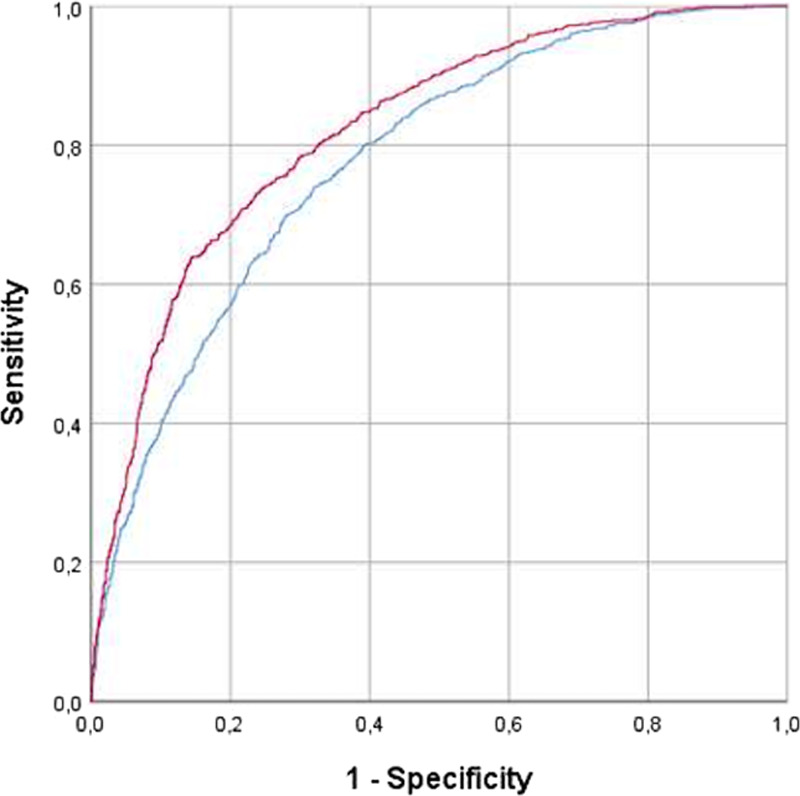
The positive and negative predictive values of the surprise questions for ICU admission, hospital admission, and 1-year survival were, respectively, 64%/94%, 59%/92%, and 60%/86%. Accordingly, the mean accuracy and kappa statistics were 93% (95% CI, 92-94%), κ equals to 0.43, 89% (95% CI, 88-90%), κ equals to 0.40, and 81% (95% CI, 80-82%), κ equals to 0.43.
The frequently overlooked simple and cheap surprise question is probably an useful tool to evaluate the prognosis of acutely admitted critically ill patients.
“如果该患者在未来12个月内死亡,我会感到惊讶吗?”这个出人意料的问题是一种识别未来一年内死亡高风险患者的工具。特别是在重症监护病房(ICU)收治的情况下,识别哪些患者能够从ICU的强化治疗中获益以及哪些患者不能获益非常重要。
2013年4月至2018年4月在阿珀尔多恩的盖尔雷医院ICU进行了一项单中心、前瞻性、观察性队列研究。
共纳入3140例患者(57%为男性),平均年龄63.5岁。713例患者(23%)在1年内死亡。
医生对三个不同的出人意料的问题回答“是”或“否”:“我预计该患者将在ICU治疗后存活”(出人意料的问题1),“我预计该患者将在住院期间存活”(出人意料的问题2),以及“我预计该患者将在ICU治疗后存活一年”(出人意料的问题3)。我们测试了出人意料的问题的阳性和阴性预测值、出人意料的问题的平均准确率以及kappa统计量。
出人意料的问题对ICU收治、住院和1年生存率的阳性和阴性预测值分别为64%/94%、59%/92%和60%/86%。相应地,平均准确率和kappa统计量分别为93%(95%CI,92 - 94%),κ等于0.43;89%(95%CI,88 - 90%),κ等于0.40;81%(95%CI,80 - 82%),κ等于0.43。
这个经常被忽视的简单且廉价的出人意料的问题可能是评估急性收治的危重症患者预后的有用工具。