Cardiac Metabolism Research Group (CMRG), Department of Physiology, Anatomy and Genetics, University of Oxford, Oxford, UK.
Oxford Centre for Clinical Magnetic Resonance Research (OCMR), Division of Cardiovascular Medicine, Radcliffe Department of Medicine, University of Oxford, Oxford, UK.
NMR Biomed. 2021 Apr;34(4):e4471. doi: 10.1002/nbm.4471. Epub 2021 Jan 17.
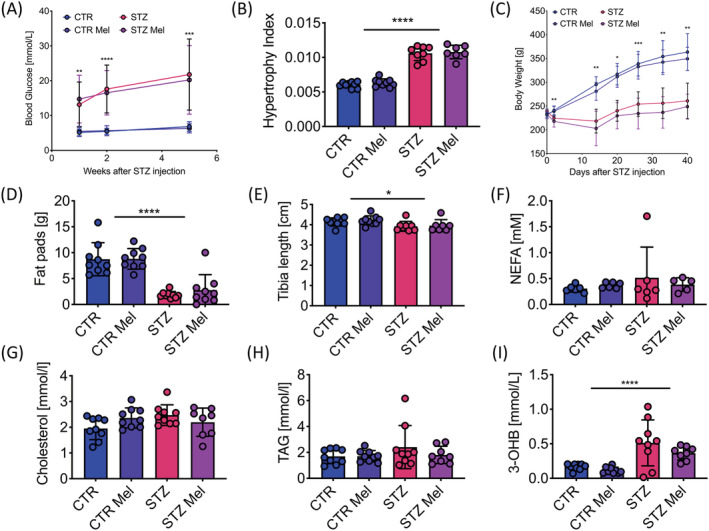
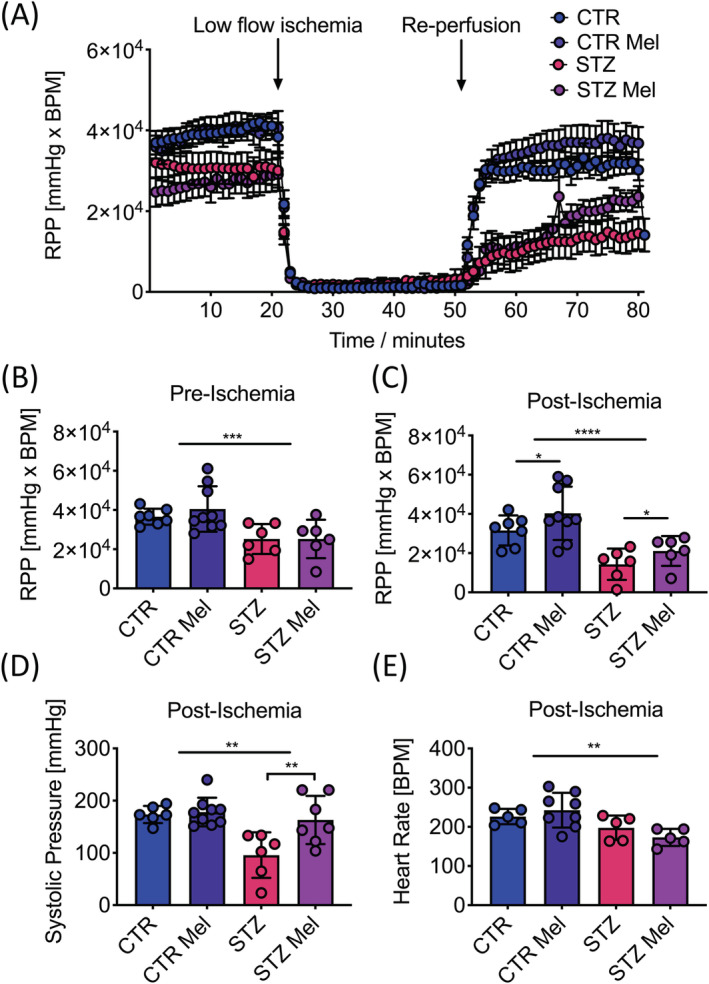
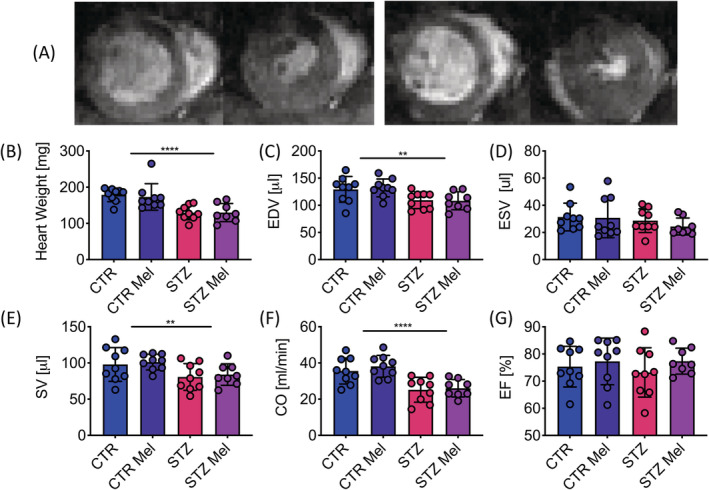
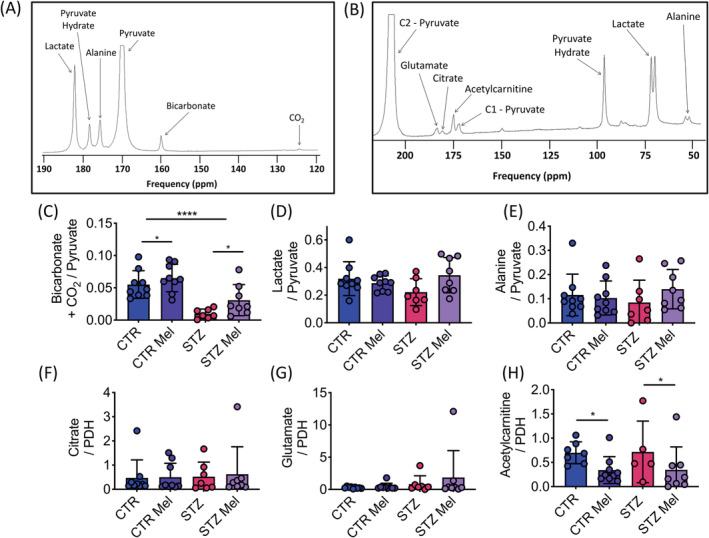
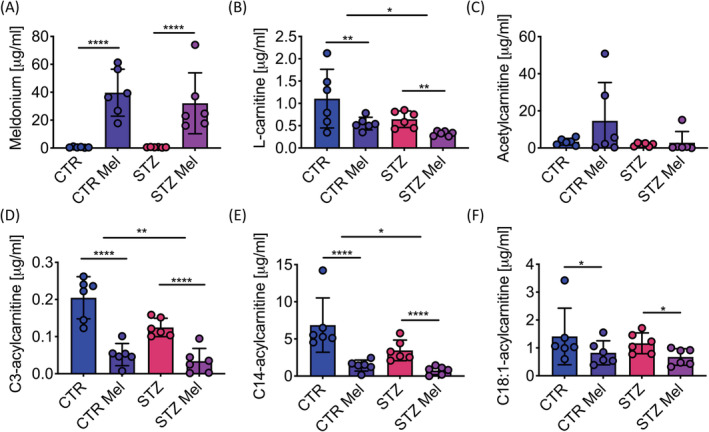
The diabetic heart has a decreased ability to metabolize glucose. The anti-ischemic drug meldonium may provide a route to counteract this by reducing l-carnitine levels, resulting in improved cardiac glucose utilization. Therefore, the aim of this study was to use the novel technique of hyperpolarized magnetic resonance to investigate the in vivo effects of treatment with meldonium on cardiac metabolism and function in control and diabetic rats. Thirty-six male Wistar rats were injected either with vehicle, or with streptozotocin (55 mg/kg) to induce a model of type 1 diabetes. Daily treatment with either saline or meldonium (100 mg/kg/day) was undertaken for three weeks. in vivo cardiac function and metabolism were assessed with CINE MRI and hyperpolarized magnetic resonance respectively. Isolated perfused hearts were challenged with low-flow ischemia/reperfusion to assess the impact of meldonium on post-ischemic recovery. Meldonium had no significant effect on blood glucose concentrations or on baseline cardiac function. However, hyperpolarized magnetic resonance revealed that meldonium treatment elevated pyruvate dehydrogenase flux by 3.1-fold and 1.2-fold in diabetic and control animals, respectively, suggesting an increase in cardiac glucose oxidation. Hyperpolarized magnetic resonance further demonstrated that meldonium reduced the normalized acetylcarnitine signal by 2.1-fold in both diabetic and control animals. The increase in pyruvate dehydrogenase flux in vivo was accompanied by an improvement in post-ischemic function ex vivo, as meldonium elevated the rate pressure product by 1.3-fold and 1.5-fold in the control and diabetic animals, respectively. In conclusion, meldonium improves in vivo pyruvate dehydrogenase flux in the diabetic heart, contributing to improved cardiac recovery after ischemia.
糖尿病心脏的葡萄糖代谢能力下降。抗缺血药物米氮平通过降低肉毒碱水平,可能提供一种改善心脏葡萄糖利用的途径。因此,本研究旨在使用新型极化磁共振技术,研究米氮平对正常和糖尿病大鼠心脏代谢和功能的体内影响。36 只雄性 Wistar 大鼠分别注射载体或链脲佐菌素(55mg/kg)诱导 1 型糖尿病模型。每日给予生理盐水或米氮平(100mg/kg/天)治疗 3 周。使用 CINE MRI 和极化磁共振分别评估体内心脏功能和代谢。用低流量缺血/再灌注对分离的灌注心脏进行挑战,以评估米氮平对缺血后恢复的影响。米氮平对血糖浓度或基线心脏功能没有显著影响。然而,极化磁共振显示,米氮平分别使糖尿病和正常动物的丙酮酸脱氢酶通量增加了 3.1 倍和 1.2 倍,提示心脏葡萄糖氧化增加。极化磁共振进一步表明,米氮平使糖尿病和正常动物的归一化乙酰肉碱信号分别降低了 2.1 倍。体内丙酮酸脱氢酶通量的增加伴随着缺血后功能的改善,米氮平使正常和糖尿病动物的压力-速率乘积分别增加了 1.3 倍和 1.5 倍。总之,米氮平改善了糖尿病心脏的体内丙酮酸脱氢酶通量,有助于改善缺血后的心脏恢复。