CIMR, University of Cambridge, Cambridge, United Kingdom.
Department of Biochemistry, Duke University, Durham, North Carolina.
Biophys J. 2021 Mar 16;120(6):1085-1096. doi: 10.1016/j.bpj.2020.12.029. Epub 2021 Jan 16.
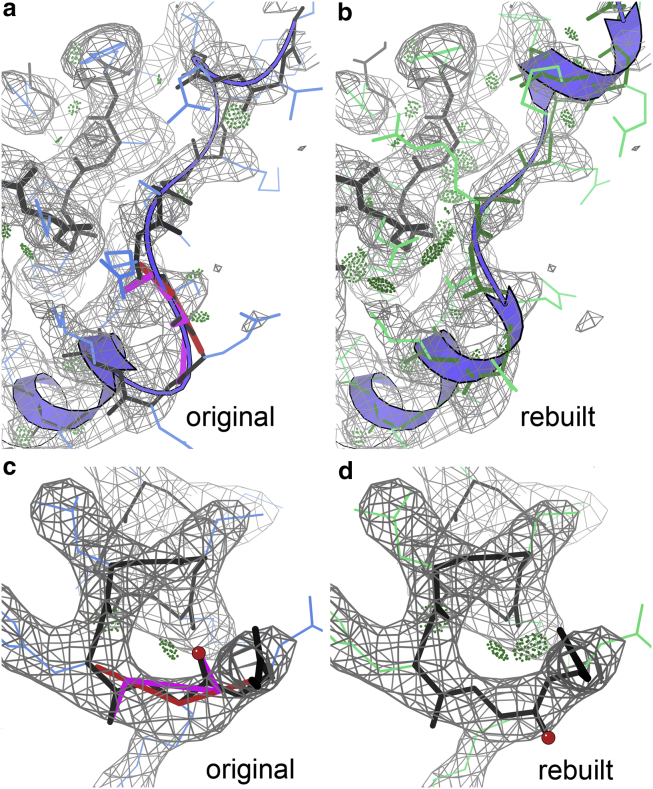
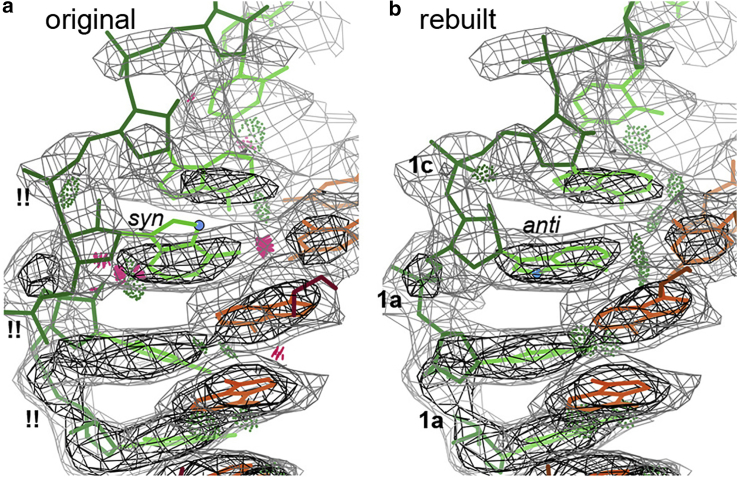
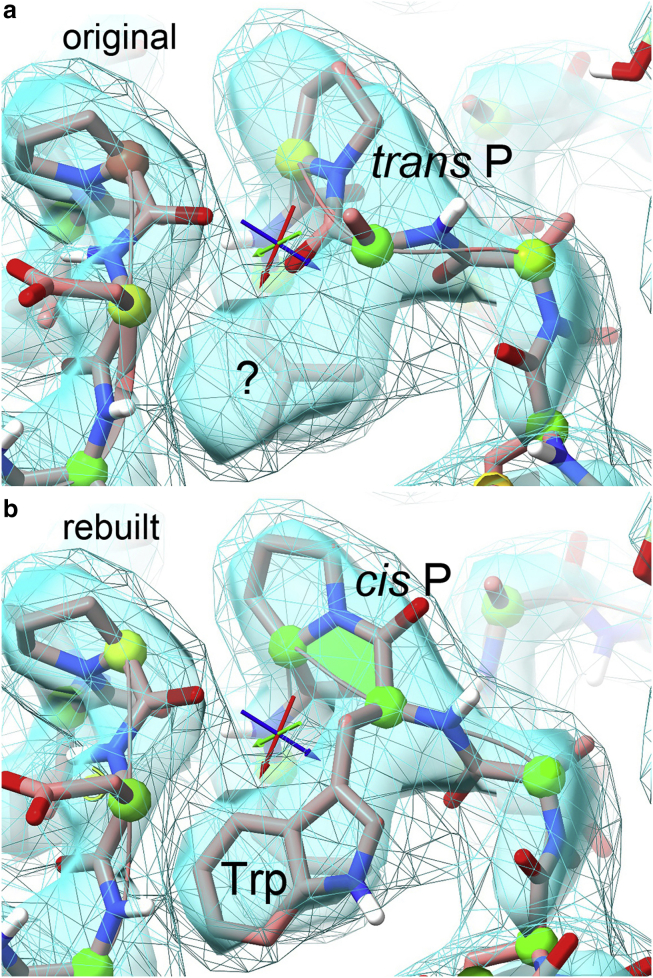
This work builds upon the record-breaking speed and generous immediate release of new experimental three-dimensional structures of the severe acute respiratory syndrome coronavirus 2 (SARS-CoV-2) proteins and complexes, which are crucial to downstream vaccine and drug development. We have surveyed those structures to catch the occasional errors that could be significant for those important uses and for which we were able to provide demonstrably higher-accuracy corrections. This process relied on new validation and correction methods such as CaBLAM and ISOLDE, which are not yet in routine use. We found such important and correctable problems in seven early SARS-CoV-2 structures. Two of the structures were soon superseded by new higher-resolution data, confirming our proposed changes. For the other five, we emailed the depositors a documented and illustrated report and encouraged them to make the model corrections themselves and use the new option at the worldwide Protein Data Bank for depositors to re-version their coordinates without changing the Protein Data Bank code. This quickly and easily makes the better-accuracy coordinates available to anyone who examines or downloads their structure, even before formal publication. The changes have involved sequence misalignments, incorrect RNA conformations near a bound inhibitor, incorrect metal ligands, and cis-trans or peptide flips that prevent good contact at interaction sites. These improvements have propagated into nearly all related structures done afterward. This process constitutes a new form of highly rigorous peer review, which is actually faster and more strict than standard publication review because it has access to coordinates and maps; journal peer review would also be strengthened by such access.
这项工作建立在破纪录的速度和对新型严重急性呼吸综合征冠状病毒 2(SARS-CoV-2)蛋白和复合物的实验性三维结构的慷慨即时释放之上,这些结构对于下游疫苗和药物开发至关重要。我们已经对这些结构进行了调查,以发现可能对这些重要用途有重大影响的偶尔错误,并为这些错误提供了明显更准确的修正。这一过程依赖于新的验证和修正方法,如 CaBLAM 和 ISOLDE,这些方法尚未常规使用。我们在七个早期 SARS-CoV-2 结构中发现了这样的重要且可修正的问题。其中两个结构很快被新的高分辨率数据所取代,证实了我们提出的修正。对于其他五个结构,我们向提交者发送了一份有文件和插图的报告,并鼓励他们自行进行模型修正,并使用全球蛋白质数据库为提交者提供的新选项,在不更改蛋白质数据库代码的情况下重新提交坐标。这使得更好的准确性坐标可以快速且轻松地提供给任何检查或下载其结构的人,甚至在正式发表之前。这些修正涉及序列不对齐、结合抑制剂附近的不正确 RNA 构象、不正确的金属配体以及阻止相互作用位点良好接触的顺式-反式或肽翻转。这些改进已经传播到之后几乎所有相关的结构中。这个过程构成了一种新的高度严格的同行评审形式,它实际上比标准出版评审更快、更严格,因为它可以访问坐标和图谱;这种访问也将加强期刊同行评审。