Department of Neurosurgery, Renmin Hospital of Wuhan University, Wuhan, 430060, Hubei Province, People's Republic of China.
Central Laboratory, Renmin Hospital of Wuhan University, Wuhan, 430060, Hubei Province, People's Republic of China.
J Neuroinflammation. 2021 Jan 18;18(1):25. doi: 10.1186/s12974-020-02057-z.
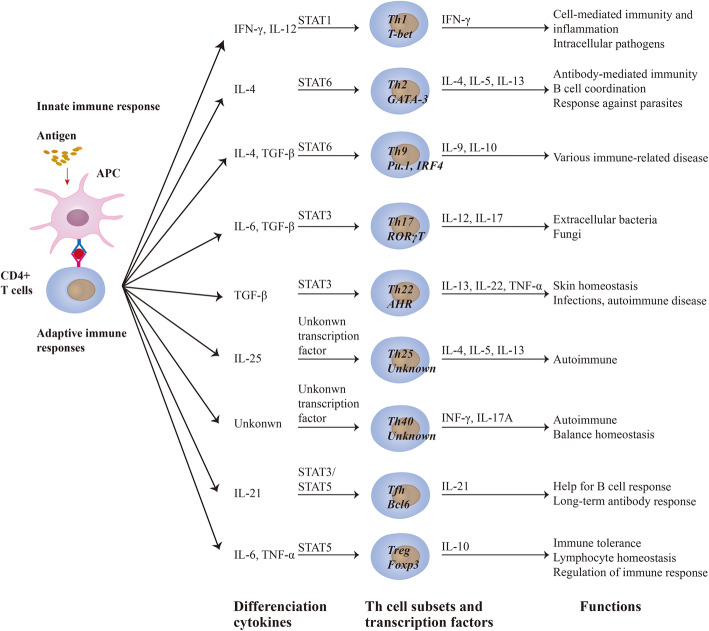
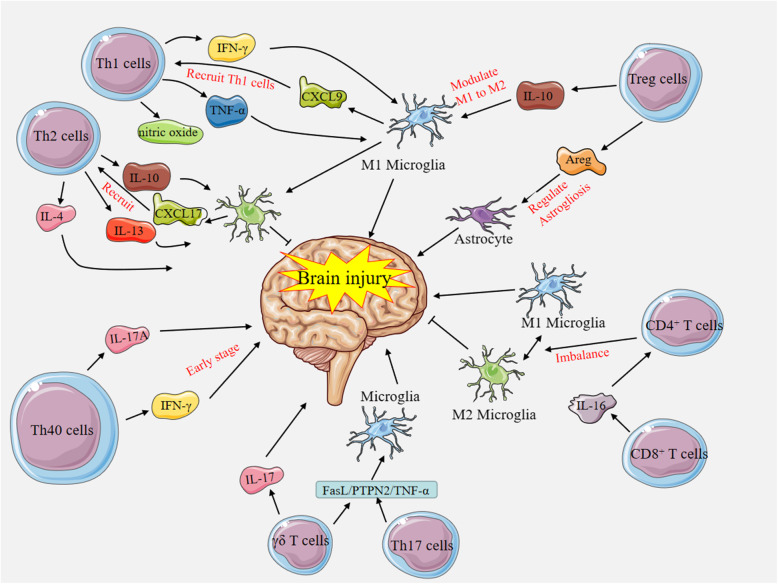
Through considerable effort in research and clinical studies, the immune system has been identified as a participant in the onset and progression of brain injury after ischaemic stroke. Due to the involvement of all types of immune cells, the roles of the immune system in stroke pathology and associated effects are complicated. Past research concentrated on the functions of monocytes and neutrophils in the pathogenesis of ischaemic stroke and tried to demonstrate the mechanisms of tissue injury and protection involving these immune cells. Within the past several years, an increasing number of studies have elucidated the vital functions of T cells in the innate and adaptive immune responses in both the acute and chronic phases of ischaemic stroke. Recently, the phenotypes of T cells with proinflammatory or anti-inflammatory function have been demonstrated in detail. T cells with distinctive phenotypes can also influence cerebral inflammation through various pathways, such as regulating the immune response, interacting with brain-resident immune cells and modulating neurogenesis and angiogenesis during different phases following stroke. In view of the limited treatment options available following stroke other than tissue plasminogen activator therapy, understanding the function of immune responses, especially T cell responses, in the post-stroke recovery period can provide a new therapeutic direction. Here, we discuss the different functions and temporal evolution of T cells with different phenotypes during the acute and chronic phases of ischaemic stroke. We suggest that modulating the balance between the proinflammatory and anti-inflammatory functions of T cells with distinct phenotypes may become a potential therapeutic approach that reduces the mortality and improves the functional outcomes and prognosis of patients suffering from ischaemic stroke.
通过大量的研究和临床研究,免疫系统已被确定为缺血性中风后脑损伤发生和进展的参与者。由于涉及所有类型的免疫细胞,免疫系统在中风病理学和相关影响中的作用较为复杂。过去的研究集中在单核细胞和中性粒细胞在缺血性中风发病机制中的作用,并试图阐明涉及这些免疫细胞的组织损伤和保护机制。在过去几年中,越来越多的研究阐明了 T 细胞在缺血性中风的先天和适应性免疫反应中的重要功能。最近,详细展示了具有促炎或抗炎功能的 T 细胞表型。具有独特表型的 T 细胞还可以通过各种途径影响大脑炎症,例如调节免疫反应、与脑内免疫细胞相互作用以及在中风后不同阶段调节神经发生和血管生成。鉴于中风后除组织纤溶酶原激活剂治疗外的治疗选择有限,了解免疫反应,尤其是 T 细胞反应,在中风后恢复期间的功能可为新的治疗方向提供依据。在这里,我们讨论了在缺血性中风的急性期和慢性期具有不同表型的 T 细胞的不同功能和时间演变。我们认为,调节具有不同表型的 T 细胞的促炎和抗炎功能之间的平衡可能成为一种潜在的治疗方法,降低死亡率,并改善缺血性中风患者的功能结局和预后。