Department of Nanobiomedical Science, Dankook University, Cheonan, 31116, Republic of Korea.
Microbiome Division, Theragen Bio Co., Ltd, Seongnam-si, Gyeonggi-do, 13488, Republic of Korea.
Sci Rep. 2021 Jan 18;11(1):1727. doi: 10.1038/s41598-020-80826-9.
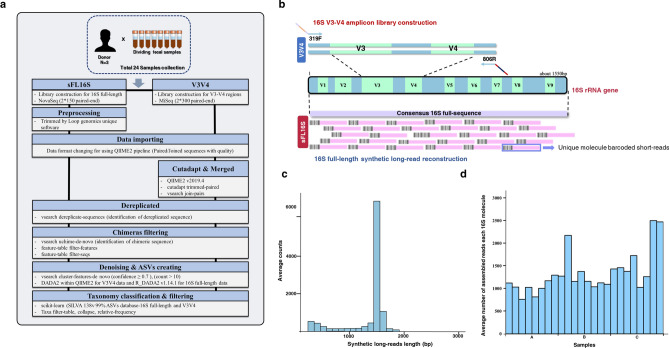
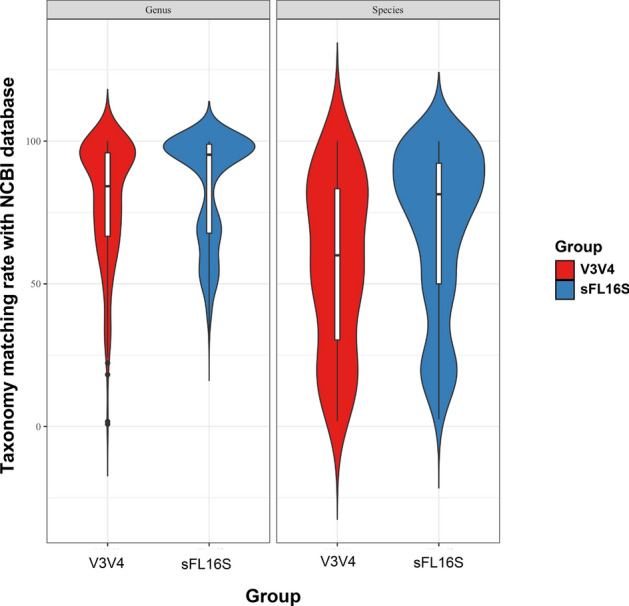
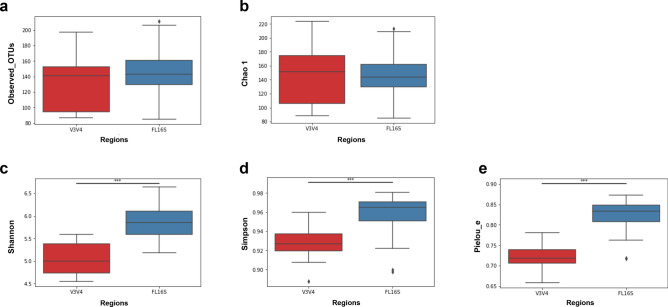
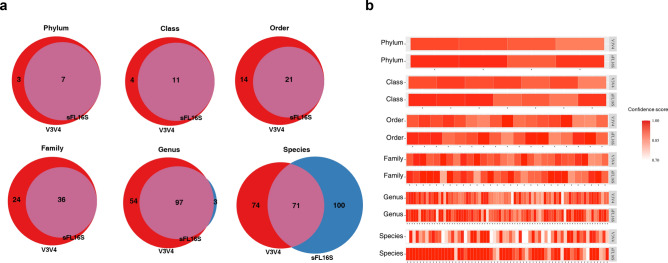
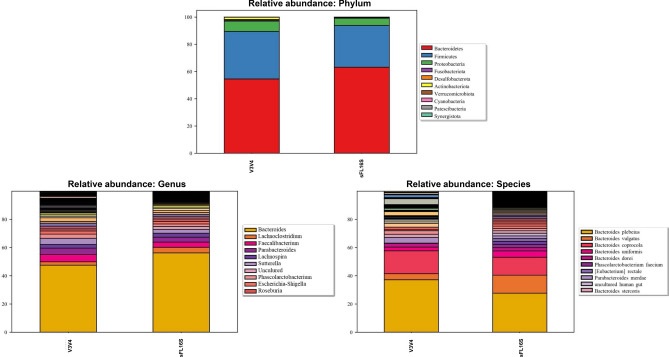
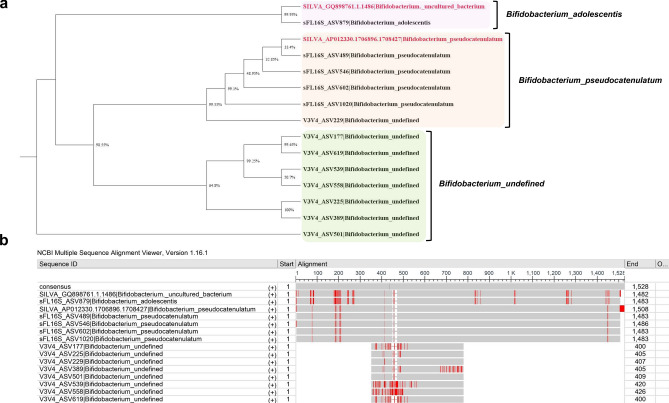
Characterizing the microbial communities inhabiting specimens is one of the primary objectives of microbiome studies. A short-read sequencing platform for reading partial regions of the 16S rRNA gene is most commonly used by reducing the cost burden of next-generation sequencing (NGS), but misclassification at the species level due to its length being too short to consider sequence similarity remains a challenge. Loop Genomics recently proposed a new 16S full-length-based synthetic long-read sequencing technology (sFL16S). We compared a 16S full-length-based synthetic long-read (sFL16S) and V3-V4 short-read (V3V4) methods using 24 human GUT microbiota samples. Our comparison analyses of sFL16S and V3V4 sequencing data showed that they were highly similar at all classification resolutions except the species level. At the species level, we confirmed that sFL16S showed better resolutions than V3V4 in analyses of alpha-diversity, relative abundance frequency and identification accuracy. Furthermore, we demonstrated that sFL16S could overcome the microbial misidentification caused by different sequence similarity in each 16S variable region through comparison the identification accuracy of Bifidobacterium, Bacteroides, and Alistipes strains classified from both methods. Therefore, this study suggests that the new sFL16S method is a suitable tool to overcome the weakness of the V3V4 method.
对栖息样本中的微生物群落进行特征描述是微生物组研究的主要目标之一。短读测序平台通过降低下一代测序 (NGS) 的成本负担,通常用于读取 16S rRNA 基因的部分区域,但由于其长度太短而无法考虑序列相似性,因此在物种水平上仍存在分类错误的问题。Loop Genomics 最近提出了一种新的基于 16S 全长的合成长读测序技术 (sFL16S)。我们使用 24 个人类肠道微生物群样本比较了基于 16S 全长的合成长读 (sFL16S) 和 V3-V4 短读 (V3V4) 方法。我们对 sFL16S 和 V3V4 测序数据的比较分析表明,除了物种水平外,它们在所有分类分辨率上都非常相似。在物种水平上,我们证实 sFL16S 在分析 alpha 多样性、相对丰度频率和鉴定准确性方面显示出比 V3V4 更好的分辨率。此外,我们通过比较两种方法分类的双歧杆菌、拟杆菌和alistipes 菌株的鉴定准确性,证明 sFL16S 可以克服每个 16S 可变区不同序列相似性引起的微生物误识别。因此,本研究表明,新的 sFL16S 方法是克服 V3V4 方法弱点的一种合适工具。