
来自维管束植物的呼吸复合物 III、复合物 IV 和超复合物 III-IV 的原子结构。
Atomic structures of respiratory complex III, complex IV, and supercomplex III-IV from vascular plants.
机构信息
Department of Molecular and Cellular Biology, University of California Davis, Davis, United States.
BIOEM Facility, University of California Davis, Davis, United States.
出版信息
Elife. 2021 Jan 19;10:e62047. doi: 10.7554/eLife.62047.
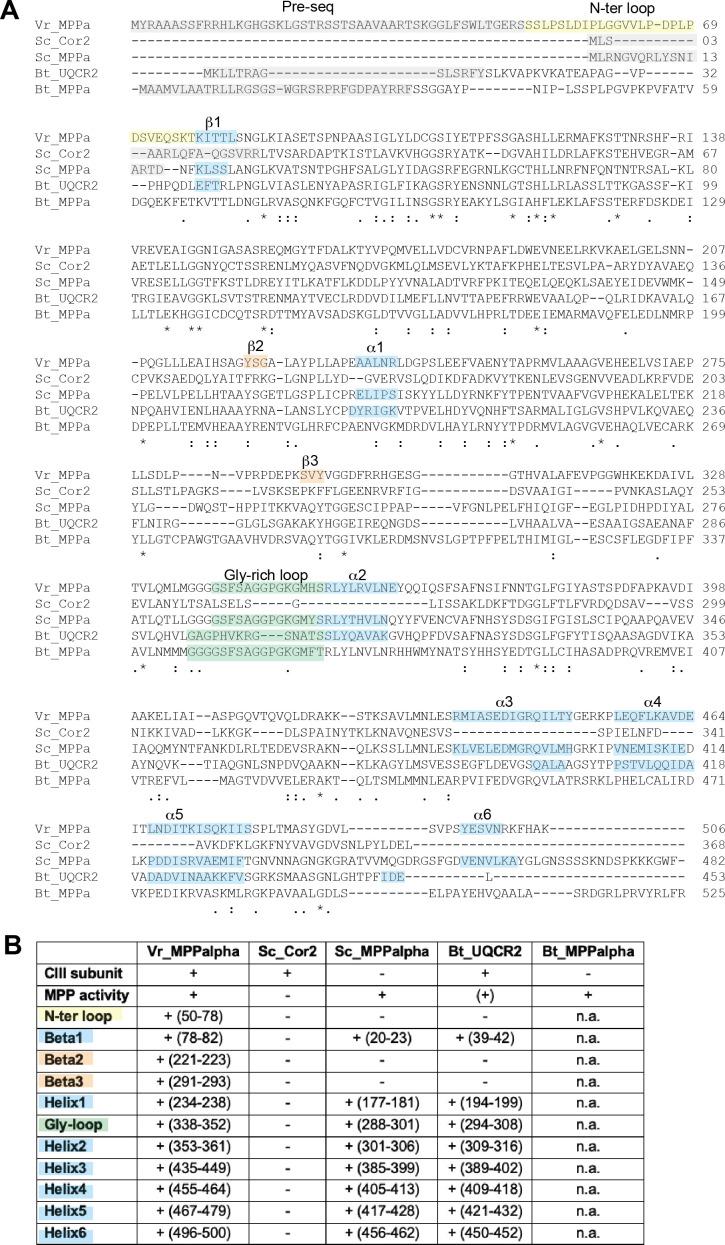
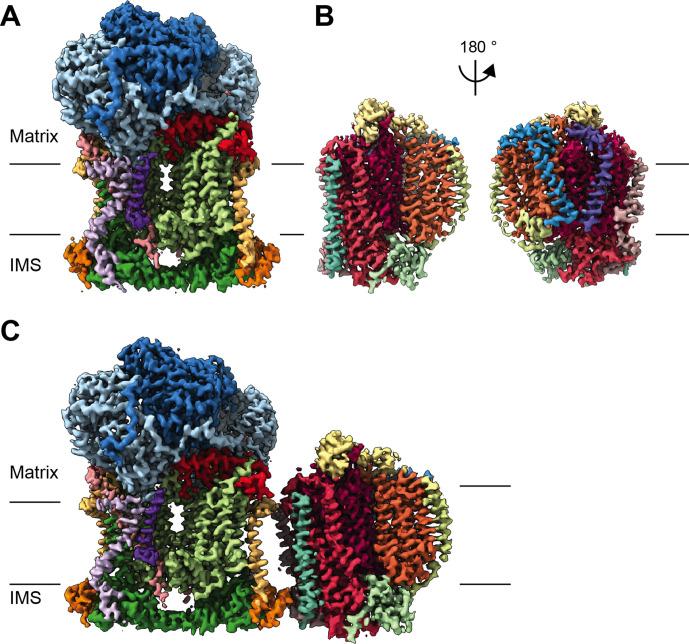
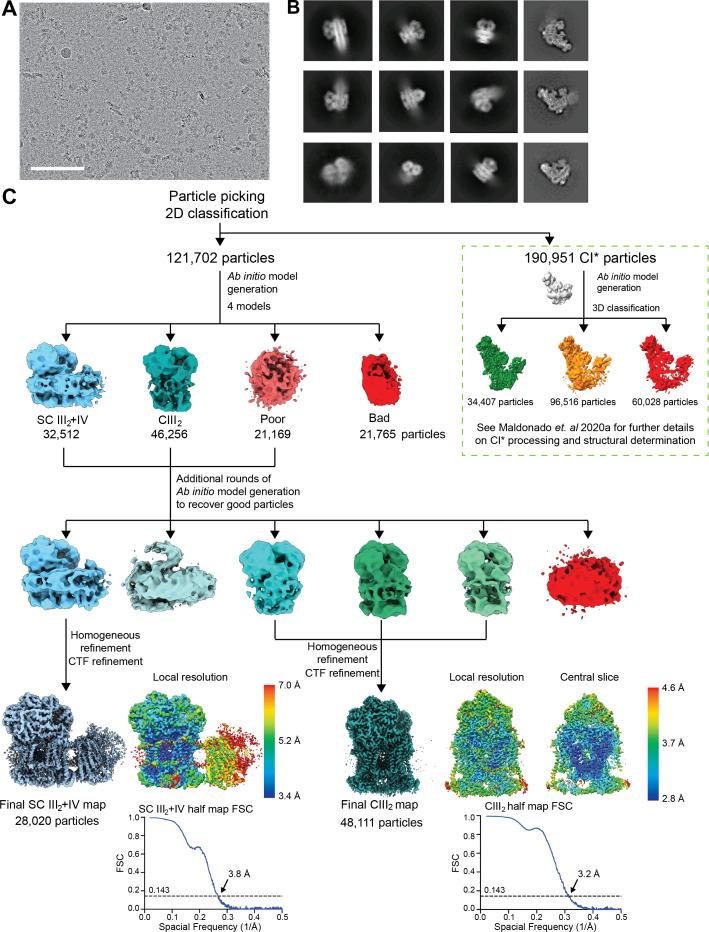
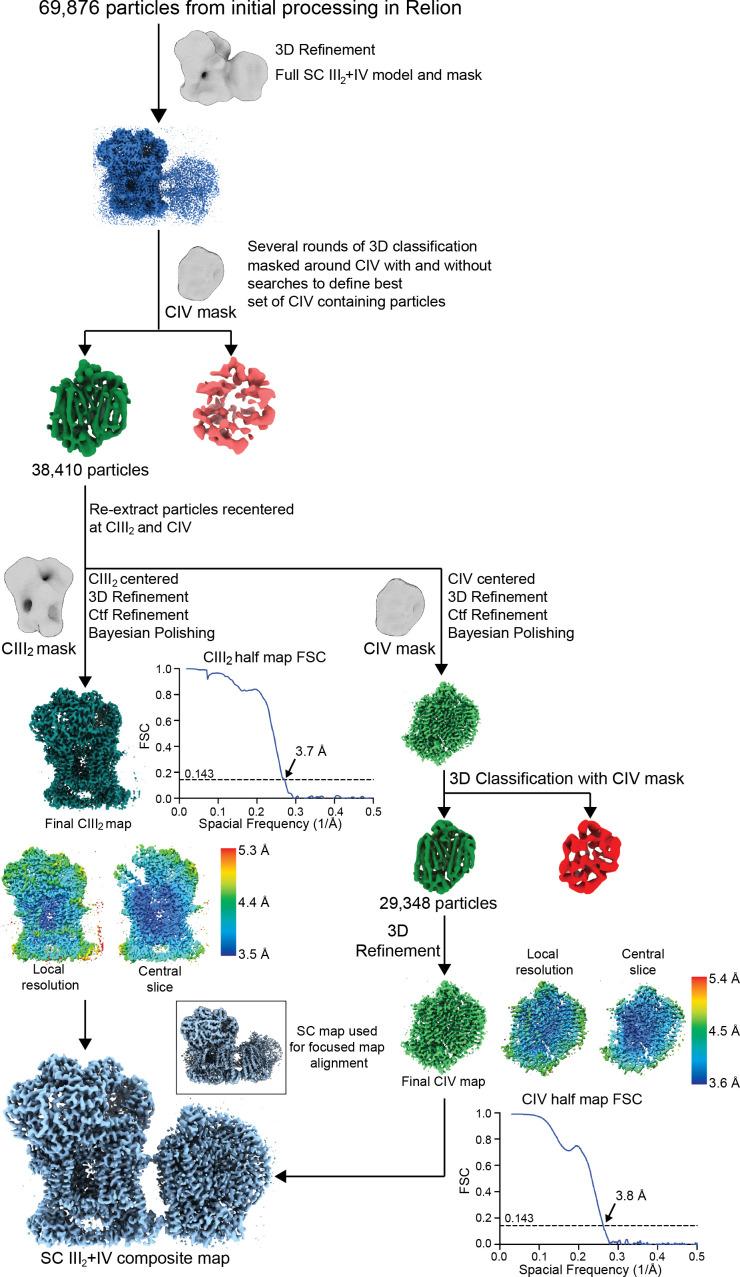
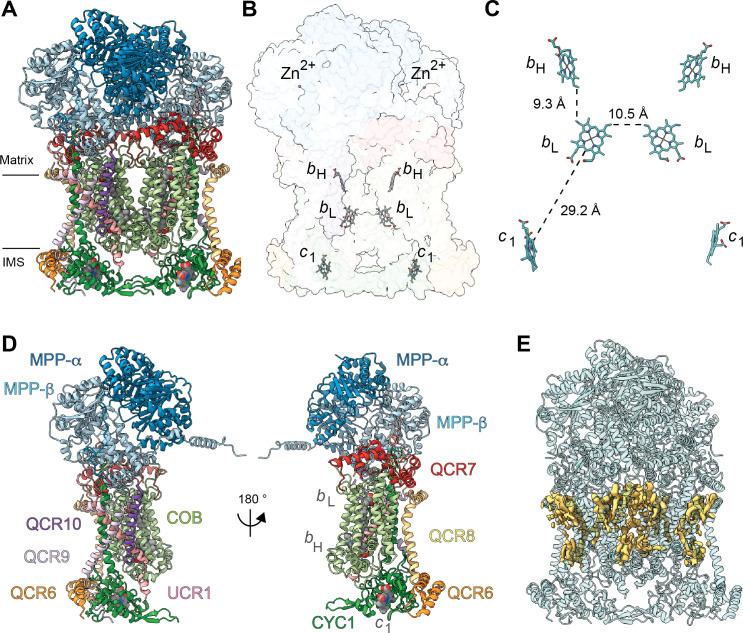
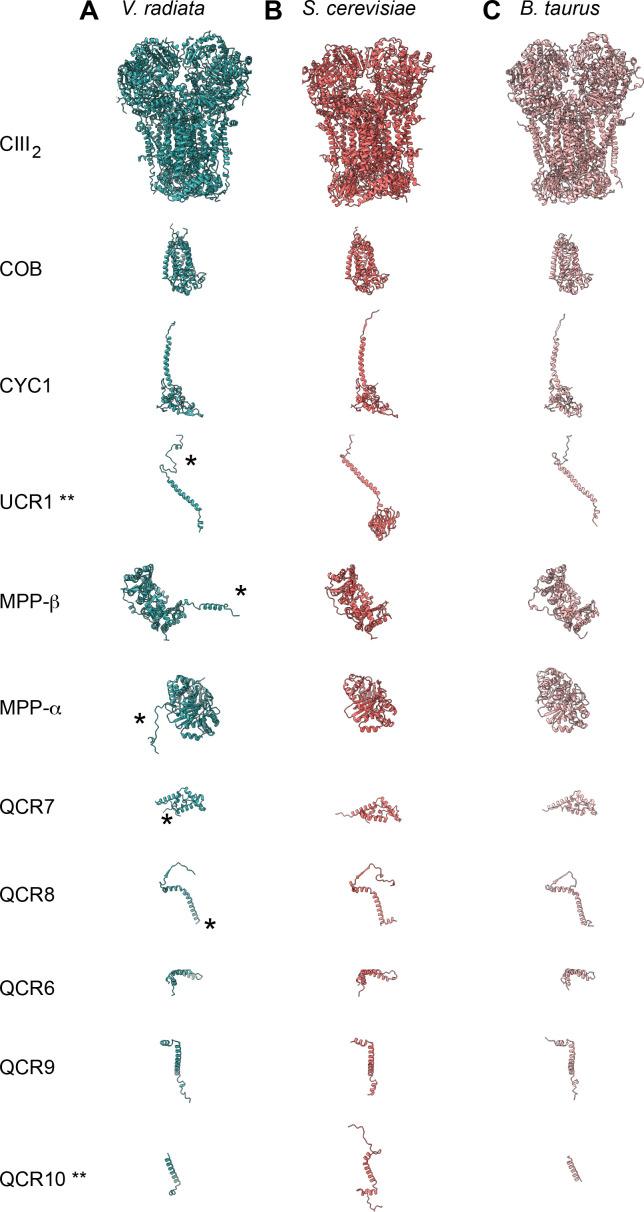
Mitochondrial complex III (CIII) and complex IV (CIV), which can associate into a higher-order supercomplex (SC III+IV), play key roles in respiration. However, structures of these plant complexes remain unknown. We present atomic models of CIII, CIV, and SC III+IV from determined by single-particle cryoEM. The structures reveal plant-specific differences in the MPP domain of CIII and define the subunit composition of CIV. Conformational heterogeneity analysis of CIII revealed long-range, coordinated movements across the complex, as well as the motion of CIII's iron-sulfur head domain. The CIV structure suggests that, in plants, proton translocation does not occur via the H channel. The supercomplex interface differs significantly from that in yeast and bacteria in its interacting subunits, angle of approach and limited interactions in the mitochondrial matrix. These structures challenge long-standing assumptions about the plant complexes and generate new mechanistic hypotheses.
线粒体复合物 III(CIII)和复合物 IV(CIV)可以形成更高阶的超复合物(SC III+IV),在呼吸作用中发挥关键作用。然而,这些植物复合物的结构仍然未知。我们通过单颗粒冷冻电镜技术确定了来自的 CIII、CIV 和 SC III+IV 的原子模型。这些结构揭示了 CIII 的 MPP 结构域中的植物特异性差异,并定义了 CIV 的亚基组成。CIII 的构象异质性分析揭示了整个复合物的长程、协调运动,以及 CIII 的铁硫头部结构域的运动。CIV 的结构表明,在植物中,质子转运不是通过 H 通道发生的。超复合物界面与酵母和细菌的界面在相互作用的亚基、接近角度和线粒体基质中的有限相互作用方面存在显著差异。这些结构对植物复合物的长期假设提出了挑战,并产生了新的机械假设。
 Zotero 插件