Department of Pathology, Case Western Reserve University, 10900 Euclid Ave. Cleveland, OH 44106, USA.
Department of Biomedical Engineering, Case Western Reserve University, 10900 Euclid Ave. Cleveland, OH 44106, USA.
Acta Biomater. 2021 Apr 1;124:315-326. doi: 10.1016/j.actbio.2021.01.013. Epub 2021 Jan 16.
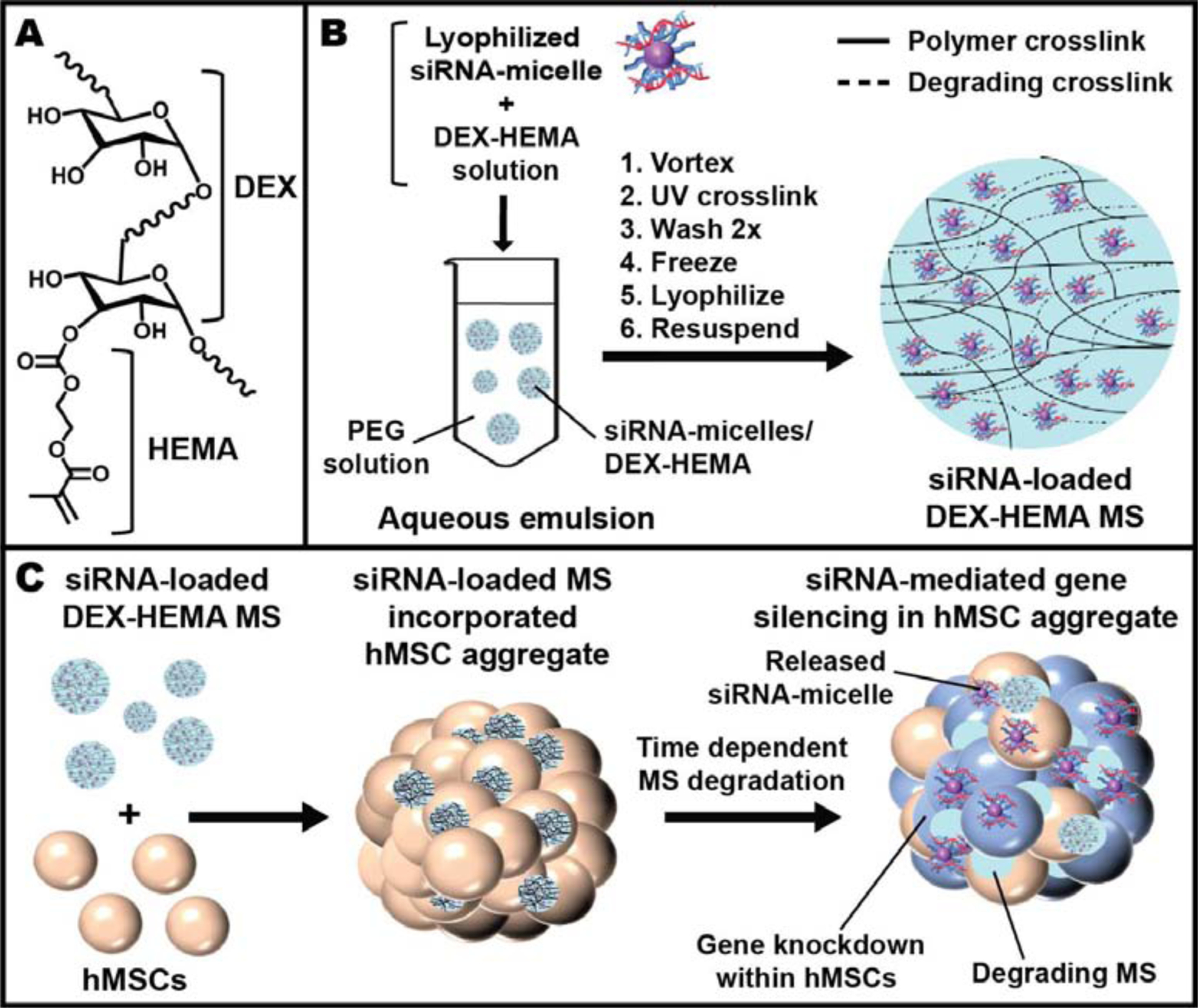
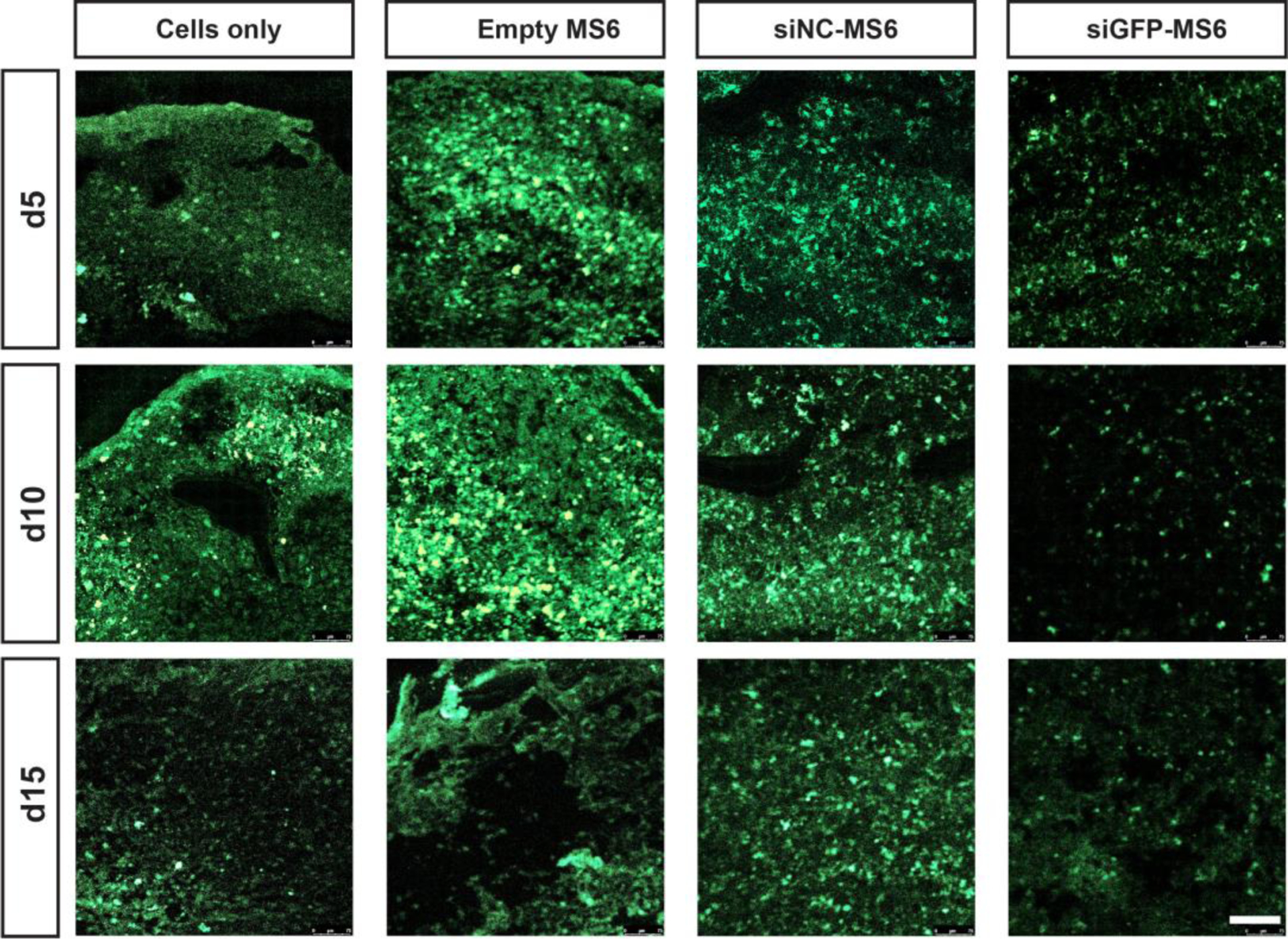
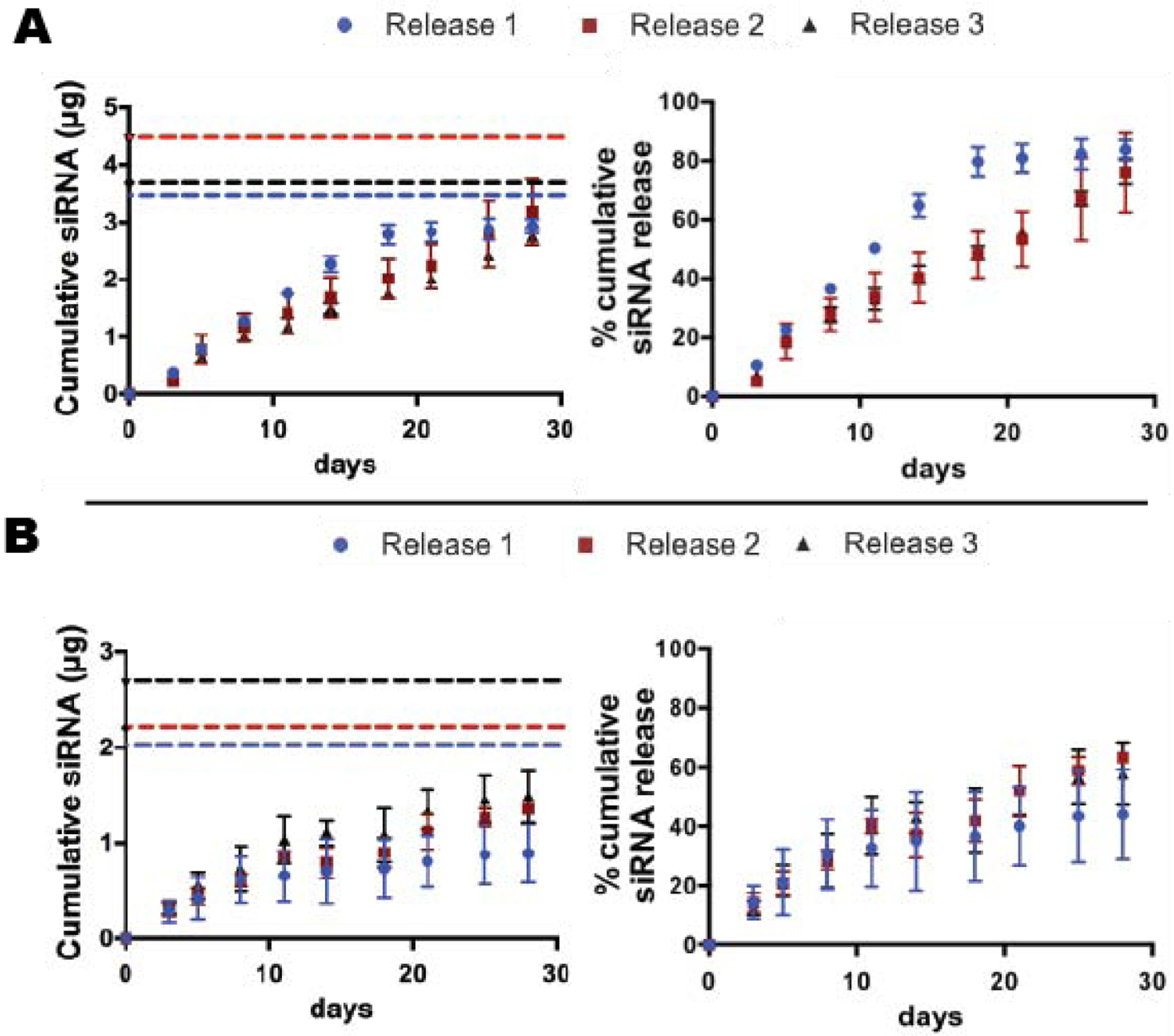
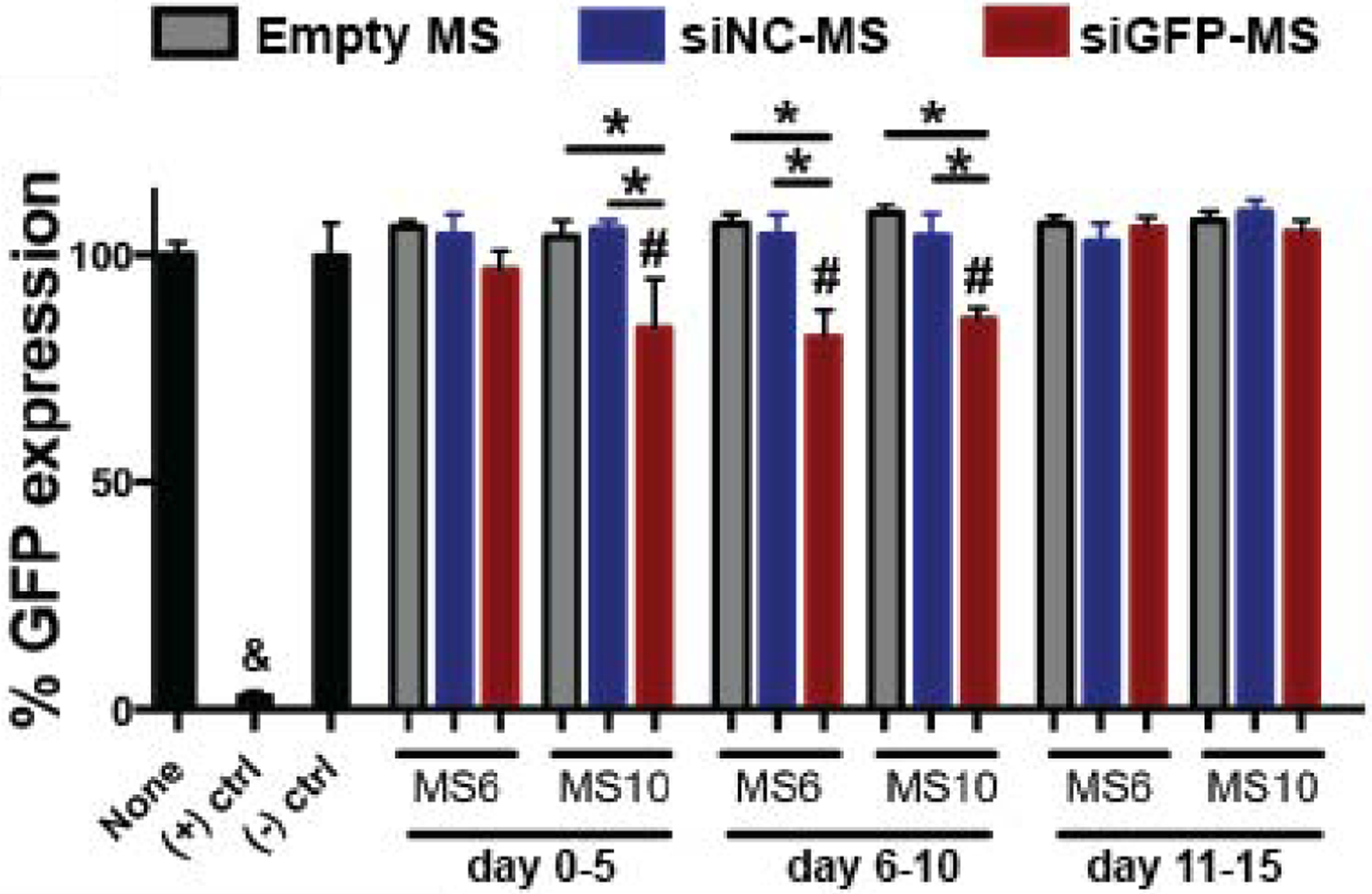
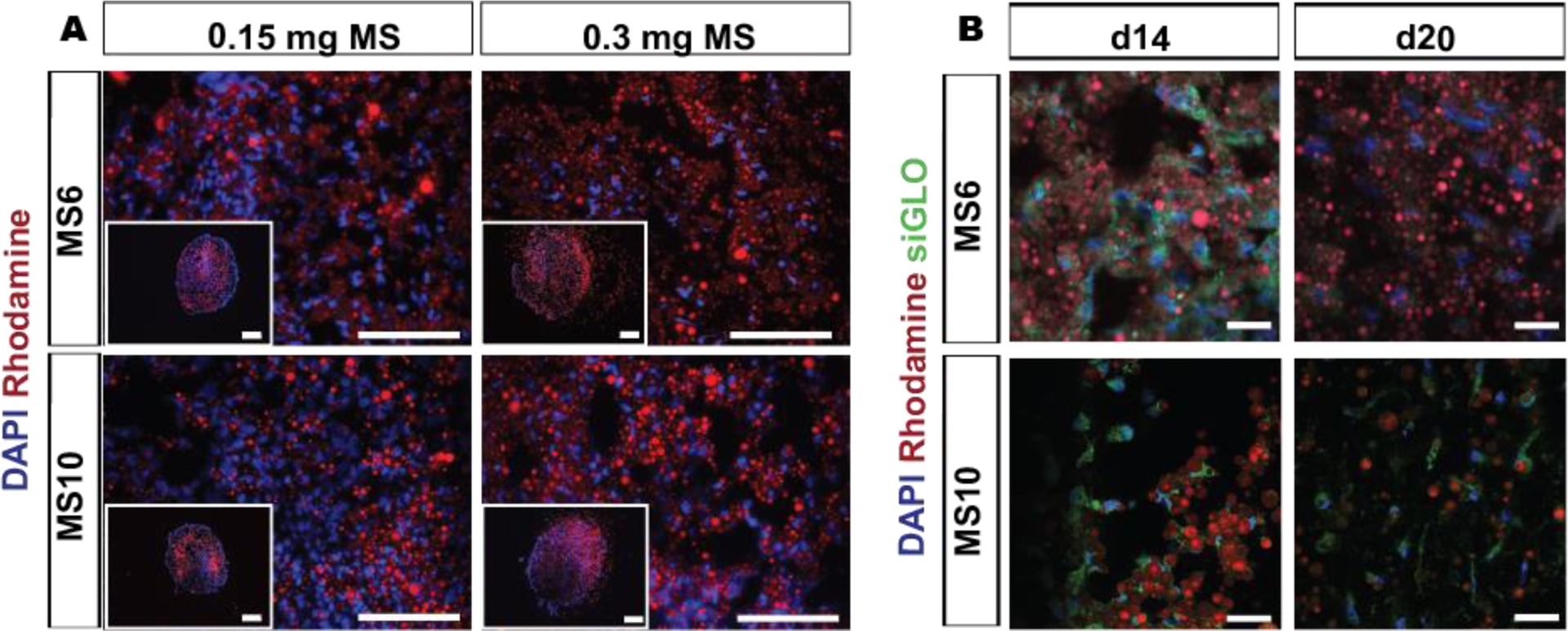
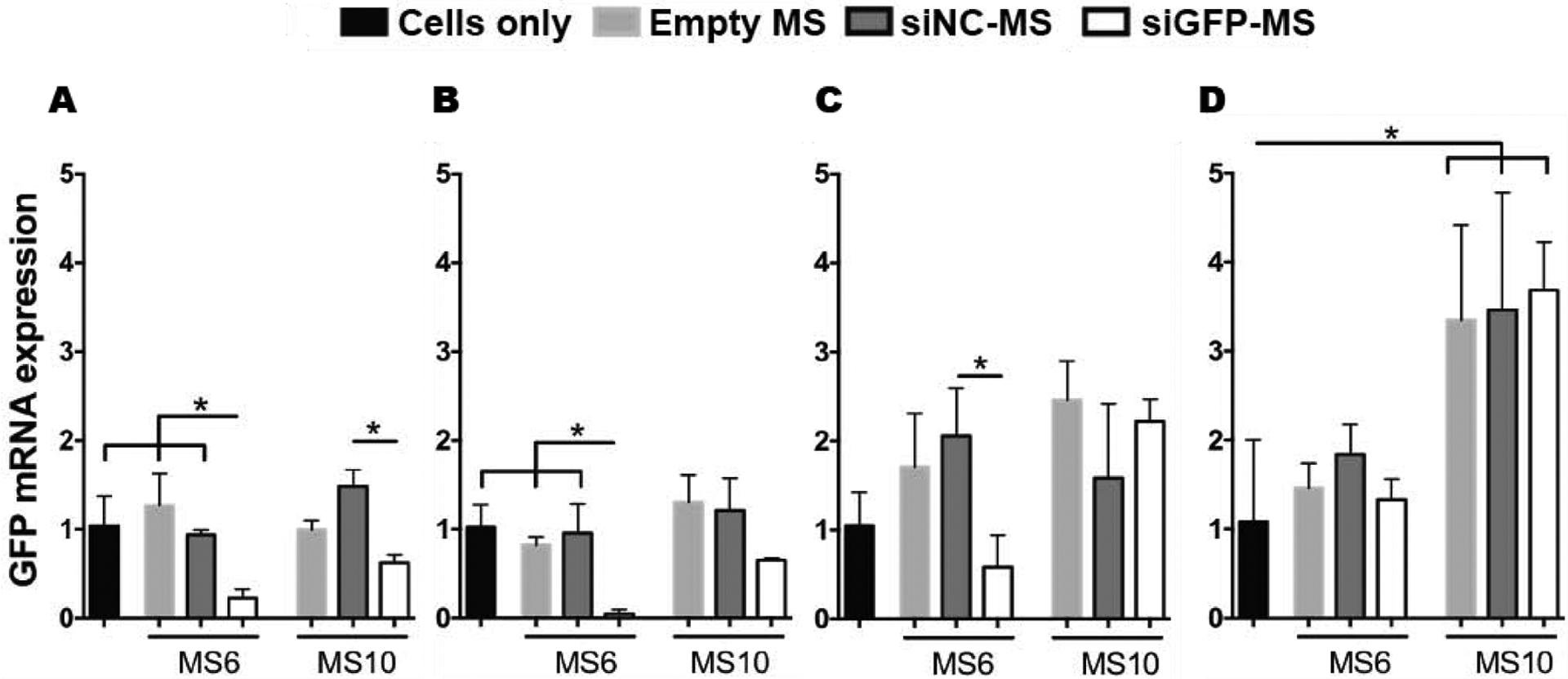
Delivery systems for controlled release of RNA interference (RNAi) molecules, including small interfering (siRNA) and microRNA (miRNA), have the potential to direct stem cell differentiation for regenerative musculoskeletal applications. To date, localized RNA delivery platforms in this area have focused predominantly on bulk scaffold-based approaches, which can interfere with cell-cell interactions important for recapitulating some native musculoskeletal developmental and healing processes in tissue regeneration strategies. In contrast, scaffold-free, high density human mesenchymal stem cell (hMSC) aggregates may provide an avenue for creating a more biomimetic microenvironment. Here, photocrosslinkable dextran microspheres (MS) encapsulating siRNA-micelles were prepared via an aqueous emulsion method and incorporated within hMSC aggregates for localized and sustained delivery of bioactive siRNA. siRNA-micelles released from MS in a sustained fashion over the course of 28 days, and the released siRNA retained its ability to transfect cells for gene silencing. Incorporation of fluorescently labeled siRNA (siGLO)-laden MS within hMSC aggregates exhibited tunable siGLO delivery and uptake by stem cells. Incorporation of MS loaded with siRNA targeting green fluorescent protein (siGFP) within GFP-hMSC aggregates provided sustained presentation of siGFP within the constructs and prolonged GFP silencing for up to 15 days. This platform system enables sustained gene silencing within stem cell aggregates and thus shows great potential in tissue regeneration applications. STATEMENT OF SIGNIFICANCE: This work presents a new strategy to deliver RNA-nanocomplexes from photocrosslinked dextran microspheres for tunable presentation of bioactive RNA. These microspheres were embedded within scaffold-free, human mesenchymal stem cell (hMSC) aggregates for sustained gene silencing within three-dimensional cell constructs while maintaining cell viability. Unlike exogenous delivery of RNA within culture medium that suffers from diffusion limitations and potential need for repeated transfections, this strategy provides local and sustained RNA presentation from the microspheres to cells in the constructs. This system has the potential to inhibit translation of hMSC differentiation antagonists and drive hMSC differentiation toward desired specific lineages, and is an important step in the engineering of high-density stem cell systems with incorporated instructive genetic cues for application in tissue regeneration.
用于 RNA 干扰 (RNAi) 分子的控释的递药系统,包括小干扰 (siRNA) 和微 RNA (miRNA),有可能指导干细胞分化用于再生肌肉骨骼应用。迄今为止,该领域的局部 RNA 递药平台主要集中在基于大块支架的方法上,这些方法可能会干扰对组织再生策略中一些天然肌肉骨骼发育和修复过程的细胞间相互作用。相比之下,无支架、高密度人间充质干细胞 (hMSC) 聚集体可能为创造更仿生的微环境提供了途径。在这里,通过水乳液法制备了包封 siRNA-胶束的光交联葡聚糖微球 (MS),并将其掺入 hMSC 聚集体中,用于生物活性 siRNA 的局部和持续递药。siRNA-胶束在 28 天的过程中以持续的方式从 MS 中释放,并且释放的 siRNA 保持其转染细胞进行基因沉默的能力。将荧光标记的 siRNA (siGLO)-负载的 MS 掺入 hMSC 聚集体中,表现出由干细胞可调的 siGLO 递药和摄取。将负载有针对绿色荧光蛋白 (siGFP) 的 siRNA 的 MS 掺入 GFP-hMSC 聚集体中,在构建体中持续呈现 siGFP,并将 GFP 沉默延长至长达 15 天。该平台系统允许在干细胞聚集体中持续基因沉默,因此在组织再生应用中具有巨大潜力。意义声明:这项工作提出了一种新策略,用于从光交联葡聚糖微球中递送 RNA-纳米复合物,以实现生物活性 RNA 的可调呈现。这些微球被嵌入无支架、人骨髓间充质干细胞 (hMSC) 聚集体中,用于在三维细胞构建体中持续基因沉默,同时保持细胞活力。与在培养基中进行外源性 RNA 转染不同,这种策略从微球向构建体中的细胞提供局部和持续的 RNA 呈现,而不存在扩散限制和潜在需要重复转染的问题。该系统有可能抑制 hMSC 分化拮抗剂的翻译并促使 hMSC 向所需的特定谱系分化,并且是在具有掺入指导遗传线索的高密度干细胞系统的工程中向前迈出的重要一步,用于组织再生。