Coffman Colt A, Kay Jacob J M, Saba Kat M, Harrison Adam T, Holloway Jeffrey P, LaFountaine Michael F, Moore Robert Davis
Concussion Health and Neuroscience Lab, Arnold School of Public Health, University of South Carolina, Columbia, SC 29208, USA.
Department of Pediatrics, School of Medicine, University of South Carolina, Columbia, SC 29209, USA.
J Clin Med. 2021 Jan 5;10(1):161. doi: 10.3390/jcm10010161.
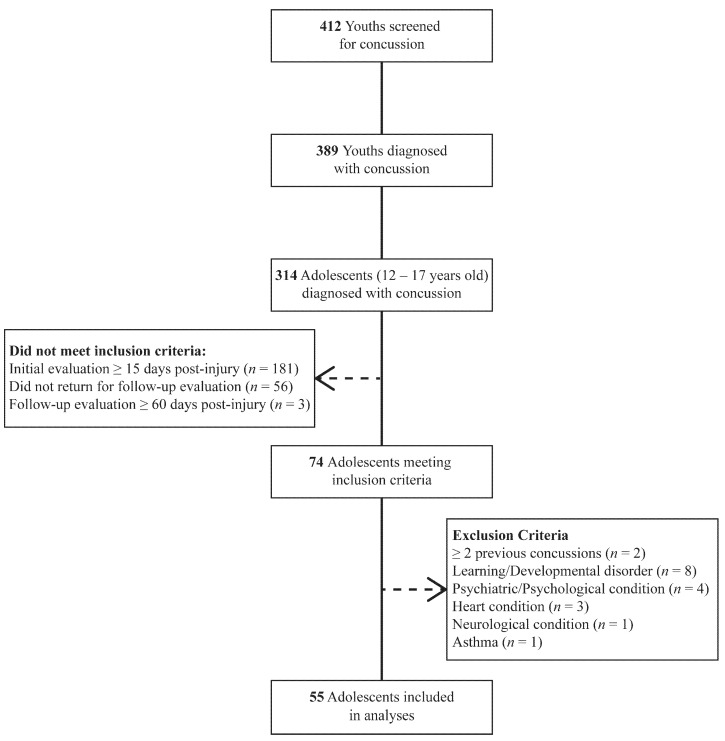
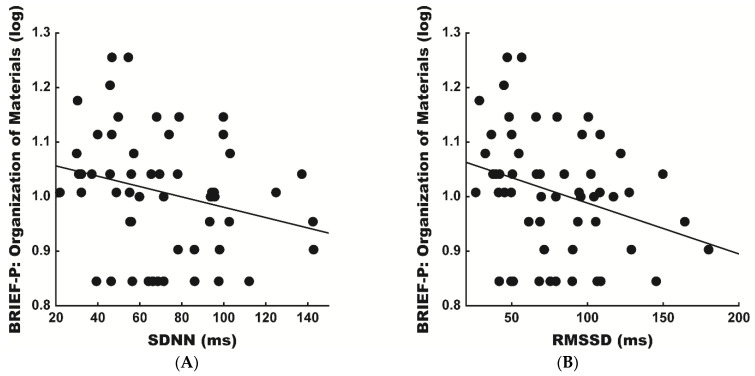
Objective assessments of concussion recovery are crucial for facilitating effective clinical management. However, predictive tools for determining adolescent concussion outcomes are currently limited. Research suggests that heart rate variability (HRV) represents an indirect and objective marker of central and peripheral nervous system integration. Therefore, it may effectively identify underlying deficits and reliably predict the symptomology following concussion. Thus, the present study sought to evaluate the relationship between HRV and adolescent concussion outcomes. Furthermore, we sought to examine its predictive value for assessing outcomes. Fifty-five concussed adolescents (12-17 years old) recruited from a local sports medicine clinic were assessed during the initial subacute evaluation (within 15 days postinjury) and instructed to follow up for a post-acute evaluation. Self-reported clinical and depressive symptoms, neurobehavioral function, and cognitive performance were collected at each timepoint. Short-term HRV metrics via photoplethysmography were obtained under resting conditions and physiological stress. Regression analyses demonstrated significant associations between HRV metrics, clinical symptoms, neurobehavioral function, and cognitive performance at the subacute evaluation. Importantly, the analyses illustrated that subacute HRV metrics significantly predicted diminished post-acute neurobehavioral function and cognitive performance. These findings indicate that subacute HRV metrics may serve as a viable predictive biomarker for identifying underlying neurological dysfunction following concussion and predict late cognitive outcomes.
对脑震荡恢复情况进行客观评估对于促进有效的临床管理至关重要。然而,目前用于确定青少年脑震荡预后的预测工具有限。研究表明,心率变异性(HRV)是中枢和外周神经系统整合的一种间接客观指标。因此,它可能有效地识别潜在缺陷并可靠地预测脑震荡后的症状。因此,本研究旨在评估HRV与青少年脑震荡预后之间的关系。此外,我们试图检验其对评估预后的预测价值。从当地运动医学诊所招募了55名脑震荡青少年(12 - 17岁),在初始亚急性评估期间(受伤后15天内)进行评估,并被要求进行急性后期评估。在每个时间点收集自我报告的临床和抑郁症状、神经行为功能和认知表现。通过光电容积脉搏波描记法在静息状态和生理应激下获得短期HRV指标。回归分析表明,在亚急性评估中,HRV指标、临床症状、神经行为功能和认知表现之间存在显著关联。重要的是,分析表明亚急性HRV指标显著预测了急性后期神经行为功能和认知表现的下降。这些发现表明,亚急性HRV指标可能作为一种可行的预测生物标志物,用于识别脑震荡后潜在的神经功能障碍并预测后期认知结果。