Vilibic-Cavlek Tatjana, Barbic Ljubo, Mrzljak Anna, Brnic Dragan, Klobucar Ana, Ilic Maja, Janev-Holcer Natasa, Bogdanic Maja, Jemersic Lorena, Stevanovic Vladimir, Tabain Irena, Krcmar Stjepan, Vucelja Marko, Prpic Jelena, Boljfetic Marko, Jelicic Pavle, Madic Josip, Ferencak Ivana, Savic Vladimir
Department of Virology, Croatian Institute of Public Health, 10000 Zagreb, Croatia.
School of Medicine, University of Zagreb, 10000 Zagreb, Croatia.
Pathogens. 2021 Jan 15;10(1):73. doi: 10.3390/pathogens10010073.
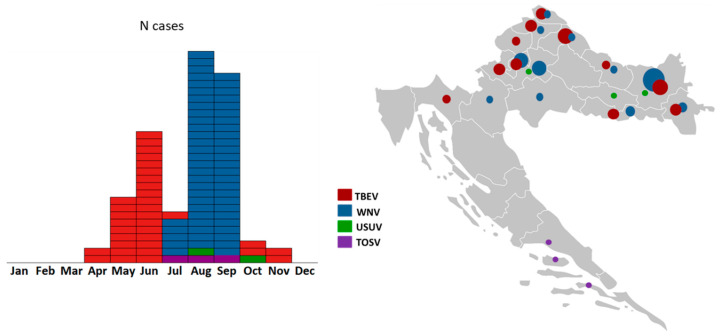
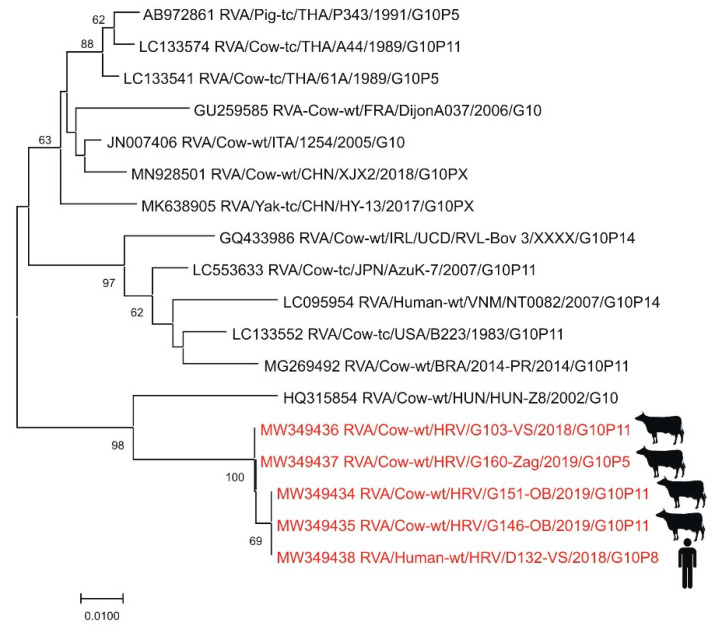
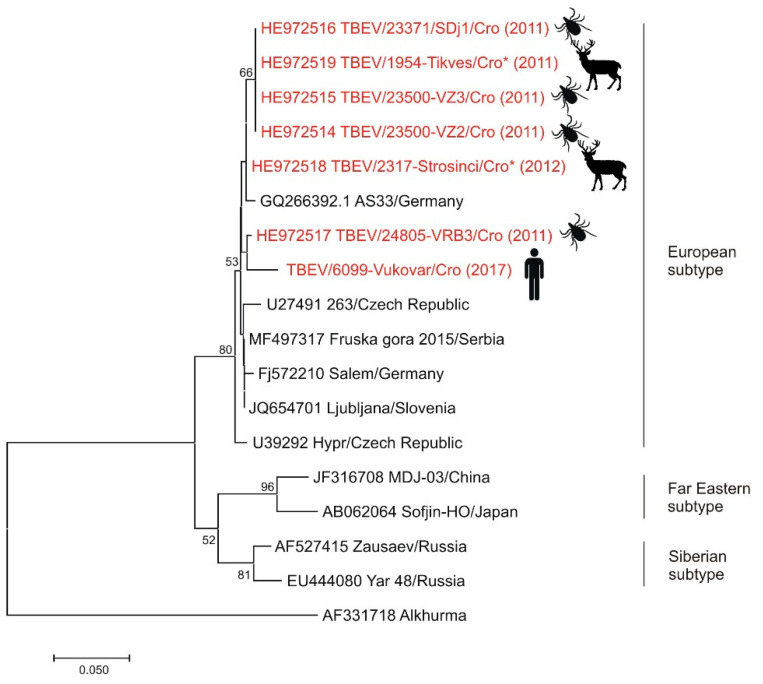
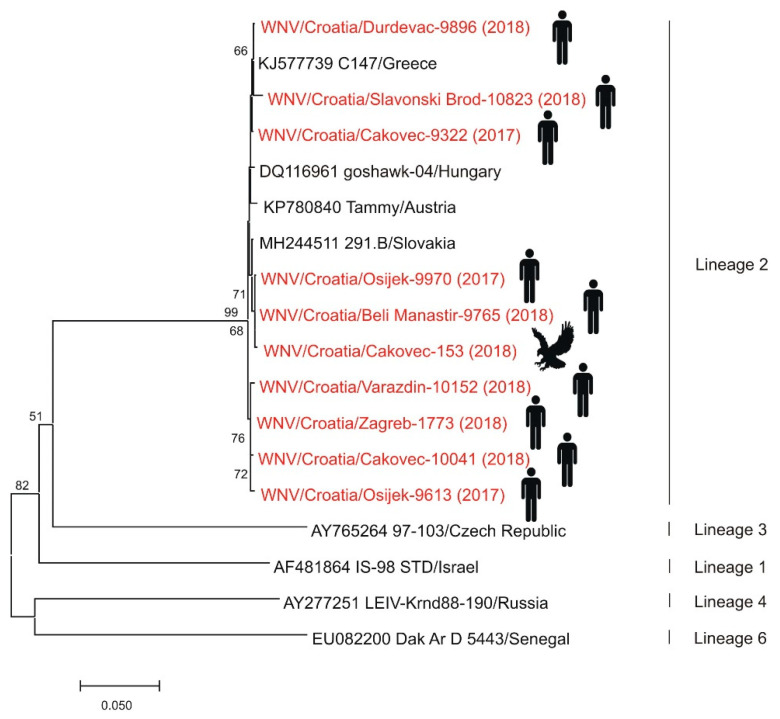
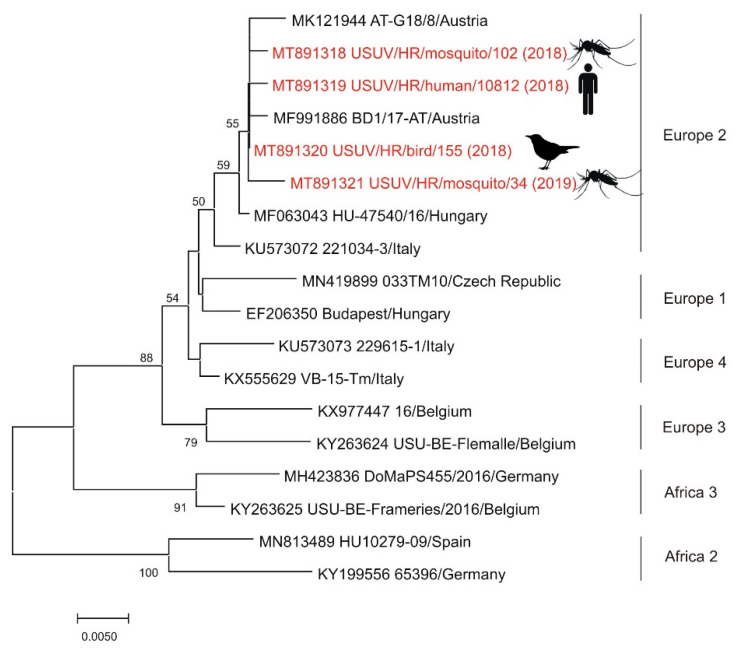
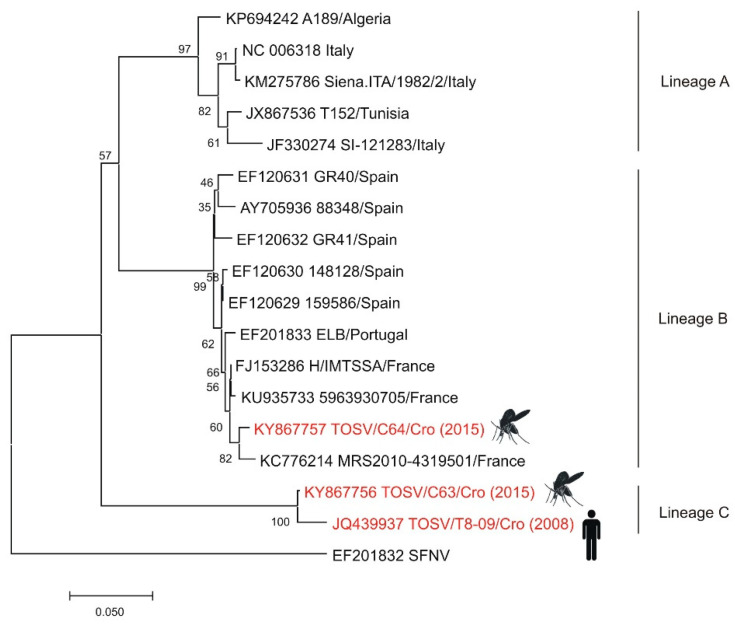
Several arboviruses have emerged in Croatia in recent years. Tick-borne encephalitis is endemic in continental counties; however, new natural micro-foci have been detected. Two autochthonous dengue cases were reported in 2010. West Nile virus emerged in 2012, followed by emergence of Usutu virus in 2013. Although high seroprevalence rates of Toscana virus have been detected among residents of Croatian littoral, the virus remains neglected, with only a few clinical cases of neuroinvasive infections reported. Lymphocytic choriomeningitis virus is a neglected neuroinvasive rodent-borne virus. So far, there are no reports on human clinical cases; however, the seroprevalence studies indicate the virus presence in the Croatian mainland. Puumala and Dobrava hantaviruses are widely distributing rodent-borne viruses with sporadic and epidemic occurrence. Hepatitis E virus is an emerging food-borne virus in Croatia. After the emergence in 2012, cases were regularly recorded. Seropositivity varies greatly by region and population group. Rotaviruses represent a significant healthcare burden since rotavirus vaccination is not included in the Croatian national immunization program. Additionally, rotaviruses are widely distributed in the Croatian ecosystem. A novel coronavirus, SARS-CoV-2, emerged in February 2020 and spread rapidly throughout the country. This review focuses on emerging and neglected viruses of zoonotic importance detected in Croatia.
近年来,克罗地亚出现了几种虫媒病毒。蜱传脑炎在该国大陆地区呈地方性流行;不过,已发现了新的自然疫源地。2010年报告了两例本土登革热病例。西尼罗河病毒于2012年出现,随后乌苏图病毒在2013年出现。尽管在克罗地亚沿海地区居民中检测到托斯卡纳病毒的血清阳性率很高,但该病毒仍被忽视,仅报告了少数几例神经侵袭性感染的临床病例。淋巴细胞性脉络丛脑膜炎病毒是一种被忽视的经啮齿动物传播的神经侵袭性病毒。到目前为止,尚无关于人类临床病例的报告;然而,血清学流行率研究表明该病毒在克罗地亚大陆存在。普马拉病毒和多布拉瓦汉坦病毒是广泛传播的经啮齿动物传播的病毒,呈散发性和流行性发生。戊型肝炎病毒是克罗地亚一种新出现的经食物传播的病毒。2012年出现后,病例时有记录。血清阳性率因地区和人群组而异。轮状病毒是一项重大的医疗负担,因为克罗地亚国家免疫规划中未包括轮状病毒疫苗接种。此外,轮状病毒在克罗地亚生态系统中广泛分布。一种新型冠状病毒,即严重急性呼吸综合征冠状病毒2(SARS-CoV-2),于2020年2月出现并在该国迅速传播。本综述重点关注在克罗地亚检测到的具有人畜共患病重要性的新出现和被忽视的病毒。