Bordanaba-Florit Guillermo, Madarieta Iratxe, Olalde Beatriz, Falcón-Pérez Juan M, Royo Félix
Center for Cooperative Research in Biosciences (CIC bioGUNE), Exosomes Laboratory, Basque Research and Technology Alliance (BRTA), E48160 Derio, Spain.
TECNALIA Basque Research and Technology Alliance (BRTA), E20009 Donostia San Sebastian, Spain.
Cancers (Basel). 2021 Jan 15;13(2):307. doi: 10.3390/cancers13020307.
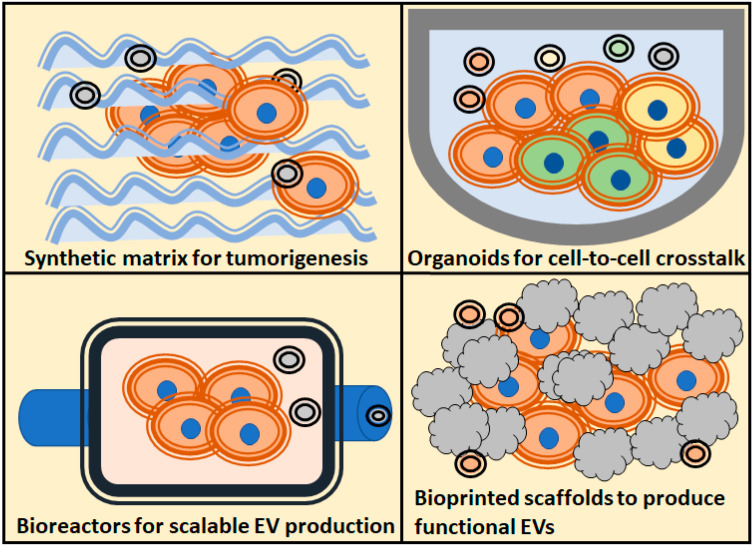
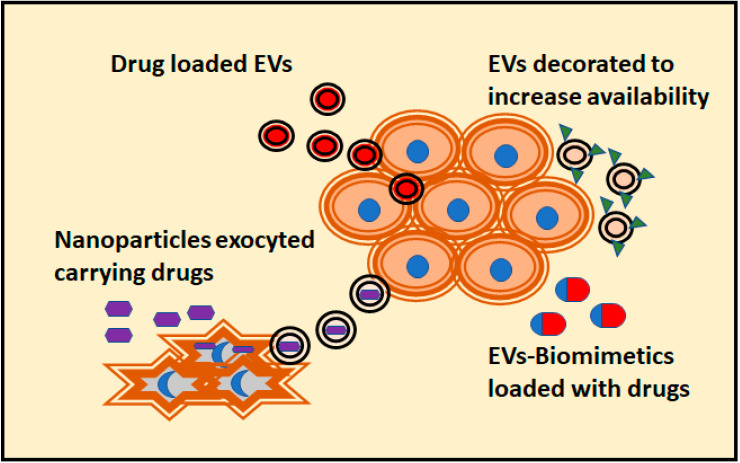
The improvement of culturing techniques to model the environment and physiological conditions surrounding tumors has also been applied to the study of extracellular vesicles (EVs) in cancer research. EVs role is not only limited to cell-to-cell communication in tumor physiology, they are also a promising source of biomarkers, and a tool to deliver drugs and induce antitumoral activity. In the present review, we have addressed the improvements achieved by using 3D culture models to evaluate the role of EVs in tumor progression and the potential applications of EVs in diagnostics and therapeutics. The most employed assays are gel-based spheroids, often utilized to examine the cell invasion rate and angiogenesis markers upon EVs treatment. To study EVs as drug carriers, a more complex multicellular cultures and organoids from cancer stem cell populations have been developed. Such strategies provide a closer response to in vivo physiology observed responses. They are also the best models to understand the complex interactions between different populations of cells and the extracellular matrix, in which tumor-derived EVs modify epithelial or mesenchymal cells to become protumor agents. Finally, the growth of cells in 3D bioreactor-like systems is appointed as the best approach to industrial EVs production, a necessary step toward clinical translation of EVs-based therapy.
模拟肿瘤周围环境和生理条件的培养技术的改进也已应用于癌症研究中细胞外囊泡(EVs)的研究。EVs的作用不仅限于肿瘤生理学中的细胞间通讯,它们还是有前景的生物标志物来源,以及递送药物和诱导抗肿瘤活性的工具。在本综述中,我们探讨了使用三维培养模型评估EVs在肿瘤进展中的作用以及EVs在诊断和治疗中的潜在应用所取得的进展。最常用的检测方法是基于凝胶的球体,常用于检测EVs处理后的细胞侵袭率和血管生成标志物。为了研究EVs作为药物载体,已经开发了更复杂的多细胞培养物和来自癌症干细胞群体的类器官。这些策略能更接近地反映体内生理学观察到的反应。它们也是理解不同细胞群体与细胞外基质之间复杂相互作用的最佳模型,在这种相互作用中,肿瘤衍生的EVs会使上皮细胞或间充质细胞转变为促肿瘤因子。最后,在类似三维生物反应器的系统中培养细胞被认为是工业生产EVs的最佳方法,这是基于EVs的疗法向临床转化的必要步骤。