School of Science, Western Sydney University, Penrith, New South Wales, Australia.
School of Animal and Veterinary Sciences, Charles Sturt University, Wagga Wagga, NSW, Australia.
Parasit Vectors. 2021 Jan 19;14(1):60. doi: 10.1186/s13071-020-04565-6.
Ticks are obligate haematophagous ectoparasites of vertebrate hosts and transmit the widest range of pathogenic organisms of any arthropod vector. Seven tick species are known to feed on bare-nosed wombats (Vombatus ursinus), in addition to the highly prevalent Sarcoptes scabiei mite which causes fatal sarcoptic mange in most bare-nosed wombat populations. Little is known about the pathogens carried by most wombat ticks or how they may impact wombats and wombat handlers.
Wombat ticks were sourced from wildlife hospitals and sanctuaries across Australia and identified to species level using taxonomic keys. Genomic DNA was extracted from a subsample, and following the amplification of the bacterial 16S rRNA gene V3-V4 hypervariable region, next-generation sequencing (NGS) on the Illumina MiSeq platform was used to assess the microbial composition.
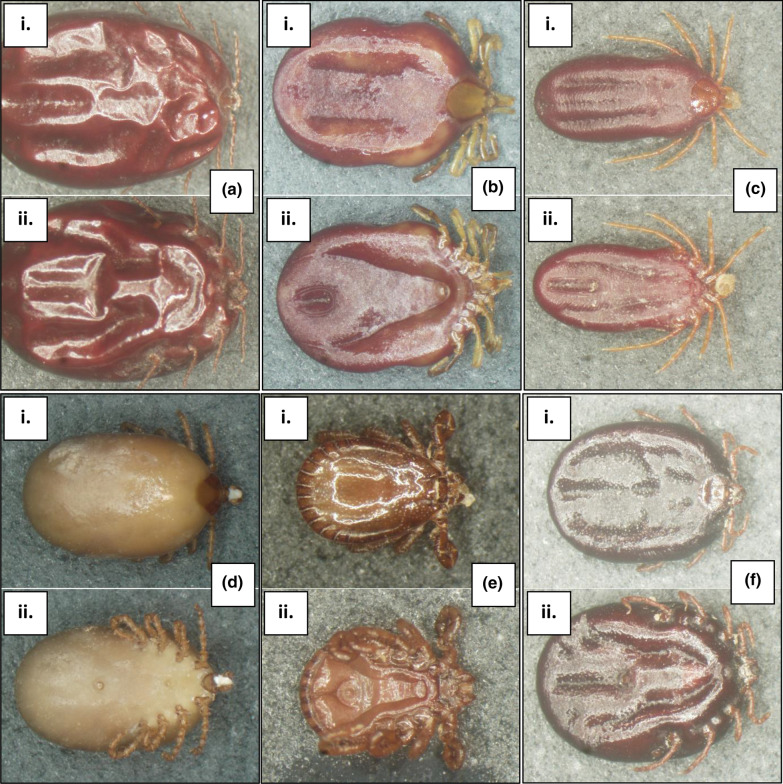
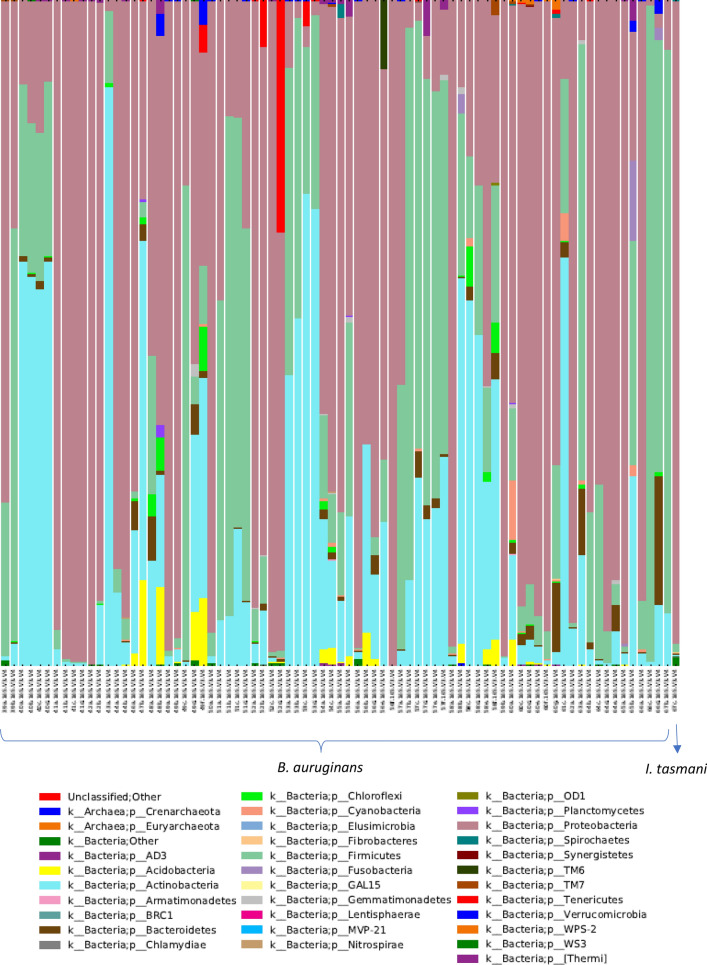
A total of 447 tick specimens were collected from 47 bare-nosed wombats between January 2019 and January 2020. Five species of ticks were identified comprising wombat tick Bothriocroton auruginans (n = 420), wallaby tick Haemaphysalis bancrofti (n = 8), bush tick Haemaphysalis longicornis (n = 3), common marsupial tick Ixodes tasmani (n = 12), and Australian paralysis tick Ixodes holocyclus (n = 4). Tick infestations ranged from one to 73 ticks per wombat. The wombat tick was the most prevalent tick species comprising 94% of the total number of samples and was present on 97.9% (46/47) of wombat hosts. NGS results revealed the 16S rRNA gene diversity profile was predominantly Proteobacteria (55.1%) followed by Firmicutes (21.9%) and Actinobacteria (18.4%). A species of Coxiella sharing closest sequence identity to Coxiella burnetii (99.07%), was detected in 72% of B. auruginans and a Rickettsiella endosymbiont dominated the bacterial profile for I. tasmani.
A new host record for H. longicornis is the bare-nosed wombat. One adult male and two engorged adult female specimens were found on an adult male wombat from Coolagolite in New South Wales, and more specimens should be collected to confirm this host record. The most prevalent tick found on bare-nosed wombats was B. auruginans, confirming previous records. Analysis of alpha-diversity showed high variability across both sample locations and instars, similar to previous studies. The detection of various Proteobacteria in this study highlights the high bacterial diversity in native Australian ticks.
蜱是专性吸血的节肢动物寄生虫,是任何节肢动物传播体中传播致病生物体范围最广的生物。除了高度流行的 Sarcoptes scabiei 螨之外,还有七种已知的蜱类物种以裸鼻袋熊(Vombatus ursinus)为食,这种螨会导致大多数裸鼻袋熊种群致命的瘙痒性皮炎。关于大多数袋熊蜱携带的病原体以及它们如何影响袋熊和袋熊饲养员的情况知之甚少。
从澳大利亚各地的野生动物医院和保护区采集了袋熊蜱,并使用分类学关键信息确定了物种水平。从亚样本中提取基因组 DNA,并扩增细菌 16S rRNA 基因 V3-V4 高变区后,使用 Illumina MiSeq 平台进行下一代测序(NGS),以评估微生物组成。
2019 年 1 月至 2020 年 1 月期间,从 47 只裸鼻袋熊中采集了 447 只蜱标本。鉴定出了五种蜱,包括袋熊蜱 Bothriocroton auruginans(n = 420)、沙袋鼠蜱 Haemaphysalis bancrofti(n = 8)、丛林蜱 Haemaphysalis longicornis(n = 3)、常见有袋动物蜱 Ixodes tasmani(n = 12)和澳大利亚麻痹蜱 Ixodes holocyclus(n = 4)。每只袋熊的蜱虫感染范围从一只到 73 只不等。袋熊蜱是最常见的蜱种,占总样本数的 94%,存在于 97.9%(46/47)的袋熊宿主中。NGS 结果显示,16S rRNA 基因多样性图谱主要由变形菌门(55.1%)组成,其次是厚壁菌门(21.9%)和放线菌门(18.4%)。在 72%的 B. auruginans 中检测到与 Coxiella burnetii(99.07%)具有最接近序列同一性的 Coxiella 属,在 I. tasmani 中,一种立克次氏体共生菌占主导地位。
裸鼻袋熊的新宿主记录是 H. longicornis。在新南威尔士州 Coolagolite 的一只成年雄性袋熊身上发现了一只成年雄性和两只吸血成年雌性标本,应该收集更多的标本来证实这一宿主记录。在裸鼻袋熊身上发现的最常见的蜱是 B. auruginans,这证实了之前的记录。对 alpha 多样性的分析表明,样本位置和龄期之间存在高度变化,与之前的研究相似。本研究中各种变形菌的检测突出了澳大利亚本地蜱的高细菌多样性。