Sydney School of Veterinary Science, Faculty of Science, University of Sydney, Sydney, NSW, 2006, Australia.
Institute of Parasitology, Biology Centre of the Czech Academy of Sciences, Branišovská 31, 37005, České Budějovice, Czech Republic.
Parasit Vectors. 2017 Dec 20;10(1):616. doi: 10.1186/s13071-017-2579-5.
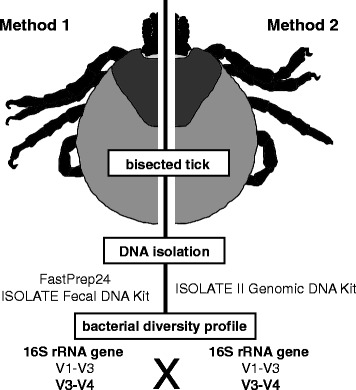
Knowledge on the capacity of Australian ticks to carry Borrelia species is currently limited or missing. To evaluate the potential of ticks to carry bacterial pathogens and their DNA, it is imperative to have a robust workflow that maximises recovery of bacterial DNA within ticks in order to enable accurate identification. By exploiting the bilateral anatomical symmetry of ticks, we were able to directly compare two DNA extraction methods for 16S rRNA gene diversity profiling and pathogen detection. We aimed to assess which combination of DNA extraction and 16S rRNA hypervariable region enables identification of the greatest bacterial diversity, whilst minimising bias, and providing the greatest capacity for the identification of Borrelia spp.
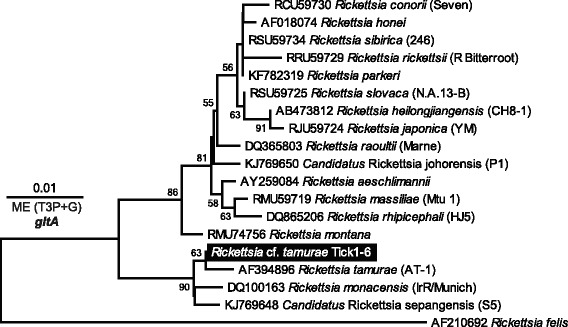
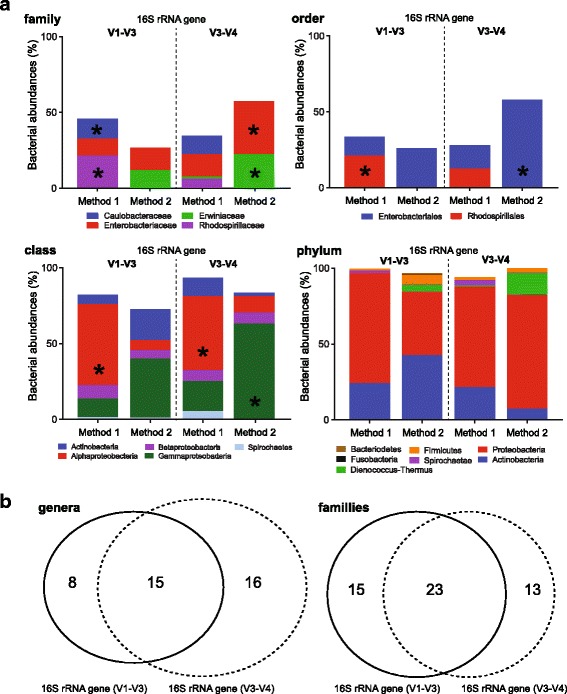
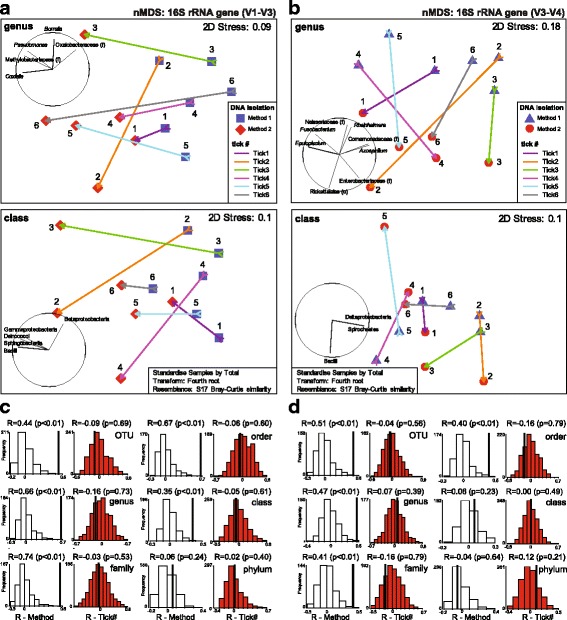
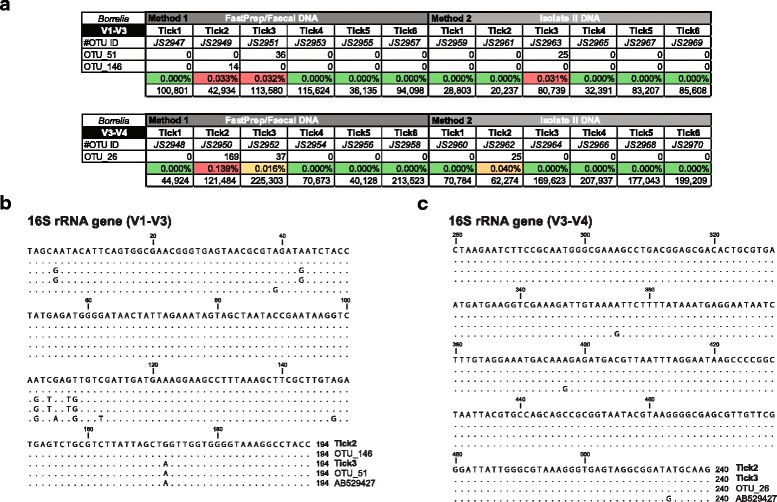
We collected Australian endemic ticks (Bothriocroton undatum), isolated DNA from equal tick halves using two commercial DNA extraction methods and sequenced samples using V1-V3 and V3-V4 16S rRNA gene diversity profiling assays. Two distinct Borrelia spp. operational taxonomic units (OTUs) were detected using the V1-V3 16S rRNA hypervariable region and matching Borrelia spp. sequences were obtained using a conventional nested-PCR. The tick 16S rRNA gene diversity profile was dominated by Rickettsia spp. (98-99%), while the remaining OTUs belonged to Proteobacteria (51-81%), Actinobacteria (6-30%) and Firmicutes (2-7%). Multiple comparisons tests demonstrated biases in each of the DNA extraction kits towards different bacterial taxa.
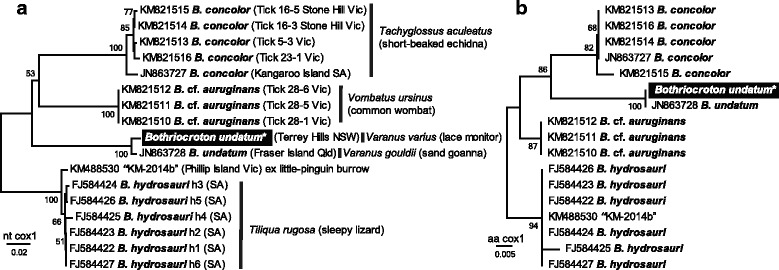
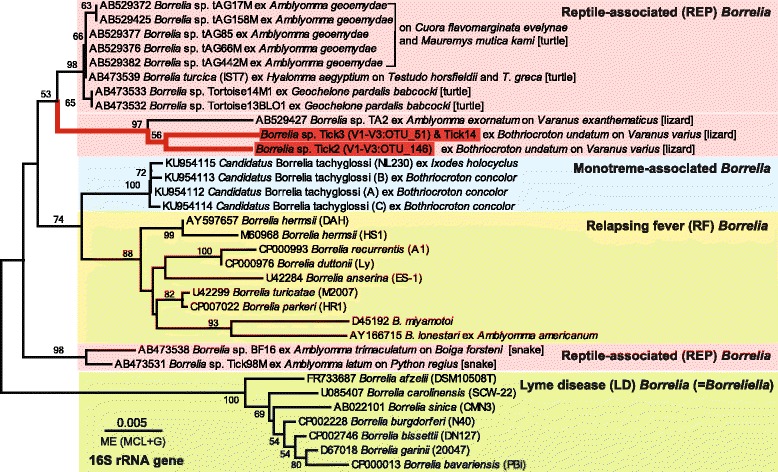
Two distinct Borrelia species belonging to the reptile-associated Borrelia group were identified. Our results show that the method of DNA extraction can promote bias in the final microbiota identified. We determined an optimal DNA extraction method and 16S rRNA gene diversity profile assay that maximises detection of Borrelia species.
目前,有关澳大利亚蜱虫携带伯氏疏螺旋体的能力的知识有限或缺失。为了评估蜱虫携带细菌病原体及其 DNA 的潜力,必须采用稳健的工作流程,最大限度地提高蜱虫中细菌 DNA 的回收率,从而实现准确鉴定。通过利用蜱虫的双侧解剖对称性,我们能够直接比较两种用于 16S rRNA 基因多样性分析和病原体检测的 DNA 提取方法。我们旨在评估哪种 DNA 提取和 16S rRNA 高变区的组合能够最大程度地识别细菌多样性,同时最大限度地减少偏差,并为鉴定伯氏疏螺旋体提供最大的能力。
我们采集了澳大利亚特有蜱虫(Bothriocroton undatum),使用两种商业 DNA 提取方法从相等的蜱虫半部分中分离 DNA,并使用 V1-V3 和 V3-V4 16S rRNA 基因多样性分析试剂盒对样本进行测序。使用 V1-V3 16S rRNA 高变区检测到两个不同的伯氏疏螺旋体属操作分类单位(OTU),并使用常规巢式 PCR 获得了匹配的伯氏疏螺旋体序列。蜱虫 16S rRNA 基因多样性谱主要由立克次体属(98-99%)主导,而其余 OTU 属于变形菌门(51-81%)、放线菌门(6-30%)和厚壁菌门(2-7%)。多项比较测试表明,每种 DNA 提取试剂盒都存在偏向不同细菌类群的偏差。
鉴定出两种属于爬行动物相关伯氏疏螺旋体群的不同伯氏疏螺旋体属。我们的结果表明,DNA 提取方法可能会导致最终鉴定的微生物组产生偏差。我们确定了一种最佳的 DNA 提取方法和 16S rRNA 基因多样性分析试剂盒,可最大程度地检测伯氏疏螺旋体属。