Jiangsu Provincial Center for Disease Control and Prevention, 172 Jiangsu Road, Nanjing, 210009, Jiangsu, China.
Duke Global Health Institute, Duke University, 310 Trent Dr, Durham, NC, 27710, USA.
Infect Dis Poverty. 2021 Jan 19;10(1):8. doi: 10.1186/s40249-021-00793-9.
The detection of drug-resistant tuberculosis (DR-TB) is a major health concern in China. We aim to summarize interventions related to the screening and detection of DR-TB in Jiangsu Province, analyse their impact, and highlight policy implications for improving the prevention and control of DR-TB.
We selected six prefectures from south, central and north Jiangsu Province. We reviewed policy documents between 2008 and 2019, and extracted routine TB patient registration data from the TB Information Management System (TBIMS) between 2013 and 2019. We used the High-quality Health System Framework to structure the analysis. We performed statistical analysis and logistic regression to assess the impact of different policy interventions on DR-TB detection.
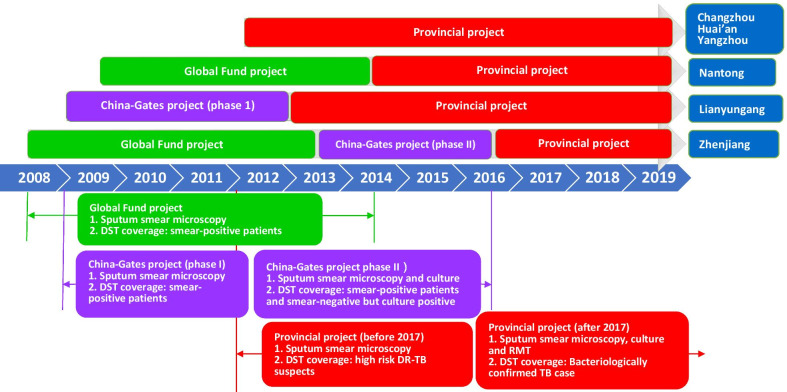
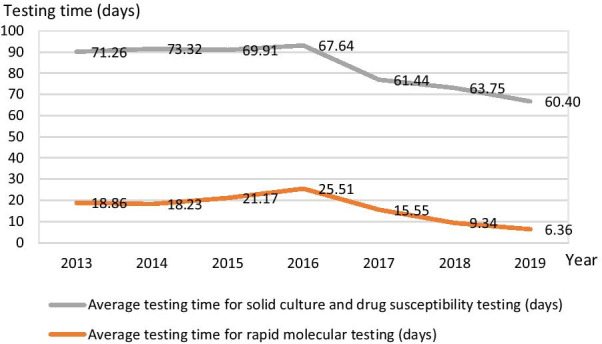
Three prefectures in Jiangsu introduced DR-TB related interventions between 2008 and 2010 in partnership with the Global Fund to Fight AIDS, Tuberculosis and Malaria (the Global Fund) and the Bill & Melinda Gates Foundation (Gates Foundation). By 2017, all prefectures in Jiangsu had implemented provincial level DR-TB policies, such as use of rapid molecular tests (RMT), and expanded drug susceptibility testing (DST) for populations at risk of DR-TB. The percentage of pulmonary TB cases confirmed by bacteriology increased from 30.0% in 2013 to over 50.0% in all prefectures by 2019, indicating that the implementation of new diagnostics has provided more sensitive testing results than the traditional smear microscopy. At the same time, the proportion of bacteriologically confirmed cases tested for drug resistance has increased substantially, indicating that the intervention of expanding the coverage of DST has reached more of the population at risk of DR-TB. Prefectures that implemented interventions with support from the Global Fund and the Gates Foundation had better detection performance of DR-TB patiens compared to those did not receive external support. However, the disparities in DR-TB detection across prefectures significantly narrowed after the implementation of provincial DR-TB polices.
The introduction of new diagnostics, including RMT, have improved the detection of DR-TB. Prefectures that received support from the Global Fund and the Gates Foundation had better detection of DR-TB. Additionally, the implementation of provincial DR-TB polices led to improvements in the detection of DR-TB across all prefectures.
耐药结核病(DR-TB)的检测是中国的一个主要卫生关注点。我们旨在总结江苏省开展的 DR-TB 筛查和检测干预措施,分析其影响,并强调改善 DR-TB 预防和控制的政策意义。
我们从江苏省南部、中部和北部选择了六个地区。我们查阅了 2008 年至 2019 年的政策文件,并从 2013 年至 2019 年的结核病信息管理系统(TBIMS)中提取了常规结核病患者登记数据。我们使用高质量卫生系统框架来构建分析。我们进行了统计分析和逻辑回归,以评估不同政策干预对 DR-TB 检测的影响。
江苏省的三个地区在 2008 年至 2010 年期间与全球抗击艾滋病、结核病和疟疾基金(全球基金)和比尔及梅琳达·盖茨基金会(盖茨基金会)合作,引入了 DR-TB 相关干预措施。到 2017 年,江苏省所有地区都实施了省级 DR-TB 政策,例如使用快速分子检测(RMT)和扩大对 DR-TB 高危人群的药物敏感性检测(DST)。经细菌学证实的肺结核病例比例从 2013 年的 30.0%上升到 2019 年所有地区的 50.0%以上,这表明新诊断方法提供了比传统涂片显微镜更敏感的检测结果。同时,经过耐药性检测的细菌学确诊病例比例大幅增加,表明扩大 DST 覆盖面的干预措施已经覆盖了更多的 DR-TB 高危人群。与没有获得外部支持的地区相比,获得全球基金和盖茨基金会支持的干预措施的地区对 DR-TB 患者的检测效果更好。然而,在实施省级 DR-TB 政策后,全省 DR-TB 检测的差距显著缩小。
引入新的诊断方法,包括 RMT,提高了 DR-TB 的检测率。获得全球基金和盖茨基金会支持的地区对 DR-TB 的检测效果更好。此外,实施省级 DR-TB 政策改善了全省 DR-TB 的检测。