Griesemer Sara B, Van Slyke Greta, St George Kirsten
Laboratory of Viral Diseases, Wadsworth Center, New York State Department of Health, Albany, New York, USA.
Laboratory of Viral Diseases, Wadsworth Center, New York State Department of Health, Albany, New York, USA
J Clin Microbiol. 2021 Mar 19;59(4). doi: 10.1128/JCM.01261-20.
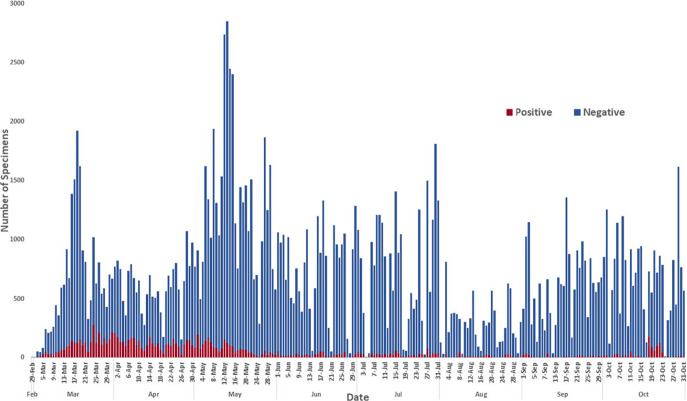
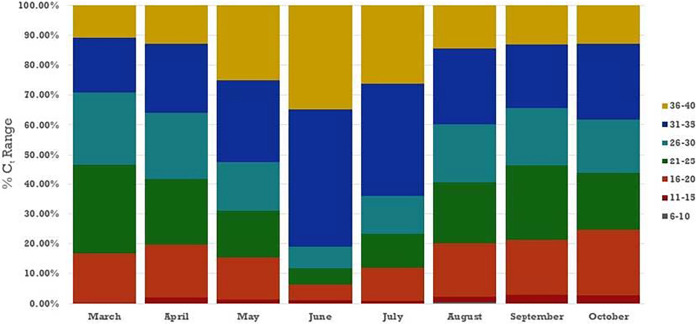
Accommodating large increases in sample workloads has presented a major challenge to clinical laboratories during the coronavirus disease 2019 (COVID-19) pandemic. Despite the implementation of automated detection systems and previous efficiencies, including barcoding, electronic data transfer, and extensive robotics, capacities have struggled to meet the demand. Sample pooling has been suggested as an additional strategy to address this need. The greatest concern with this approach in clinical settings is the potential for reduced sensitivity, particularly detection failures with weakly positive samples. To investigate this possibility, detection rates in pooled samples were evaluated, with a focus on pools containing weakly positive specimens. Additionally, the frequencies of occurrence of weakly positive samples during the pandemic were reviewed. Weakly positive specimens, with threshold cycle ( ) values of 33 or higher, were detected in 95% of 60 five-sample pools but only 87% of 39 nine-sample pools. The proportion of positive samples with very low viral loads rose markedly during the first few months of the pandemic, peaking in June, decreasing thereafter, and remaining level since August. At all times, weakly positive specimens comprised a significant component of the sample population, ranging from 29% to >80% for values above 31. In assessing the benefits of pooling strategies, however, other aspects of the testing process must be considered. Accessioning, result data management, electronic data transfer, reporting, and billing are not streamlined and may be complicated by pooling procedures. Therefore, the impact on the entire laboratory process needs to be carefully assessed prior to implementing such a strategy.
在2019冠状病毒病(COVID-19)大流行期间,应对样本工作量的大幅增加给临床实验室带来了重大挑战。尽管实施了自动检测系统以及包括条形码、电子数据传输和广泛的机器人技术在内的先前的效率提升措施,但检测能力仍难以满足需求。样本合并被建议作为满足这一需求的额外策略。在临床环境中,对这种方法最大的担忧是灵敏度可能降低,特别是对弱阳性样本的检测失败。为了研究这种可能性,评估了合并样本中的检测率,重点是包含弱阳性样本的样本池。此外,还回顾了大流行期间弱阳性样本的出现频率。在60个五样本样本池中,95%检测到阈值循环( )值为33或更高的弱阳性样本,但在39个九样本样本池中,只有87%检测到。在大流行的头几个月,病毒载量极低的阳性样本比例显著上升,6月达到峰值,此后下降,自8月以来保持稳定。在任何时候,弱阳性样本在样本总体中都占很大比例,对于 值高于31的样本,比例从29%到超过80%不等。然而,在评估合并策略的益处时,必须考虑检测过程的其他方面。样本登记、结果数据管理、电子数据传输、报告和计费并未简化,可能会因合并程序而变得复杂。因此,在实施这种策略之前,需要仔细评估其对整个实验室流程的影响。