Institute of Transformative Bio-Molecules (WPI-ITbM), Nagoya University, Furo-cho, Chikusa-ku, Nagoya, 464-8601, Japan.
Laboratory of Animal Integrative Physiology, Graduate School of Bioagricultural Sciences, Nagoya University, Nagoya, 464-8601, Japan.
Sci Rep. 2021 Jan 19;11(1):1843. doi: 10.1038/s41598-021-81540-w.
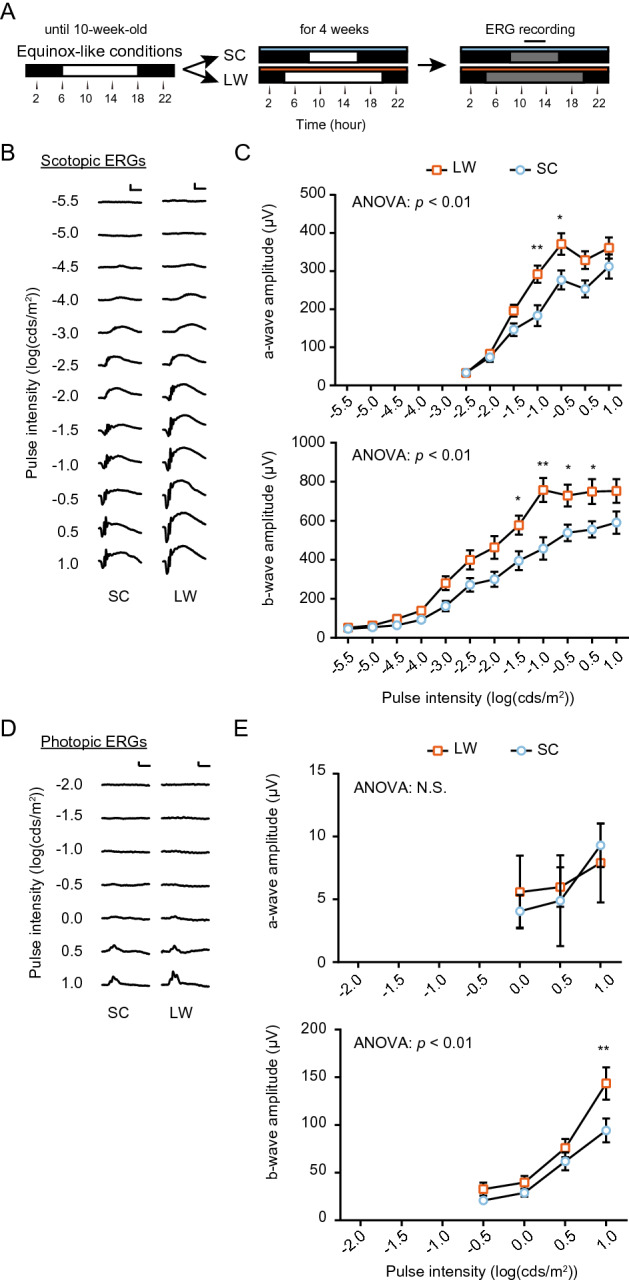
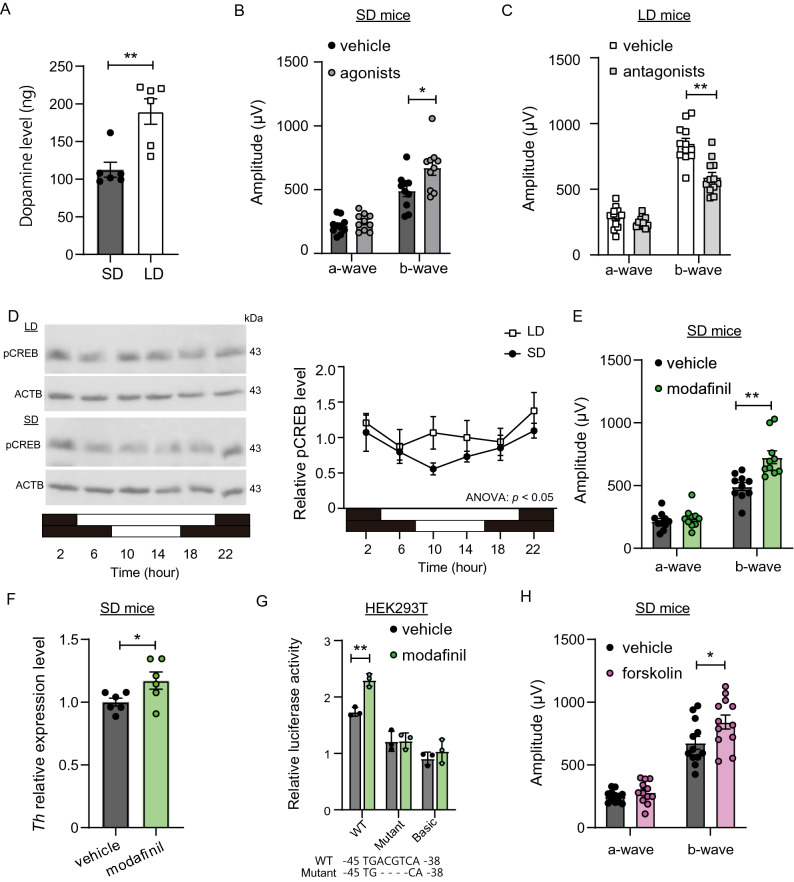
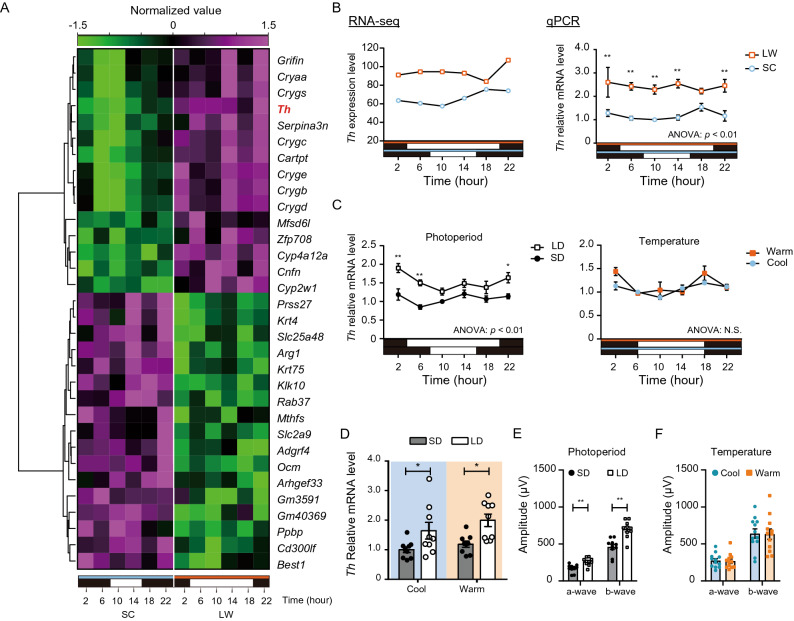
At high latitudes, approximately 10% of people suffer from depression during the winter season, a phenomenon known as seasonal affective disorder (SAD). Shortened photoperiod and/or light intensity during winter season are risk factors for SAD, and bright light therapy is an effective treatment. Interestingly, reduced retinal photosensitivity along with the mood is observed in SAD patients in winter. However, the molecular basis underlying seasonal changes in retinal photosensitivity remains unclear, and pharmacological intervention is required. Here we show photoperiodic regulation of dopamine signaling and improvement of short day-attenuated photosensitivity by its pharmacological intervention in mice. Electroretinograms revealed dynamic seasonal changes in retinal photosensitivity. Transcriptome analysis identified short day-mediated suppression of the Th gene, which encodes tyrosine hydroxylase, a rate-limiting enzyme for dopamine biosynthesis. Furthermore, pharmacological intervention in dopamine signaling through activation of the cAMP signaling pathway rescued short day-attenuated photosensitivity, whereas dopamine receptor antagonists decreased photosensitivity under long-day conditions. Our results reveal molecular basis of seasonal changes in retinal photosensitivity in mammals. In addition, our findings provide important insights into the pathogenesis of SAD and offer potential therapeutic interventions.
在高纬度地区,大约有 10%的人在冬季会患上抑郁症,这种现象被称为季节性情感障碍(SAD)。冬季的光照时间缩短和/或光照强度降低是 SAD 的风险因素,而明亮光照疗法是一种有效的治疗方法。有趣的是,在冬季 SAD 患者中观察到视网膜感光性和情绪同时降低。然而,视网膜感光性季节性变化的分子基础尚不清楚,需要药物干预。在这里,我们展示了光照周期对多巴胺信号的调节,以及通过药物干预改善短日照减弱的感光性。视网膜电图揭示了视网膜感光性的动态季节性变化。转录组分析确定了短日照介导的 Th 基因表达抑制,该基因编码酪氨酸羟化酶,是多巴胺生物合成的限速酶。此外,通过激活 cAMP 信号通路对多巴胺信号进行药物干预可挽救短日照减弱的感光性,而多巴胺受体拮抗剂在长日照条件下降低感光性。我们的研究结果揭示了哺乳动物视网膜感光性季节性变化的分子基础。此外,我们的发现为 SAD 的发病机制提供了重要的见解,并为潜在的治疗干预提供了依据。