Servicio de Microbiología. Hospital Universitario Ramón y Cajal and Instituto Ramón y Cajal de Investigación Sanitaria, Madrid, Spain.
Centro de Investigación Biológica en Red Epidemiología y Salud Pública, Instituto de Salud Carlos III, Madrid, Spain.
Elife. 2021 Jan 20;10:e65130. doi: 10.7554/eLife.65130.
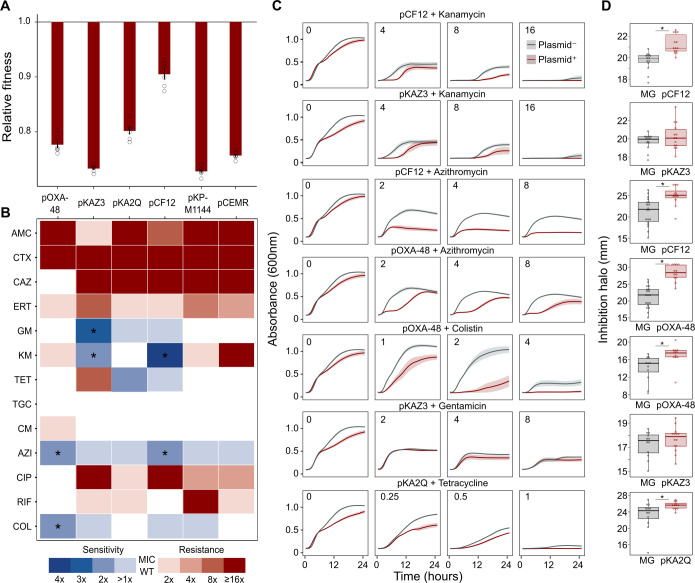
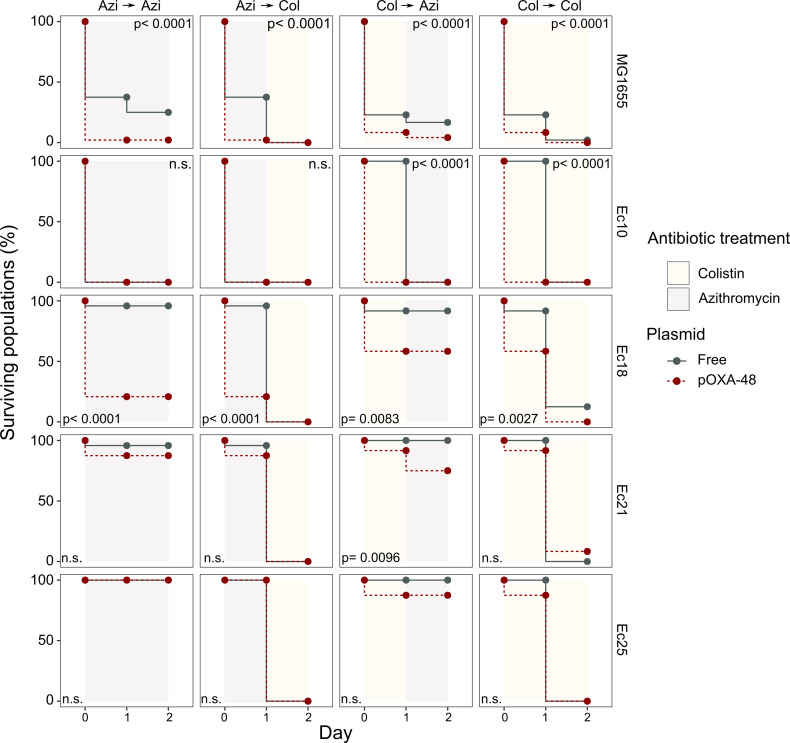
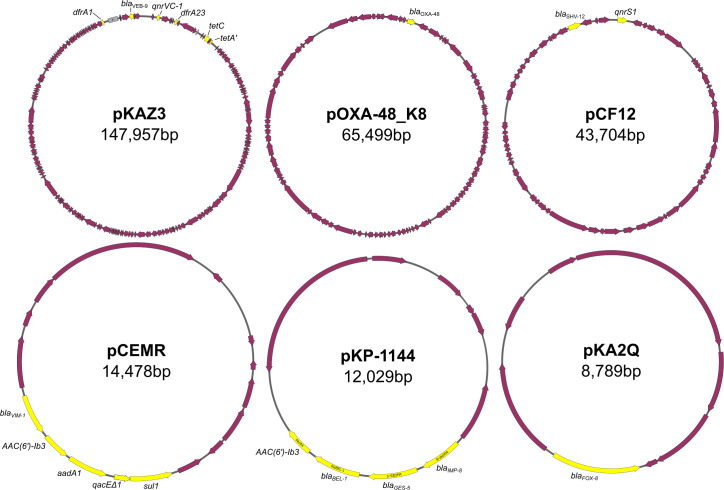
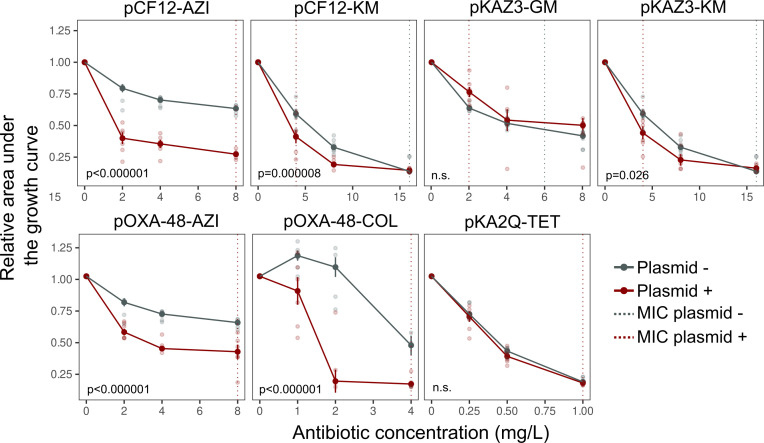
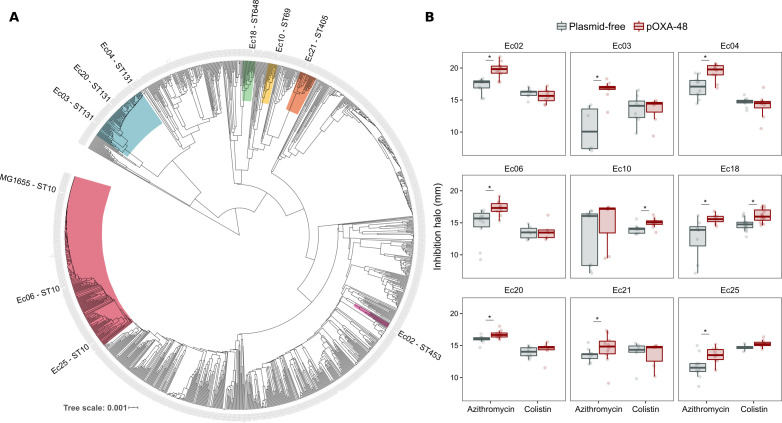
Collateral sensitivity (CS) is a promising alternative approach to counteract the rising problem of antibiotic resistance (ABR). CS occurs when the acquisition of resistance to one antibiotic produces increased susceptibility to a second antibiotic. Recent studies have focused on CS strategies designed against ABR mediated by chromosomal mutations. However, one of the main drivers of ABR in clinically relevant bacteria is the horizontal transfer of ABR genes mediated by plasmids. Here, we report the first analysis of CS associated with the acquisition of complete ABR plasmids, including the clinically important carbapenem-resistance conjugative plasmid pOXA-48. In addition, we describe the conservation of CS in clinical isolates and its application to selectively kill plasmid-carrying bacteria. Our results provide new insights that establish the basis for developing CS-informed treatment strategies to combat plasmid-mediated ABR.
协同敏感性 (CS) 是一种很有前途的替代方法,可以对抗抗生素耐药性 (ABR) 不断上升的问题。当对一种抗生素的耐药性获得增加对第二种抗生素的敏感性时,就会发生协同敏感性。最近的研究集中在针对由染色体突变介导的 ABR 的 CS 策略上。然而,临床相关细菌中 ABR 的主要驱动因素之一是由质粒介导的 ABR 基因的水平转移。在这里,我们报告了首次分析与获得完整 ABR 质粒相关的 CS,包括临床上重要的碳青霉烯类耐药性可接合质粒 pOXA-48。此外,我们描述了 CS 在临床分离株中的保守性及其在选择性杀死携带质粒的细菌中的应用。我们的结果提供了新的见解,为开发基于 CS 的治疗策略以对抗质粒介导的 ABR 奠定了基础。