Workneh Bitew Zebenay, Worku Teshager, Alemu Ayinalem
St. Paul's Hospital Millennium Medical College Addis Ababa Ethiopia.
School of Nursing and Midwifery College of Health and Medical Sciences Haramaya University Harar Ethiopia.
Food Sci Nutr. 2020 Nov 10;9(1):375-388. doi: 10.1002/fsn3.2003. eCollection 2021 Jan.
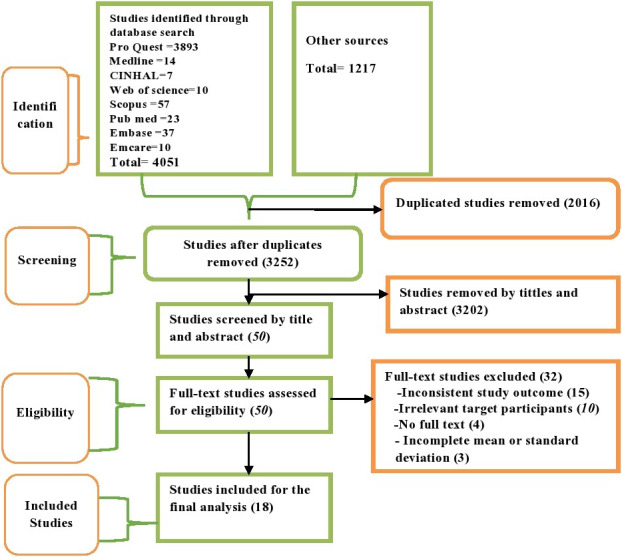
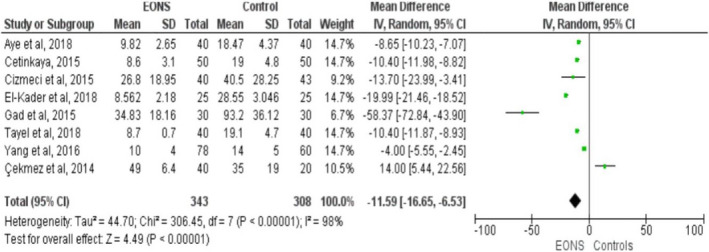
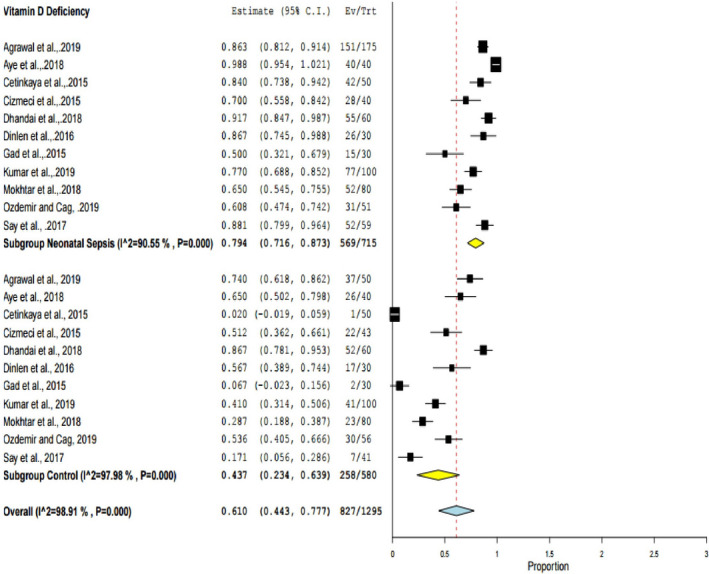
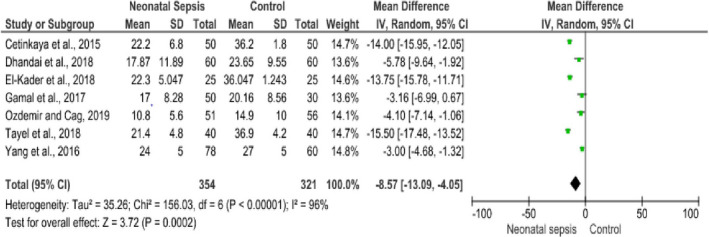
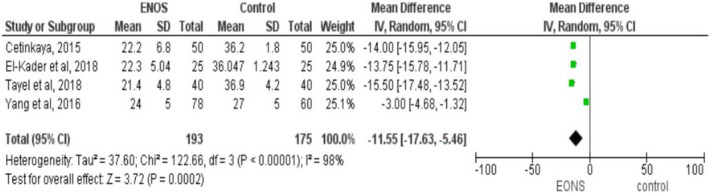
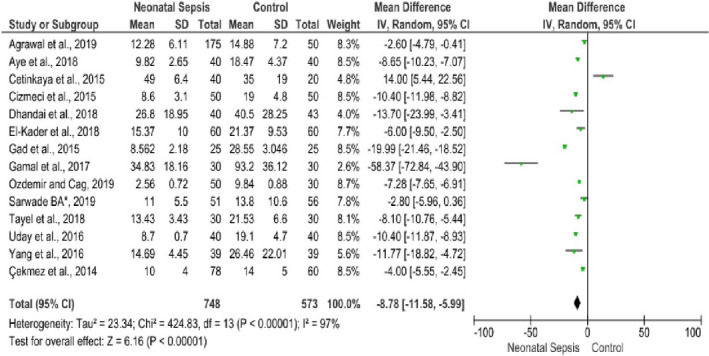
Vitamin D deficiency is a major public health concern of pregnant women and neonates worldwide, affecting more than half of neonates. Studies report inconsistent and inconclusive effects of vitamin D treatment on neonatal sepsis. This study aimed to provide conclusive evidence regarding the effect of maternal and cord blood vitamin D levels on neonatal sepsis. Data were retrieved from the electronic database (Web of Science, Scopus, CINAHL [EBSCOhost], ProQuest, EMBASE [Ovid], PubMed, Emcare, MEDLINE [Ovid], and gray literature sources [World cat, Mednar, Google scholar and Google]). Joanna Briggs Institute quality assessment tool was utilized for quality assessment while analysis was performed using Open Meta-analyst, Comprehensive Meta-analysis version 3.3.070, and Review Manager version 5.3 software. From the 18 studies included in the study, the overall prevalence of vitamin D deficiency among neonates was 61% (95% CI: 44.3, 77.7); 79.4% (95% CI: 71.6, 87.3) of neonates with sepsis were vitamin D deficient as were 43.7% (23.4, 63.9) of sepsis-free neonates. Neonates born from mothers with low vitamin D levels were at greater risk of developing neonatal sepsis with a weighed mean difference of -8.57 ng/ml (95% CI: -13.09, -4.05). Similarly, neonates with low cord vitamin D levels were at risk for neonatal sepsis with a mean difference of -8.78 ng/ml (95% CI:-11.58, -5.99). The incidence of EONS in full-term newborns was significantly associated with low maternal and cord blood vitamin D levels with weighed mean differences of -11.55ng/ml (95% CI: -17.63, -5.46) & -11.59 ng/ml (95% CI:-16.65, -6.53), respectively. Low levels of vitamin D both in the cord blood and maternal blood were significantly associated with neonatal sepsis. Hence, vitamin D supplementation for pregnant women and newborns could decrease neonatal sepsis.
维生素D缺乏是全球孕妇和新生儿面临的一个重大公共卫生问题,影响着超过半数的新生儿。研究报告了维生素D治疗对新生儿败血症的影响不一致且无定论。本研究旨在提供关于母体和脐带血维生素D水平对新生儿败血症影响的确凿证据。数据从电子数据库(科学网、Scopus、CINAHL [EBSCOhost]、ProQuest、EMBASE [Ovid]、PubMed、Emcare、MEDLINE [Ovid]以及灰色文献来源[World cat、Mednar、谷歌学术和谷歌])中检索。采用乔安娜·布里格斯研究所质量评估工具进行质量评估,同时使用Open Meta - analyst、综合Meta分析版本3.3.070和Review Manager版本5.3软件进行分析。在所纳入的18项研究中,新生儿维生素D缺乏的总体患病率为61%(95%置信区间:44.3,77.7);患败血症的新生儿中有79.4%(95%置信区间:71.6,87.3)维生素D缺乏,未患败血症的新生儿中有43.7%(23.4,63.9)维生素D缺乏。母亲维生素D水平低的新生儿发生新生儿败血症的风险更高,加权平均差为 - 8.57 ng/ml(95%置信区间: - 13.09, - 4.05)。同样,脐带血维生素D水平低的新生儿有患新生儿败血症的风险,平均差为 - 8.78 ng/ml(95%置信区间: - 11.58, - 5.99)。足月儿早发型新生儿败血症的发生率与母体和脐带血维生素D水平低显著相关,加权平均差分别为 - 11.55 ng/ml(95%置信区间: - 17.63, - 5.46)和 - 11.59 ng/ml(95%置信区间: - 16.65, - 6.53)。脐带血和母血中维生素D水平低均与新生儿败血症显著相关。因此,对孕妇和新生儿补充维生素D可降低新生儿败血症的发生。