Department of Anaesthesiology, University Hospital RWTH Aachen University, Aachen, Germany.
Department of Anaesthesiology, Intensive Care and Pain Medicine, University Hospital Münster, Münster, Germany.
Perfusion. 2022 Mar;37(2):134-143. doi: 10.1177/0267659121989231. Epub 2021 Jan 21.
Due to improved technology and increased application the mortality during extracorporeal membrane oxygenation (ECMO) is constantly declining. Nevertheless, complications including haemorrhage or thrombus formation remain frequent. Local mitigation of coagulation within an ECMO system to prevent thrombus formation on ECMO components and optimizing systemic anticoagulation is an approach to reduce clotting and bleeding complications at once. Foreign surfaces of ECMO systems, activate platelets (PLTs), which besides their major role in coagulation, can trigger the formation of neutrophil extracellular traps (NETs) contributing to robust thrombus formation. The impact of a reduced PLT count on PLT activation and NET formation is of paramount importance and worth investigating.
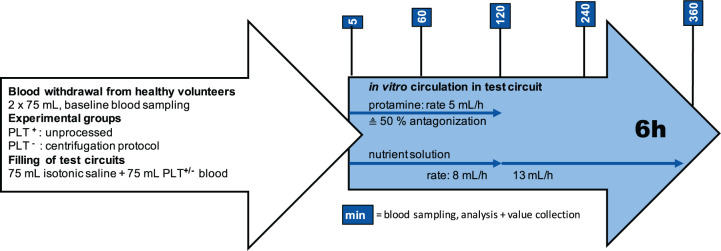
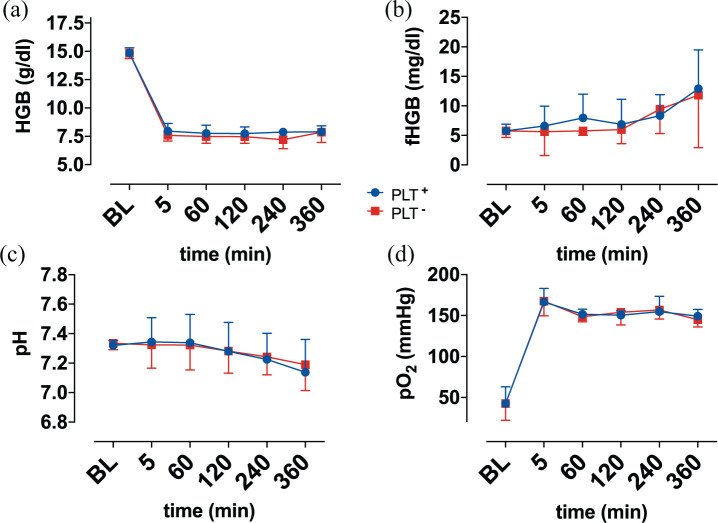
In this study platelet poor (PLT) and native (PLT) heparinized human blood was circulated in two identical test circuits for ECMO devices for 6 hours. PLT reduction was achieved by a centrifugation protocol prior to the experiments. To achieve native coagulation characteristics within the test circuits, the initial heparin dose was antagonized by continuous protamine administration.
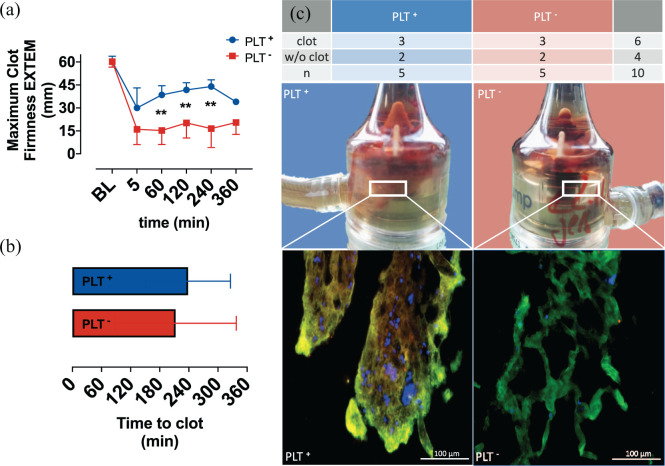
The PLT group showed significantly lower platelet activation, basal NET formation and limited clot stability measured via thromboelastometry. Fluorescent and scanning electron microscope imaging showed differences in clot composition. Both groups showed equal clot formation within the circuit.
This study demonstrated that the reduction of PLTs within an ECMO system is associated with limited PLT activation and NET formation, which reduces clot stability but is not sufficient to inhibit clot formation per se.
由于技术的进步和应用的增加,体外膜肺氧合(ECMO)的死亡率不断下降。然而,包括出血或血栓形成在内的并发症仍然很常见。在 ECMO 系统内局部减轻凝血以防止 ECMO 组件上的血栓形成并优化全身抗凝是一种减少血栓形成和出血并发症的方法。ECMO 系统的外来表面激活血小板(PLT),除了在凝血中的主要作用外,还可以触发中性粒细胞胞外陷阱(NET)的形成,有助于形成牢固的血栓。血小板计数减少对 PLT 激活和 NET 形成的影响至关重要,值得研究。
在这项研究中,血小板缺乏(PLT)和天然(PLT)肝素化的人血在两个相同的 ECMO 设备测试回路中循环 6 小时。在实验前通过离心方案实现 PLT 减少。为了在测试回路中实现天然凝血特性,初始肝素剂量通过持续给予鱼精蛋白拮抗。
PLT 组显示出明显较低的血小板活化、基础 NET 形成和通过血栓弹性测定法测量的有限的凝血稳定性。荧光和扫描电子显微镜成像显示出不同的血栓组成。两组在回路内都显示出相等的血栓形成。
这项研究表明,ECMO 系统中 PLT 的减少与有限的 PLT 活化和 NET 形成相关,这降低了凝血稳定性,但不足以抑制血栓形成本身。