Kuo Macus Tien, Chen Helen H W, Feun Lynn G, Savaraj Niramol
Department of Translational Molecular Pathology, The University of Texas MD Anderson Cancer Center, Houston, TX 77030, USA.
Department of Radiation Oncology, National Cheng Kung University Hospital, College of Medicine, National Cheng Kung University, Tainan 70428, Taiwan.
Pharmaceuticals (Basel). 2021 Jan 18;14(1):72. doi: 10.3390/ph14010072.
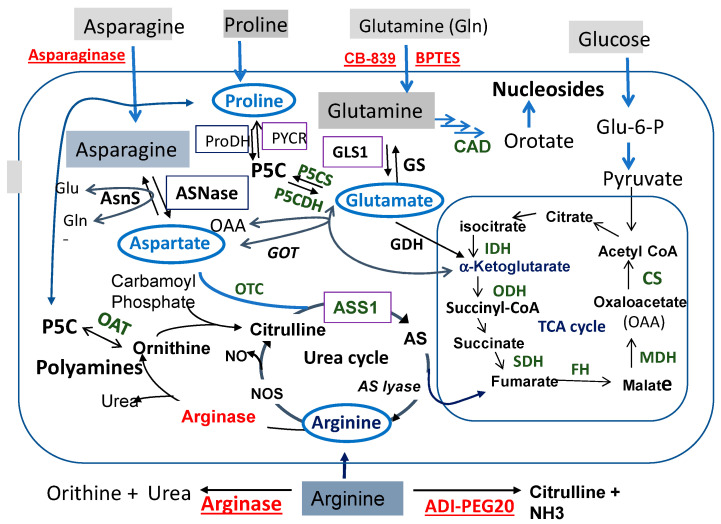
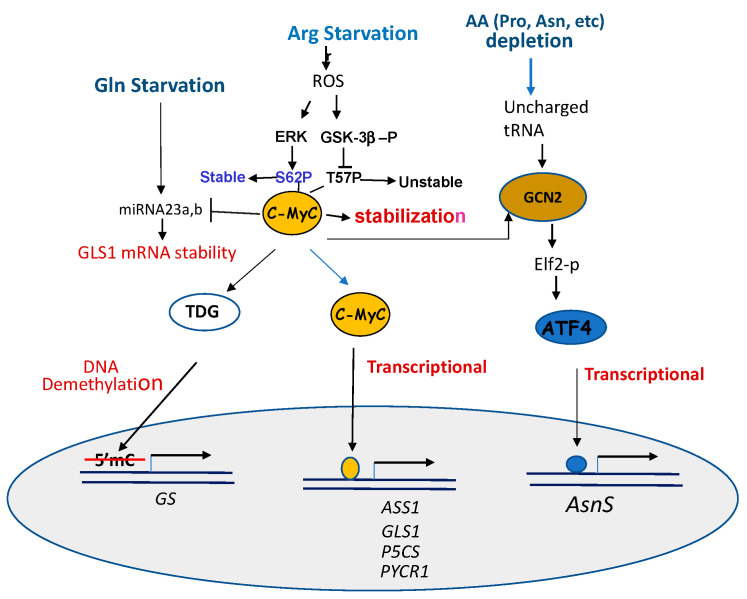
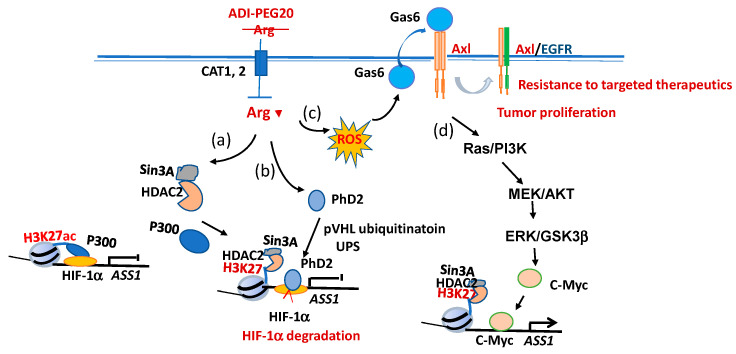
Proline, glutamine, asparagine, and arginine are conditionally non-essential amino acids that can be produced in our body. However, they are essential for the growth of highly proliferative cells such as cancers. Many cancers express reduced levels of these amino acids and thus require import from the environment. Meanwhile, the biosynthesis of these amino acids is inter-connected but can be intervened individually through the inhibition of key enzymes of the biosynthesis of these amino acids, resulting in amino acid starvation and cell death. Amino acid starvation strategies have been in various stages of clinical applications. Targeting asparagine using asparaginase has been approved for treating acute lymphoblastic leukemia. Targeting glutamine and arginine starvations are in various stages of clinical trials, and targeting proline starvation is in preclinical development. The most important obstacle of these therapies is drug resistance, which is mostly due to reactivation of the key enzymes involved in biosynthesis of the targeted amino acids and reprogramming of compensatory survival pathways via transcriptional, epigenetic, and post-translational mechanisms. Here, we review the interactive regulatory mechanisms that control cellular levels of these amino acids for amino acid starvation therapy and how drug resistance is evolved underlying treatment failure.
脯氨酸、谷氨酰胺、天冬酰胺和精氨酸是人体可产生的条件性非必需氨基酸。然而,它们对癌症等高度增殖性细胞的生长至关重要。许多癌症中这些氨基酸的表达水平降低,因此需要从环境中摄取。同时,这些氨基酸的生物合成相互关联,但可通过抑制这些氨基酸生物合成的关键酶来单独干预,从而导致氨基酸饥饿和细胞死亡。氨基酸饥饿策略已处于临床应用的不同阶段。使用天冬酰胺酶靶向天冬酰胺已被批准用于治疗急性淋巴细胞白血病。靶向谷氨酰胺和精氨酸饥饿处于临床试验的不同阶段,而靶向脯氨酸饥饿处于临床前开发阶段。这些疗法最重要的障碍是耐药性,这主要是由于参与靶向氨基酸生物合成的关键酶重新激活,以及通过转录、表观遗传和翻译后机制对代偿性生存途径进行重新编程。在此,我们综述了控制这些氨基酸细胞水平以进行氨基酸饥饿治疗的相互作用调节机制,以及耐药性在治疗失败背后是如何产生的。