Centro de Investigaciones Biológicas Margarita Salas (CSIC), Ramiro de Maeztu 9, 28040 Madrid, Spain.
School of Biological Sciences, Louisiana Tech University, Ruston, LA 71272, USA.
Int J Mol Sci. 2021 Jan 18;22(2):899. doi: 10.3390/ijms22020899.
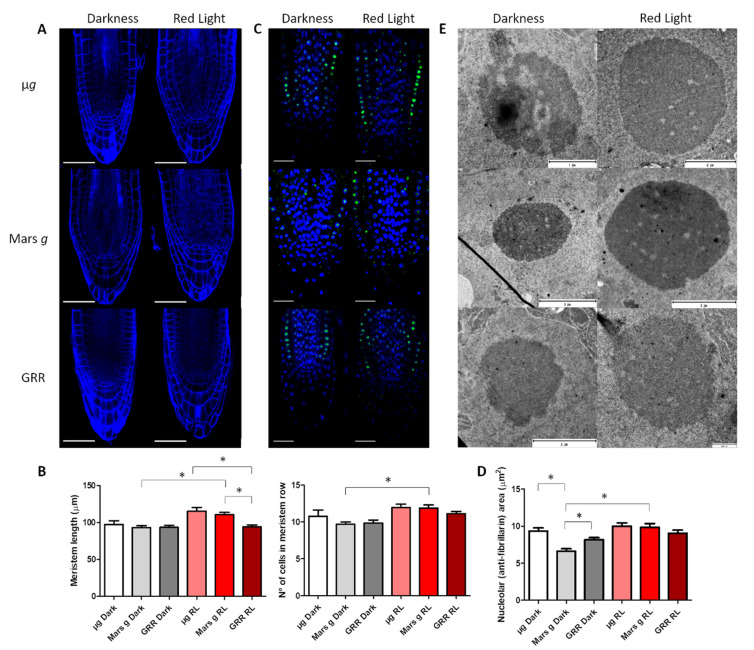
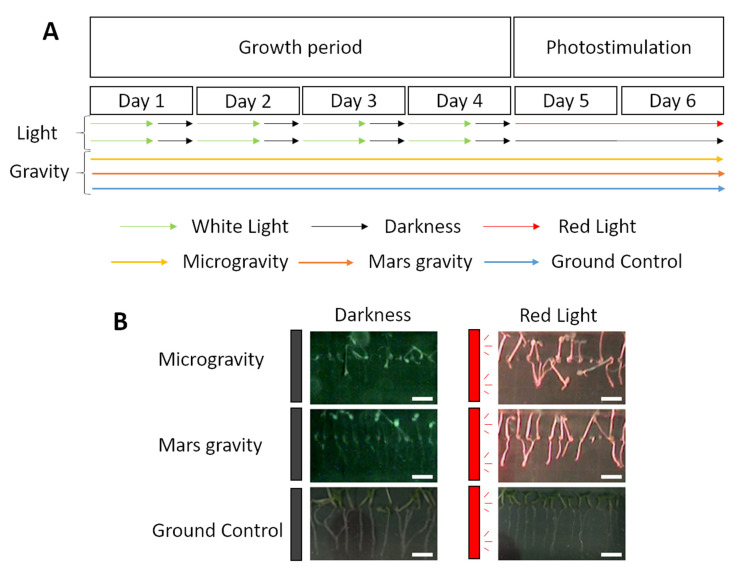
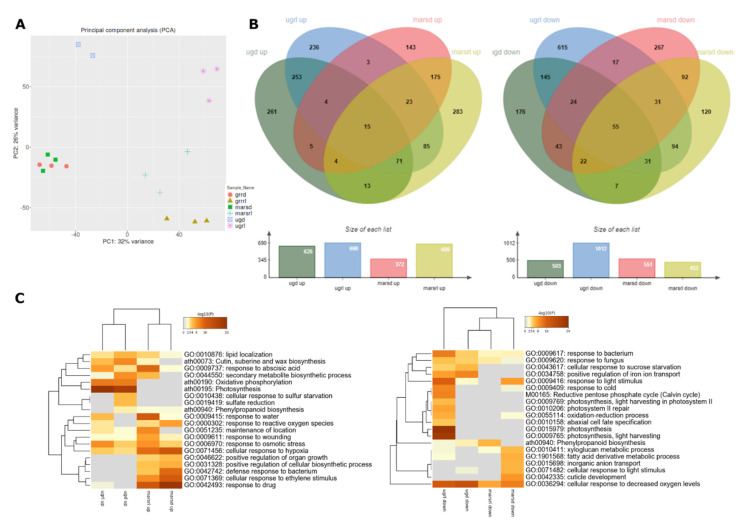
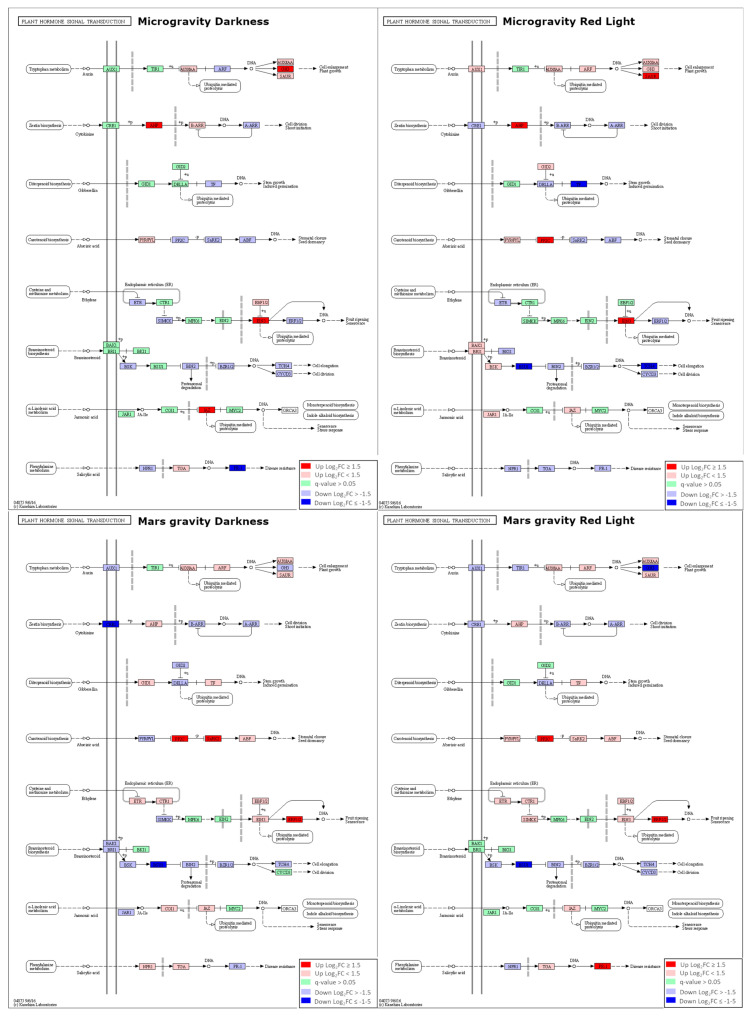
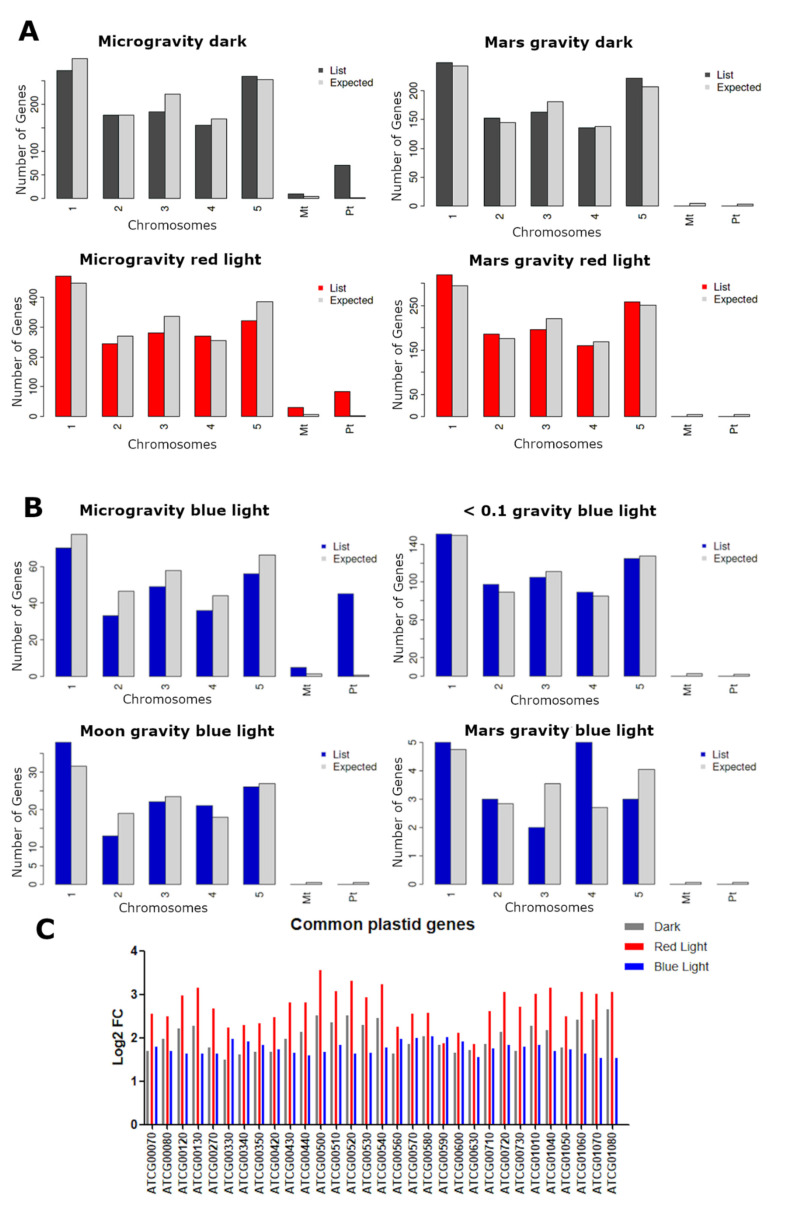
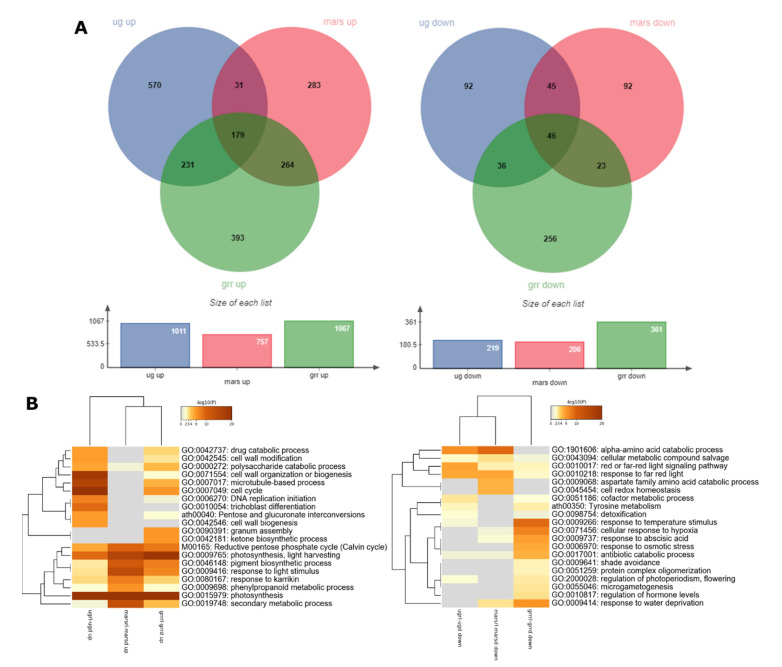
The response of plants to the spaceflight environment and microgravity is still not well understood, although research has increased in this area. Even less is known about plants' response to partial or reduced gravity levels. In the absence of the directional cues provided by the gravity vector, the plant is especially perceptive to other cues such as light. Here, we investigate the response of 6-day-old seedlings to microgravity and the Mars partial gravity level during spaceflight, as well as the effects of red-light photostimulation by determining meristematic cell growth and proliferation. These experiments involve microscopic techniques together with transcriptomic studies. We demonstrate that microgravity and partial gravity trigger differential responses. The microgravity environment activates hormonal routes responsible for proliferation/growth and upregulates plastid/mitochondrial-encoded transcripts, even in the dark. In contrast, the Mars gravity level inhibits these routes and activates responses to stress factors to restore cell growth parameters only when red photostimulation is provided. This response is accompanied by upregulation of numerous transcription factors such as the environmental acclimation-related WRKY-domain family. In the long term, these discoveries can be applied in the design of bioregenerative life support systems and space farming.
尽管在这一领域的研究有所增加,但植物对空间环境和微重力的反应仍未得到很好的理解。对植物对部分或降低重力水平的反应知之甚少。在缺乏重力矢量提供的定向线索的情况下,植物对其他线索(如光)特别敏感。在这里,我们研究了 6 天大的幼苗在空间飞行中对微重力和火星部分重力水平的反应,以及通过确定分生细胞生长和增殖来研究红光光刺激的影响。这些实验涉及微观技术和转录组研究。我们证明微重力和部分重力会引发不同的反应。微重力环境激活了负责增殖/生长的激素途径,并上调了质体/线粒体编码的转录本,即使在黑暗中也是如此。相比之下,火星重力水平抑制了这些途径,并在提供红光光刺激时激活了对应激因子的反应,以仅在恢复细胞生长参数时才会激活。这种反应伴随着许多转录因子的上调,如与环境适应相关的 WRKY 结构域家族。从长远来看,这些发现可应用于生物再生生命支持系统和太空农业的设计。