Lytaev Sergey, Vatamaniuk Irina
Lab of Applied Informatics, Lab of Autonomous Robotic Systems, St. Petersburg Federal Research Center of the Russian Academy of Sciences, 199178 Saint Petersburg, Russia.
Department of Normal Physiology, Saint Petersburg State Pediatric Medical University, 194100 Saint Petersburg, Russia.
Brain Sci. 2021 Jan 18;11(1):125. doi: 10.3390/brainsci11010125.
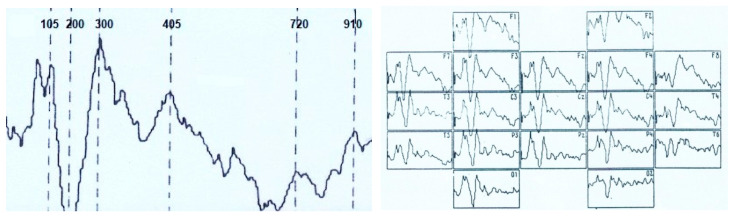
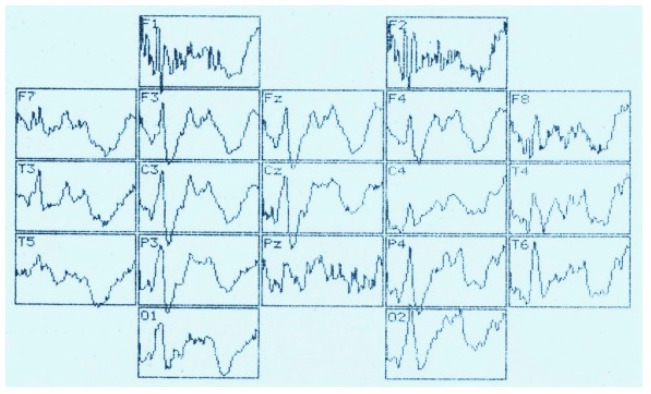
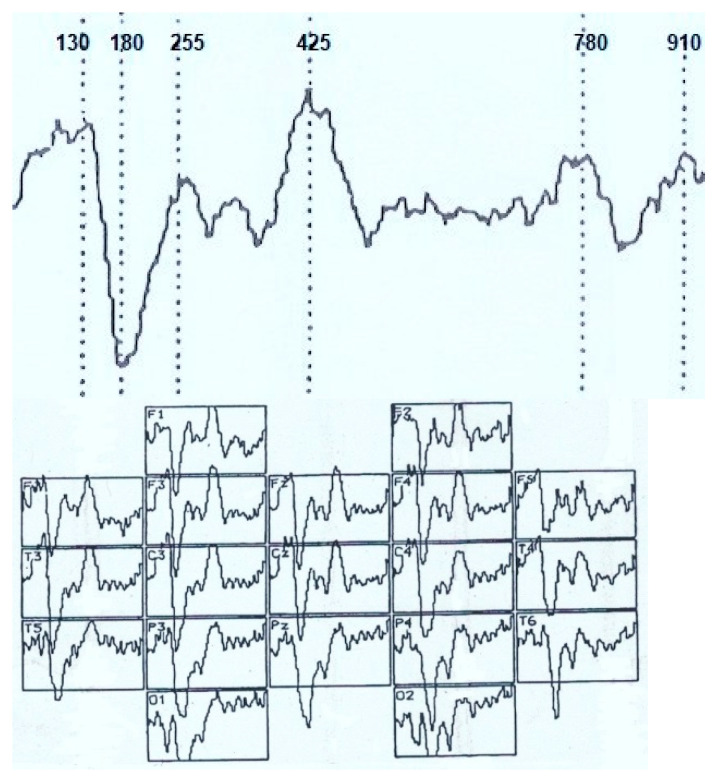
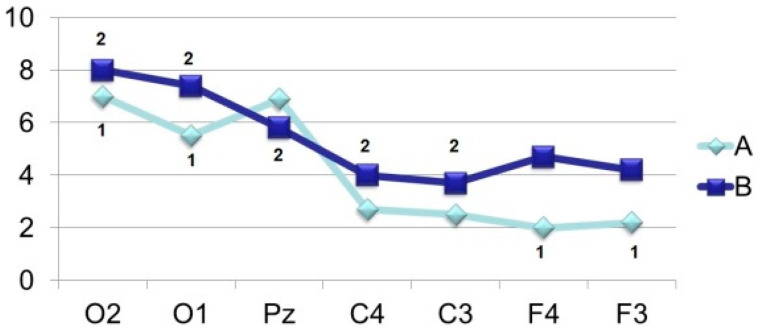
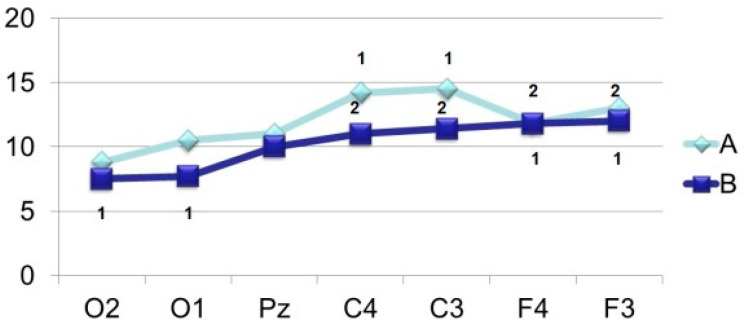
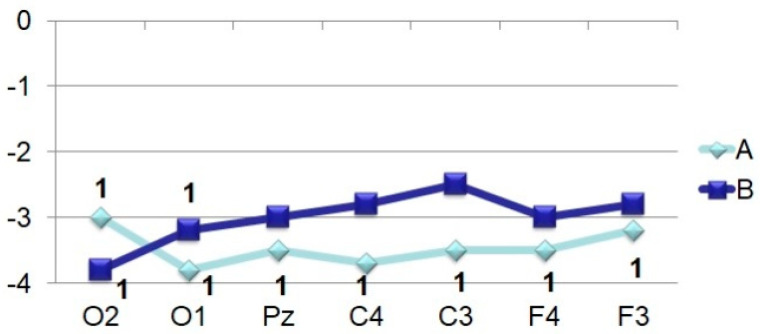
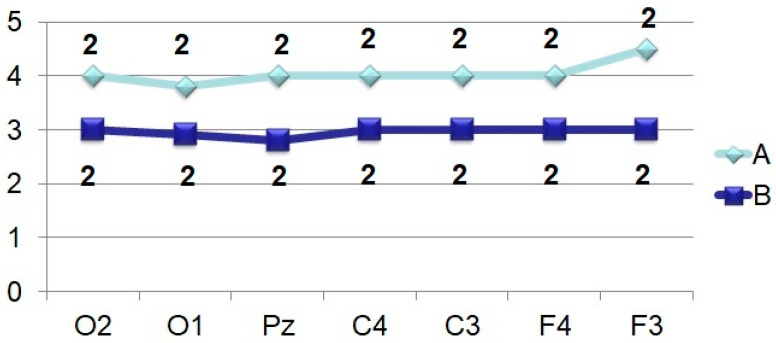
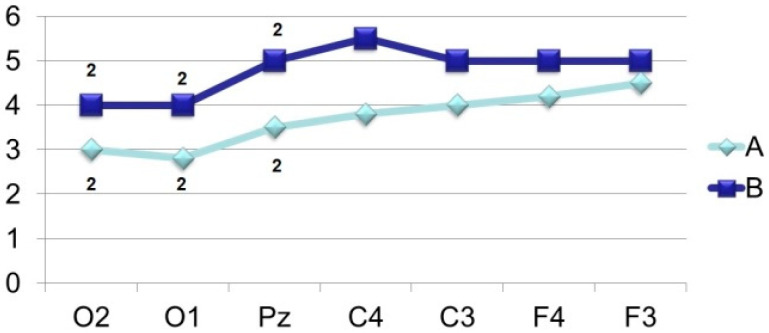
To extend the application of the late waves of the event-related potentials (ERPs) to multiple modalities, devices and software the underlying physiological mechanisms and responses of the brain for a particular sensory system and mental function must be carefully examined. The objective of this study was aimed to study the sensory processes of the "human-computer interaction" model when classifying visual images with an incomplete set of signs based on the analysis of early, middle, late and slow ERPs components. 26 healthy subjects (men) aged 20-26 years were investigated. ERPs in 19 monopolar sites according to the 10/20 system were recorded. Discriminant and factor analyzes (BMDP Statistical Software) were applied. The component N is the most specialized indicator of the perception of unrecognizable (oddball) visual images. The amplitude of the ultra-late components N and N is also higher under conditions of presentation of the oddball image, regardless of the location of the registration points. In brain pathology along with the pronounced asymmetry of the wave distribution, reduction of the N wave and lengthening of its peak latency, a line of regularities were noted. These include-a pronounced reduction in peak latency P and N, an increased amplitude of N in the frontal and central points of registration, a decrease in the amplitude of N in the left frontal cortex and its increase in the occipital registration points, activation of the occipital cortex at a time interval of 400-500 ms, as well as fusion later waves. We called such phenomena of the development of cognitive ERP in brain pathology "the incongruence of ERP components". The results of the research are discussed in the light of the paradigm of the P wave application in brain-computer interface systems, as well as with the peculiarities in brain pathology.
为了将事件相关电位(ERP)的晚期波应用扩展到多种模式、设备和软件,必须仔细研究大脑对特定感觉系统和心理功能的潜在生理机制和反应。本研究的目的是基于对早期、中期、晚期和慢ERP成分的分析,在对具有不完整符号集的视觉图像进行分类时,研究“人机交互”模型的感觉过程。对26名年龄在20 - 26岁的健康男性受试者进行了调查。根据10/20系统在19个单极部位记录ERP。应用判别分析和因子分析(BMDP统计软件)。成分N是不可识别(异常球)视觉图像感知的最特殊指标。无论记录点的位置如何,在呈现异常球图像的条件下,超晚期成分N和N的振幅也更高。在脑部病变中,除了波分布明显不对称、N波降低及其峰潜伏期延长外,还注意到一系列规律。这些规律包括——峰潜伏期P和N明显缩短、额部和中央记录点处N的振幅增加、左额叶皮层中N的振幅降低以及枕部记录点处N的振幅增加、在400 - 500毫秒的时间间隔内枕叶皮层激活,以及晚期波融合。我们将脑部病变中认知ERP发展的这种现象称为“ERP成分不一致”。根据脑机接口系统中P波应用的范式以及脑部病变的特点对研究结果进行了讨论。