Department of Cardiovascular Pathology, CVPath Institute, Inc. Gaithersburg, Maryland, USA.
Department of Medicine, Ospedale Papa Giovanni XXIII, Bergamo, Italy.
J Am Coll Cardiol. 2021 Jan 26;77(3):314-325. doi: 10.1016/j.jacc.2020.11.031.
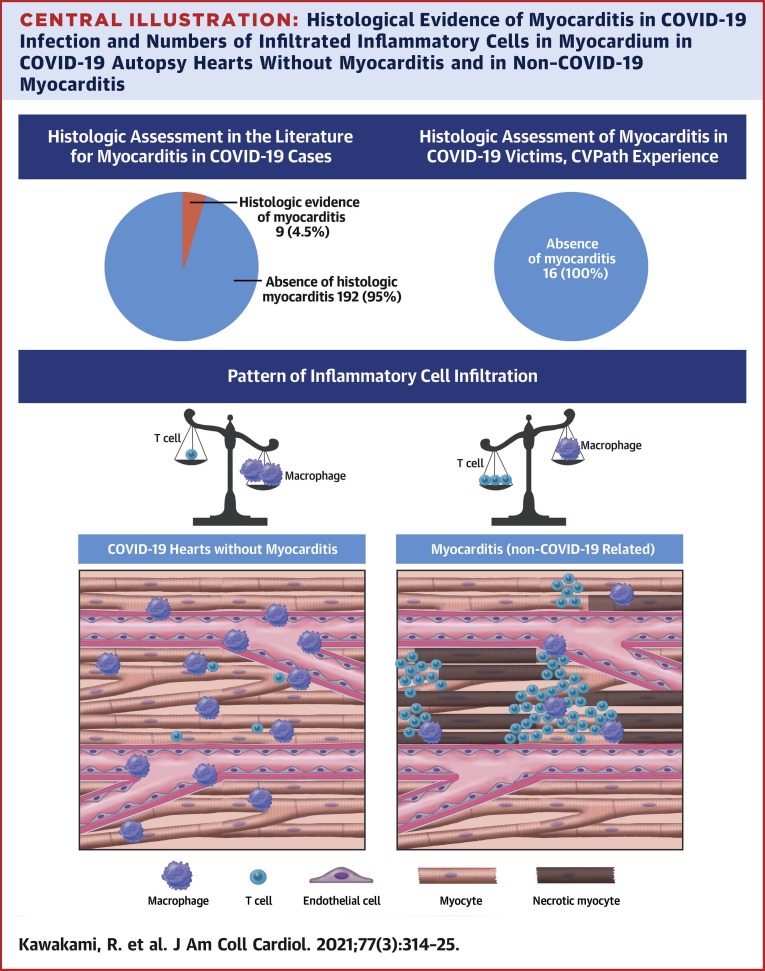
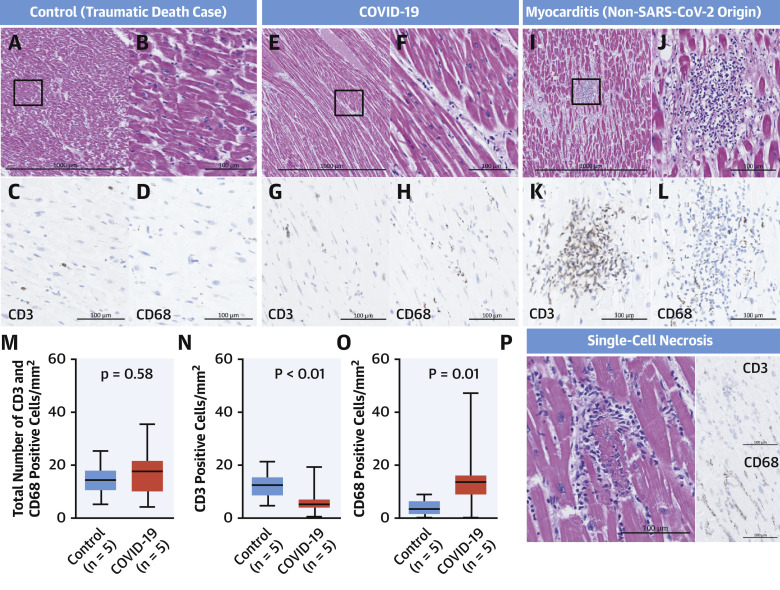
To investigate whether severe acute respiratory syndrome-coronavirus-2 (SARS-CoV-2)-induced myocarditis constitutes an important mechanism of cardiac injury, a review was conducted of the published data and the authors' experience was added from autopsy examination of 16 patients dying of SARS-CoV-2 infection. Myocarditis is an uncommon pathologic diagnosis occurring in 4.5% of highly selected cases undergoing autopsy or endomyocardial biopsy. Although polymerase chain reaction-detectable virus could be found in the lungs of most coronavirus disease-2019 (COVID-19)-infected subjects in our own autopsy registry, in only 2 cases was the virus detected in the heart. It should be appreciated that myocardial inflammation alone by macrophages and T cells can be seen in noninfectious deaths and COVID-19 cases, but the extent of each is different, and in neither case do such findings represent clinically relevant myocarditis. Given its extremely low frequency and unclear therapeutic implications, the authors do not advocate use of endomyocardial biopsy to diagnose myocarditis in the setting of COVID-19.
为了探究严重急性呼吸综合征冠状病毒 2(SARS-CoV-2)引起的心肌炎是否构成心脏损伤的重要机制,对已发表的数据进行了综述,并结合 16 例死于 SARS-CoV-2 感染患者的尸检检查结果增加了作者的经验。心肌炎是一种罕见的病理诊断,在接受尸检或心内膜心肌活检的高度选择病例中发生率为 4.5%。尽管在我们自己的尸检登记处,大多数 2019 年冠状病毒病(COVID-19)感染患者的肺部都能通过聚合酶链反应检测到病毒,但在仅有的 2 例心脏中检测到病毒。应当认识到,在非传染性死亡和 COVID-19 病例中,仅巨噬细胞和 T 细胞引起的心肌炎症就可见到,但每种炎症的程度不同,而且在这两种情况下,这些发现均不代表具有临床相关性的心肌炎。鉴于其极低的发生率和不明确的治疗意义,作者不主张在 COVID-19 背景下使用心内膜心肌活检来诊断心肌炎。