Moser K M, Page G T, Ashburn W L, Fedullo P F
West J Med. 1988 Feb;148(2):167-70.
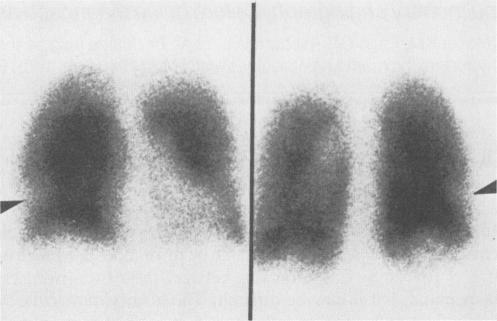
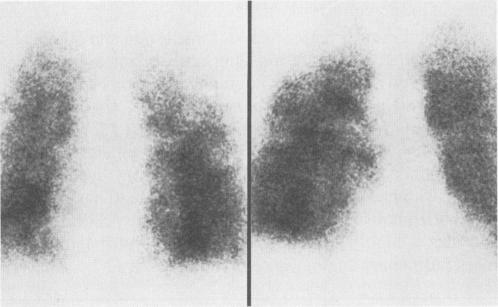
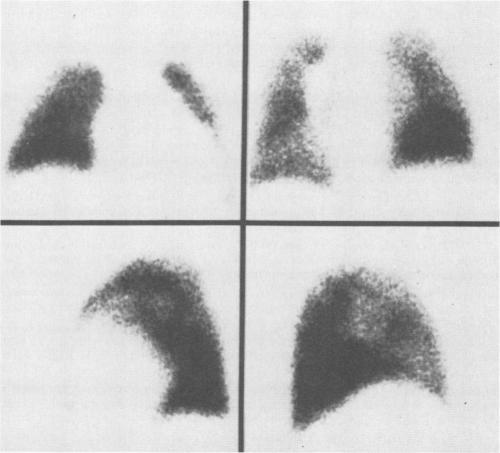
There is hesitancy, based on the perceived risk, to do pulmonary angiography in patients believed to have primary pulmonary hypertension. Yet pulmonary hypertension due to major-vessel, chronic thromboembolism mimics primary pulmonary hypertension clinically and on standard laboratory tests. Because thromboembolic pulmonary hypertension is potentially remediable by thromboendarterectomy and primary pulmonary hypertension is not, differentiating between these disorders is essential. Angiography is required in patients with thromboembolic pulmonary hypertension to define the anatomic location of the thrombi. In evaluating perfusion lung scans of 110 patients with pulmonary hypertension to determine whether the scan might provide a guide to selecting those patients who merit angiography, no segmentalsize perfusion defects were noted on the scans of 64 patients with primary pulmonary hypertension, whereas all 46 patients with thromboembolic hypertension had one or more defects that were segmental in size or larger. These data indicate that a perfusion lung scan should be done in patients with pulmonary hypertension of uncertain cause and that those with one or more segmental or larger defects merit pulmonary angiography before being diagnosed as having primary pulmonary hypertension.
基于所感知到的风险,对于被认为患有原发性肺动脉高压的患者,在进行肺血管造影时存在犹豫。然而,主要血管慢性血栓栓塞所致的肺动脉高压在临床和标准实验室检查中与原发性肺动脉高压相似。由于血栓栓塞性肺动脉高压可通过肺动脉血栓内膜剥脱术得到潜在治疗,而原发性肺动脉高压则不能,因此区分这两种疾病至关重要。对于血栓栓塞性肺动脉高压患者,需要进行血管造影以确定血栓的解剖位置。在评估110例肺动脉高压患者的灌注肺扫描,以确定该扫描是否可为选择那些值得进行血管造影的患者提供指导时,64例原发性肺动脉高压患者的扫描未发现节段性大小的灌注缺损,而所有46例血栓栓塞性高血压患者均有一个或多个节段性大小或更大的缺损。这些数据表明,对于病因不明的肺动脉高压患者应进行灌注肺扫描,那些有一个或多个节段性或更大缺损的患者在被诊断为原发性肺动脉高压之前值得进行肺血管造影。