School of Zoology, Department of Life Sciences, Tel Aviv University, Tel Aviv, Israel.
Department of Zoology, Kannur University, Kannur, India.
PLoS Negl Trop Dis. 2021 Jan 22;15(1):e0009047. doi: 10.1371/journal.pntd.0009047. eCollection 2021 Jan.
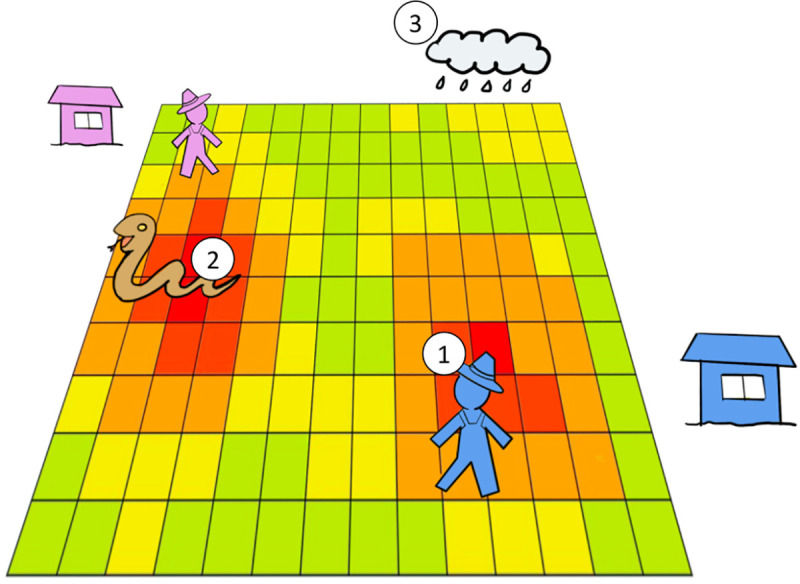
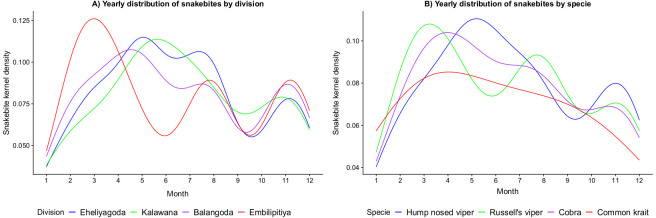
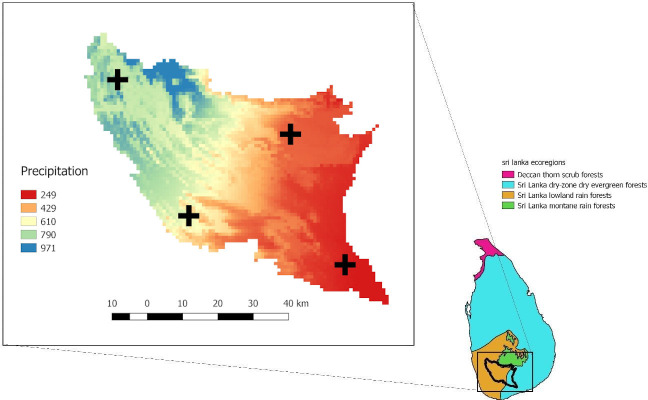
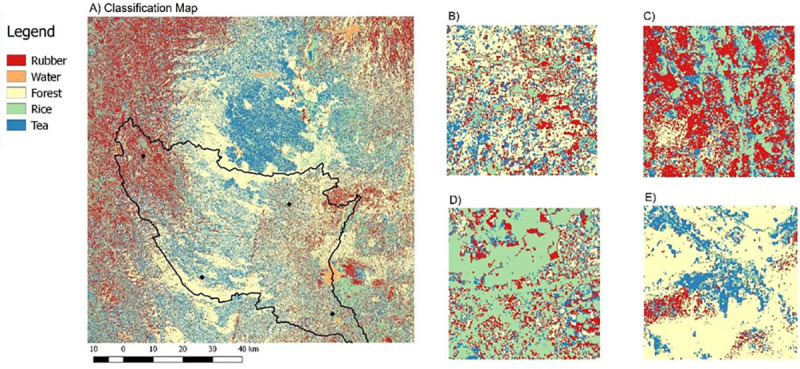
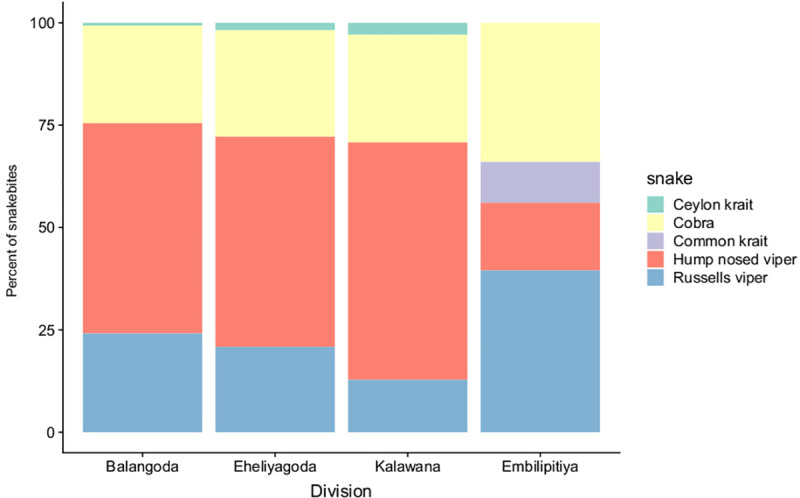
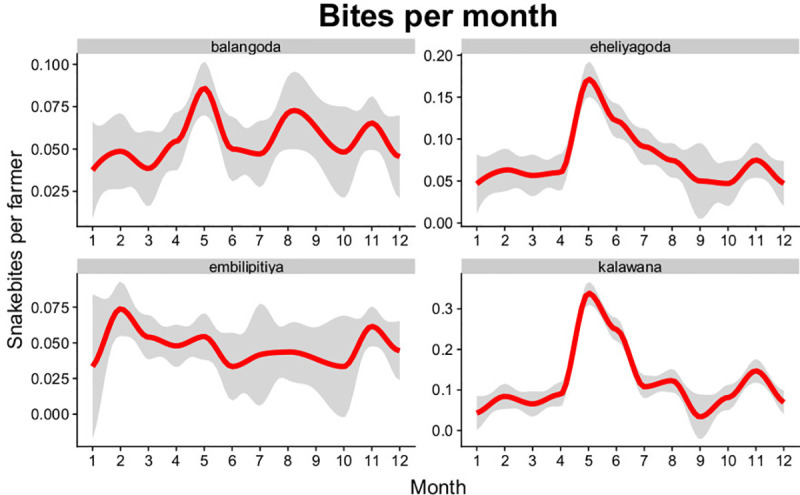
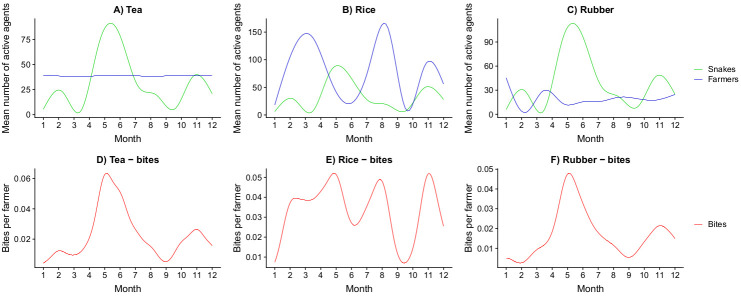
Snakebite causes more than 1.8 million envenoming cases annually and is a major cause of death in the tropics especially for poor farmers. While both social and ecological factors influence the chance encounter between snakes and people, the spatio-temporal processes underlying snakebites remain poorly explored. Previous research has focused on statistical correlates between snakebites and ecological, sociological, or environmental factors, but the human and snake behavioral patterns that drive the spatio-temporal process have not yet been integrated into a single model. Here we use a bottom-up simulation approach using agent-based modelling (ABM) parameterized with datasets from Sri Lanka, a snakebite hotspot, to characterise the mechanisms of snakebite and identify risk factors. Spatio-temporal dynamics of snakebite risks are examined through the model incorporating six snake species and three farmer types (rice, tea, and rubber). We find that snakebites are mainly climatically driven, but the risks also depend on farmer types due to working schedules as well as species present in landscapes. Snake species are differentiated by both distribution and by habitat preference, and farmers are differentiated by working patterns that are climatically driven, and the combination of these factors leads to unique encounter rates for different landcover types as well as locations. Validation using epidemiological studies demonstrated that our model can explain observed patterns, including temporal patterns of snakebite incidence, and relative contribution of bites by each snake species. Our predictions can be used to generate hypotheses and inform future studies and decision makers. Additionally, our model is transferable to other locations with high snakebite burden as well.
蛇伤每年导致超过 180 万例中毒病例,是热带地区,尤其是贫困农民的主要死亡原因。尽管社会和生态因素都会影响蛇与人之间的偶然相遇,但蛇伤的时空过程仍未得到充分探索。以前的研究主要集中在蛇伤与生态、社会学或环境因素之间的统计相关性上,但导致时空过程的人类和蛇类行为模式尚未整合到一个单一的模型中。在这里,我们使用基于代理的建模(ABM)的自下而上模拟方法,使用来自斯里兰卡(蛇伤热点地区)的数据集对模型进行参数化,以描述蛇伤的机制并确定风险因素。通过该模型,可以检查蛇伤风险的时空动态,该模型纳入了六种蛇类和三种农民类型(水稻、茶叶和橡胶)。我们发现,蛇伤主要受气候驱动,但由于工作时间表以及景观中存在的物种,风险也取决于农民类型。蛇类的分布和栖息地偏好存在差异,农民的工作模式受气候驱动,这些因素的组合导致不同土地覆盖类型和地点的独特相遇率。使用流行病学研究进行验证表明,我们的模型可以解释观察到的模式,包括蛇伤发病率的时间模式,以及每种蛇类咬伤的相对贡献。我们的预测可以用来生成假设并为未来的研究和决策者提供信息。此外,我们的模型也可以转移到其他蛇伤负担高的地区。