TopuzoĞullari Murat
Department of Bioengineering, Yıldız Technical University, İstanbul Turkey.
Turk J Chem. 2020 Jun 1;44(3):634-646. doi: 10.3906/kim-1909-95. eCollection 2020.
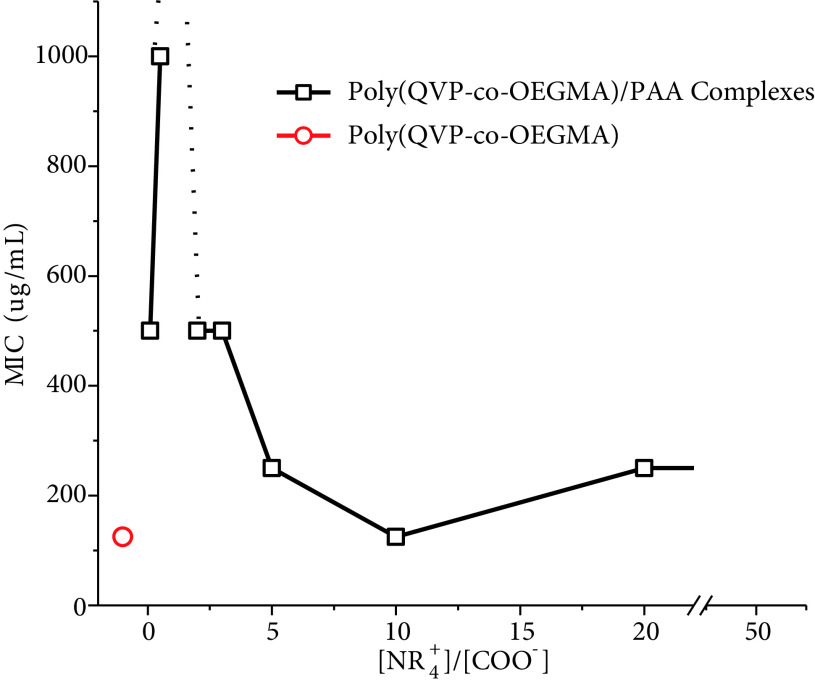
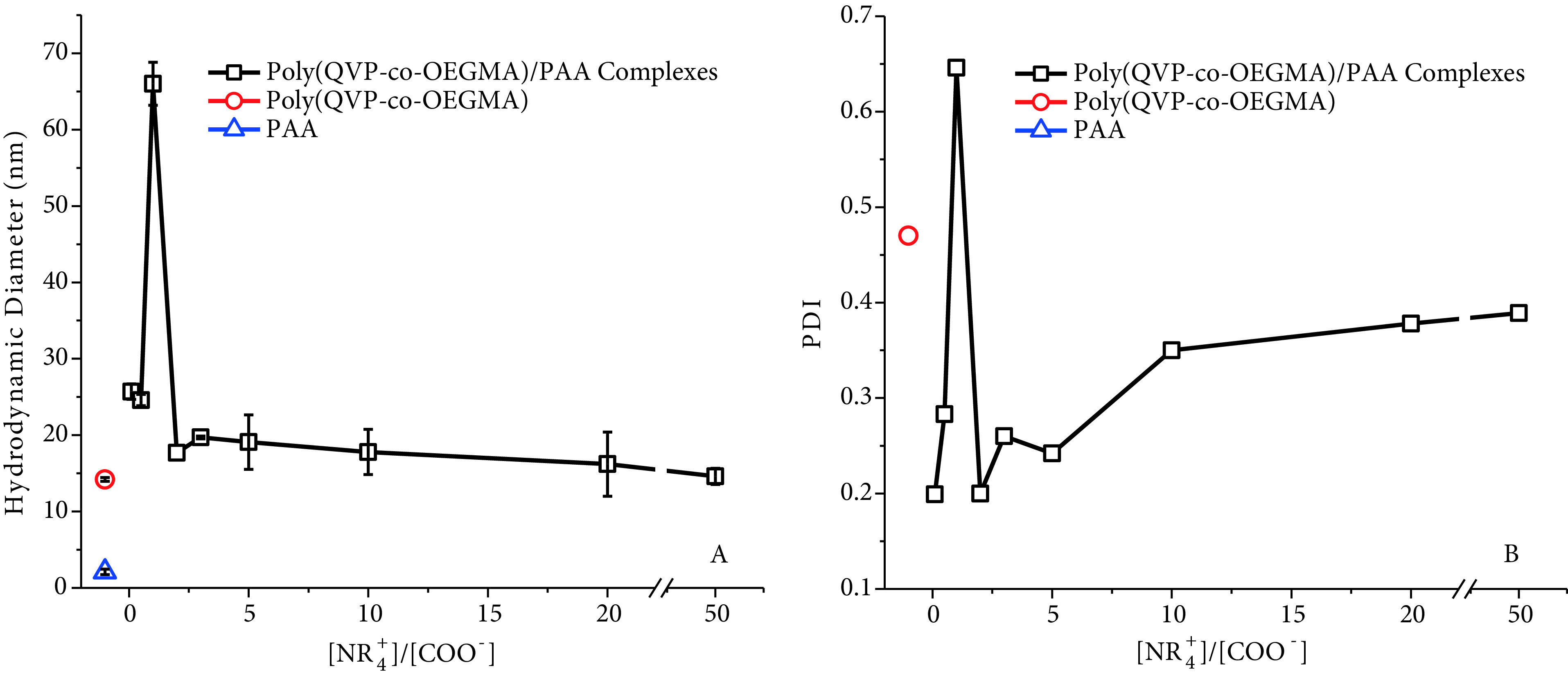
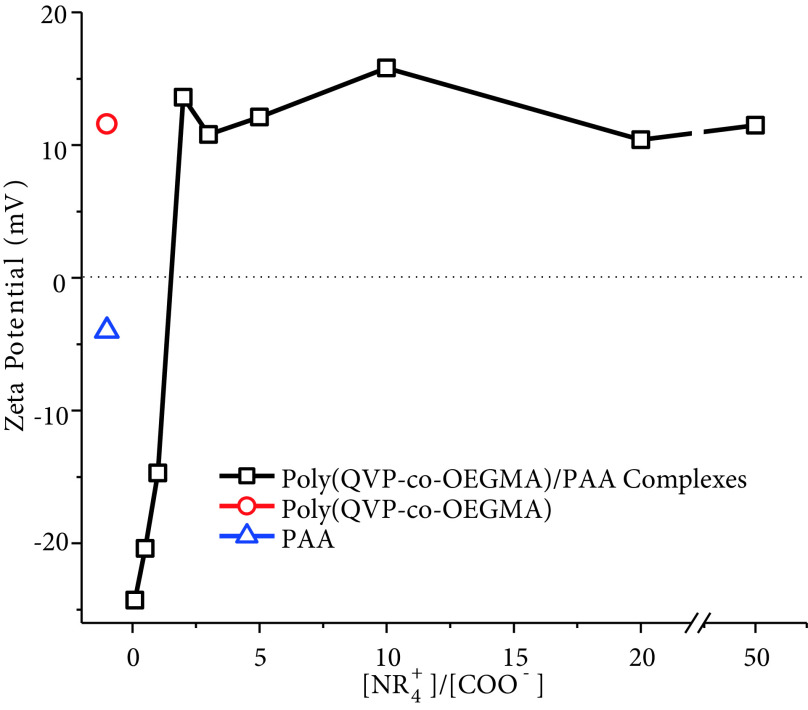
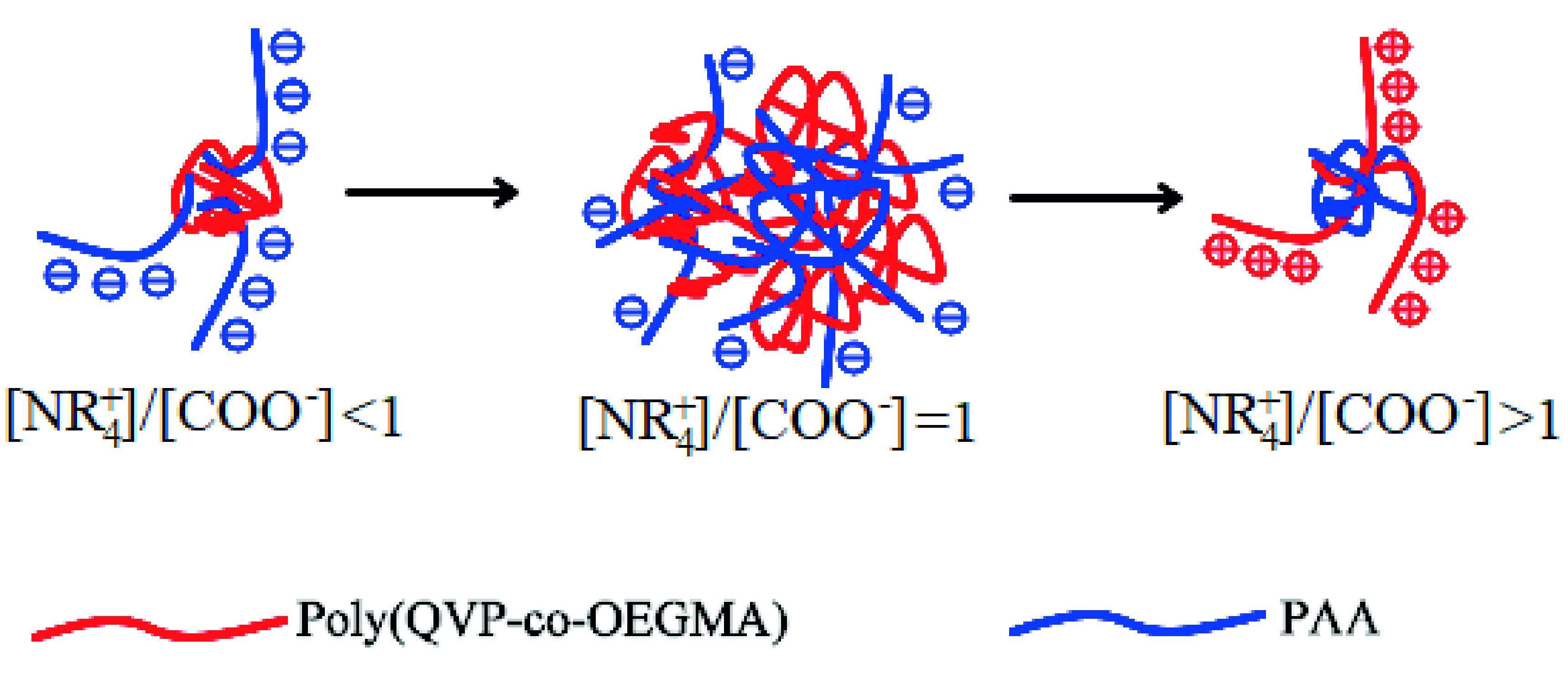
Polymers bearing quaternized 4-vinylpyridine (QVP) groups are known for their antibacterial activities and these polymers can form polyelectrolyte complexes (PEC) with polyanions through electrostatic interactions. PEC formation can be used to adjust the antibacterial activity of polymers of QVP, deliver active molecules, or design antibacterial supramolecular structures. However, the antibacterial activity of PECs of QVP polymers has not been investigated. In this study, a copolymer of QVP was mixed with polyacrylic acid in various molar ratios of components to form PECs. Hydrodynamic diameters and zeta potentials of formed PECs were determined by dynamic and electrophoretic light scattering spectroscopy techniques. The zeta potentials of PECs changed between -24 and +16 mV with variation in the ratio of components. Antibacterial assays against revealed a relation of PEC formation with antibacterial activity since MIC values changed between 125-1000 μg/mL according to the ratio of components.
带有季铵化4-乙烯基吡啶(QVP)基团的聚合物以其抗菌活性而闻名,这些聚合物可以通过静电相互作用与聚阴离子形成聚电解质复合物(PEC)。PEC的形成可用于调节QVP聚合物的抗菌活性、递送活性分子或设计抗菌超分子结构。然而,QVP聚合物的PEC的抗菌活性尚未得到研究。在本研究中,将QVP共聚物与聚丙烯酸以各种摩尔比混合以形成PEC。通过动态和电泳光散射光谱技术测定形成的PEC的流体动力学直径和zeta电位。随着组分比例的变化,PEC的zeta电位在-24至+16 mV之间变化。针对[具体对象未给出]的抗菌试验表明,PEC的形成与抗菌活性有关,因为根据组分比例,最低抑菌浓度(MIC)值在125-1000μg/mL之间变化。