Centre of Polymer Systems, University Institute, Tomas Bata University in Zlin, Nam. T.G.M. 5555, 76001 Zlin, Czech Republic.
National Center for Micro- and Nanofabrication, Technical University of Denmark, Building 347 East, Ørsteds Plads, 2800 Kongens Lyngby, Denmark.
Int J Mol Sci. 2022 Aug 8;23(15):8821. doi: 10.3390/ijms23158821.
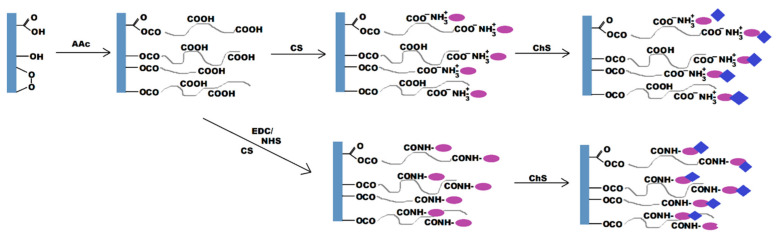
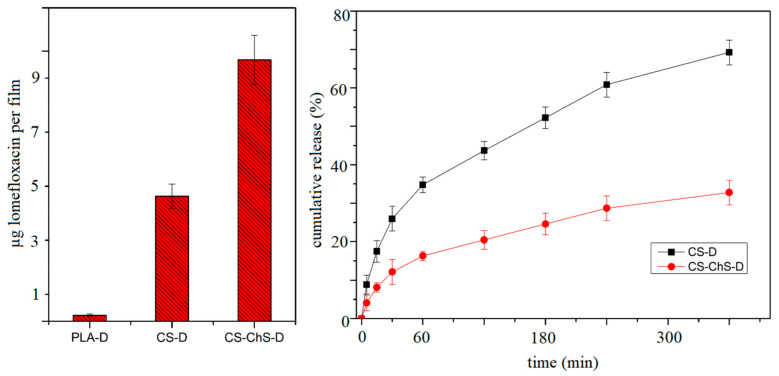
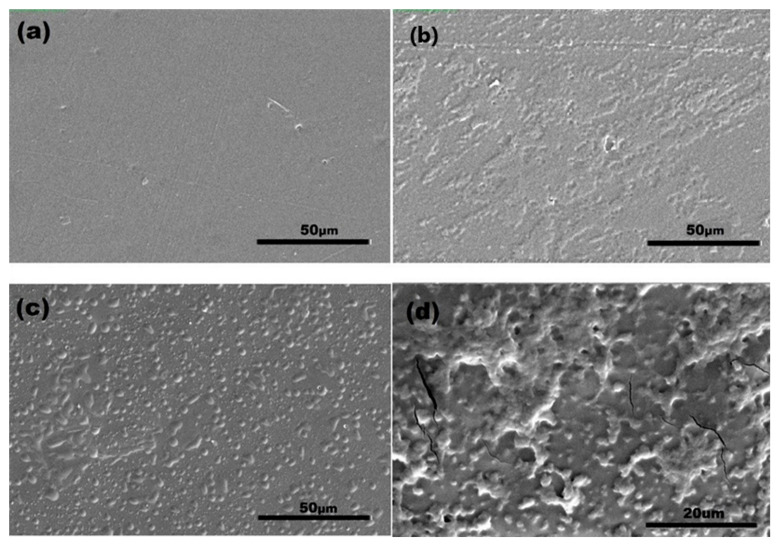
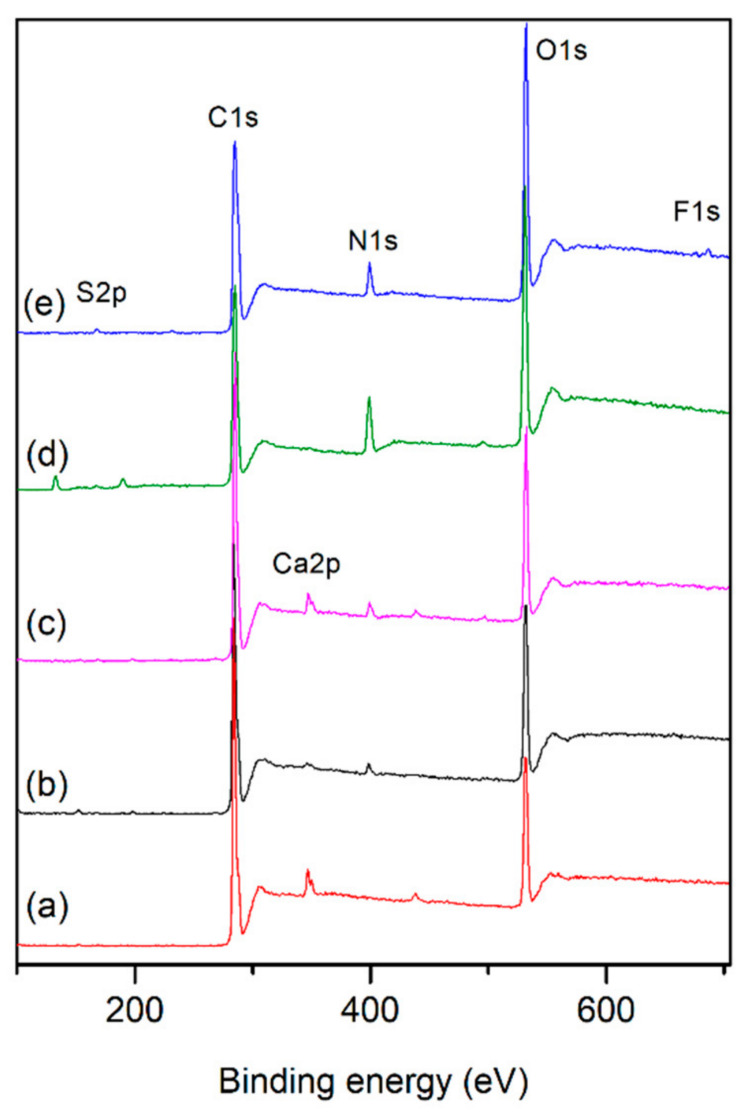
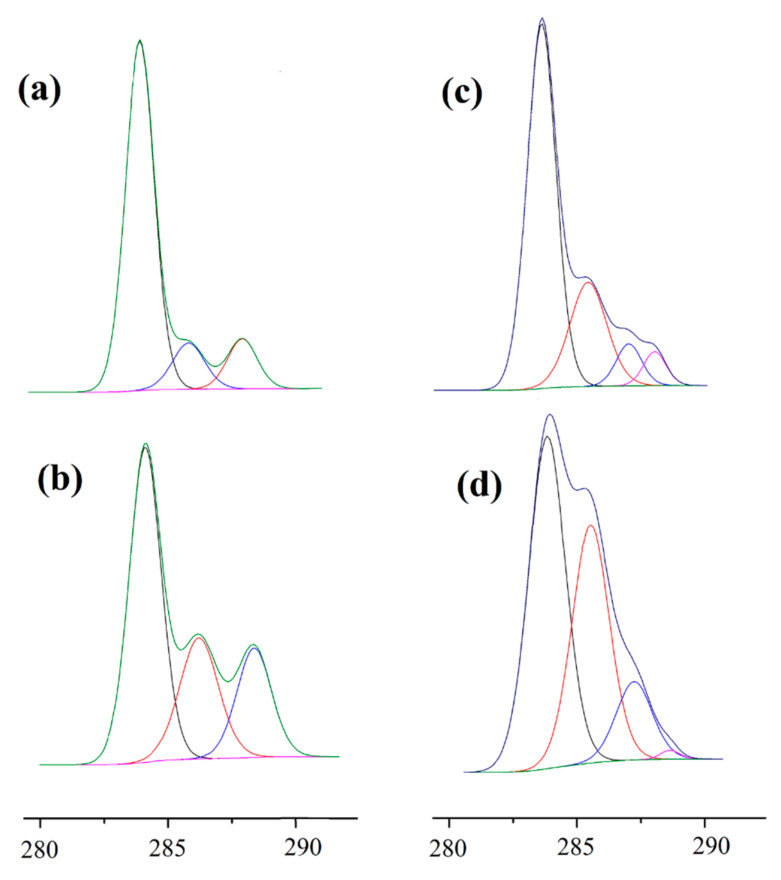
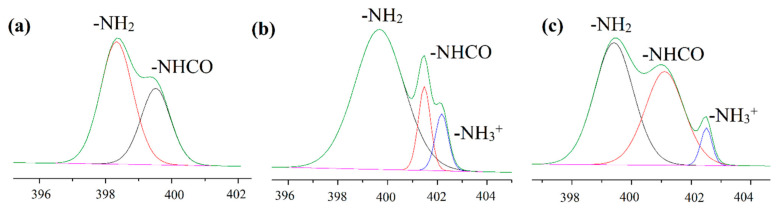
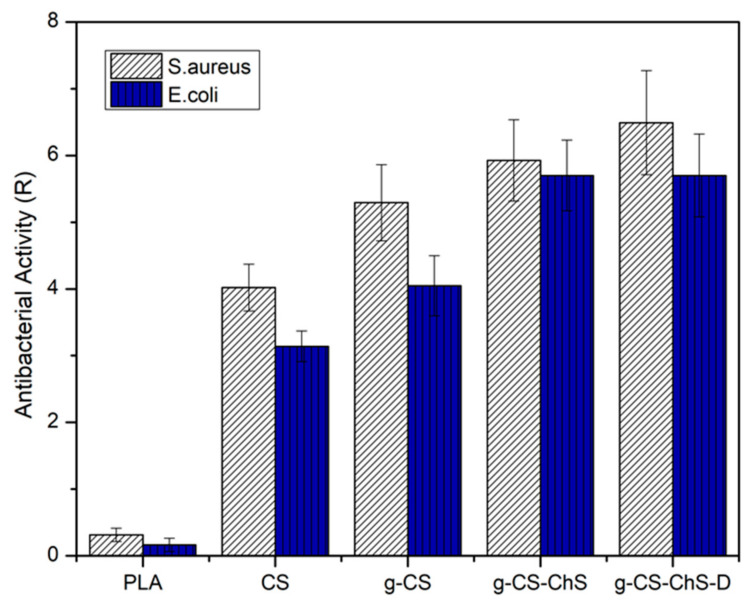
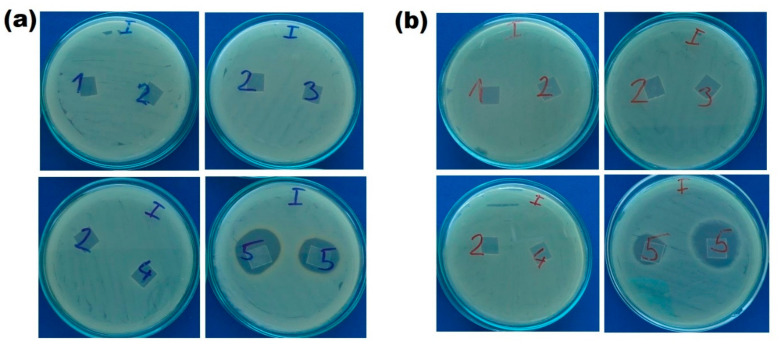
More than half of the hospital-associated infections worldwide are related to the adhesion of bacteria cells to biomedical devices and implants. To prevent these infections, it is crucial to modify biomaterial surfaces to develop the antibacterial property. In this study, chitosan (CS) and chondroitin sulfate (ChS) were chosen as antibacterial coating materials on polylactic acid (PLA) surfaces. Plasma-treated PLA surfaces were coated with CS either direct coating method or the carbodiimide coupling method. As a next step for the combined saccharide coating, CS grafted samples were immersed in ChS solution, which resulted in the polyelectrolyte complex (PEC) formation. Also in this experiment, to test the drug loading and releasing efficiency of the thin film coatings, CS grafted samples were immersed into lomefloxacin-containing ChS solution. The successful modifications were confirmed by elemental composition analysis (XPS), surface topography images (SEM), and hydrophilicity change (contact angle measurements). The carbodiimide coupling resulted in higher CS grafting on the PLA surface. The coatings with the PEC formation between CS-ChS showed improved activity against the bacteria strains than the separate coatings. Moreover, these interactions increased the lomefloxacin amount adhered to the film coatings and extended the drug release profile. Finally, the zone of inhibition test confirmed that the CS-ChS coating showed a contact killing mechanism while drug-loaded films have a dual killing mechanism, which includes contact, and release killing.
全世界有一半以上的医院相关感染与细菌细胞黏附在生物医学设备和植入物上有关。为了预防这些感染,改变生物材料表面以开发抗菌性能至关重要。在这项研究中,壳聚糖 (CS) 和硫酸软骨素 (ChS) 被选为聚乳酸 (PLA) 表面的抗菌涂层材料。通过等离子体处理 PLA 表面,采用直接涂层法或碳二亚胺偶联法将 CS 涂层在其表面。作为多糖复合涂层的下一步,将 CS 接枝样品浸入 ChS 溶液中,形成聚电解质复合物 (PEC)。同样在这个实验中,为了测试薄膜涂层的载药和释放效率,CS 接枝样品被浸入含洛美沙星的 ChS 溶液中。成功的修饰通过元素组成分析(XPS)、表面形貌图像(SEM)和润湿性变化(接触角测量)得到确认。碳二亚胺偶联导致 CS 在 PLA 表面上的接枝量更高。CS-ChS 之间形成的 PEC 涂层对细菌菌株的活性比单独的涂层更高。此外,这些相互作用增加了黏附在膜涂层上的洛美沙星量,并延长了药物释放曲线。最后,抑菌圈试验证实 CS-ChS 涂层具有接触杀菌机制,而载药膜具有双重杀菌机制,包括接触和释放杀菌。