Dumanović Jelena, Nepovimova Eugenie, Natić Maja, Kuča Kamil, Jaćević Vesna
Faculty of Chemistry, University of Belgrade, Belgrade, Serbia.
Medical Faculty of the Military Medical Academy, University of Defence, Belgrade, Serbia.
Front Plant Sci. 2021 Jan 6;11:552969. doi: 10.3389/fpls.2020.552969. eCollection 2020.
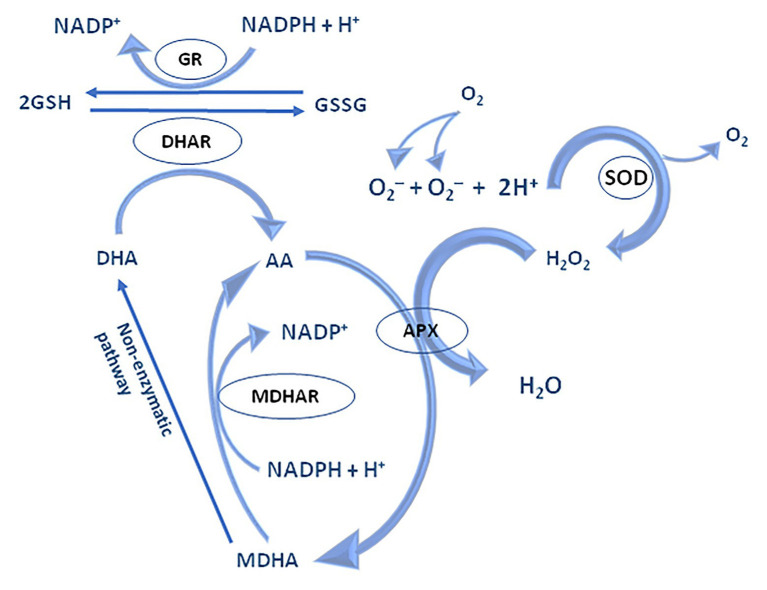
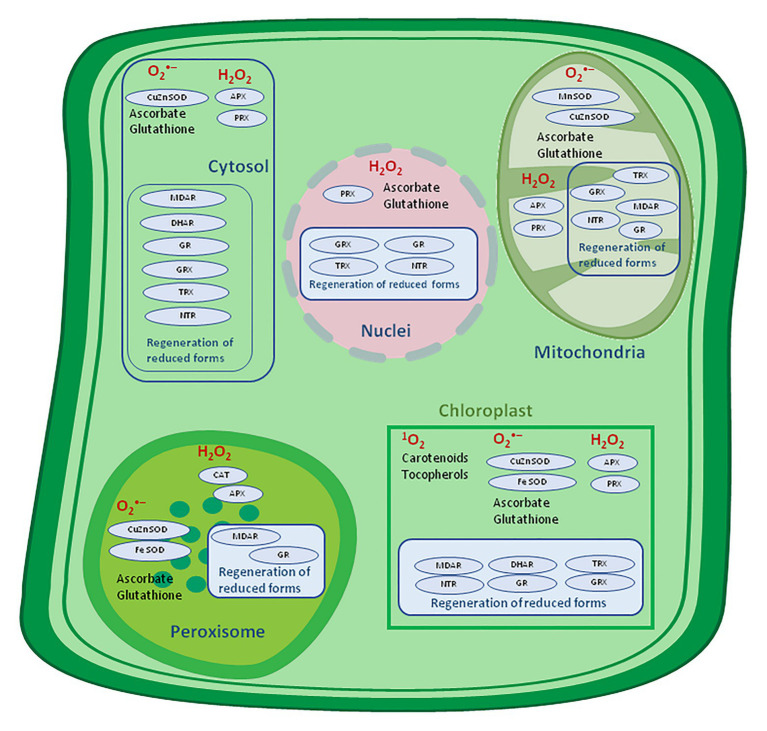
In plants, there is a complex and multilevel network of the antioxidative system (AOS) operating to counteract harmful reactive species (RS), the foremost important of which are reactive oxygen species (ROS), and maintain homeostasis within the cell. Specific AOSs for plant cells are, first and foremost, enzymes of the glutathione-ascorbate cycle (Asc-GSH), followed by phenolic compounds and lipophilic antioxidants like carotenoids and tocopherols. Evidence that plant cells have excellent antioxidative defense systems is their ability to survive at HO concentrations incompatible with animal cell life. For the survival of stressed plants, it is of particular importance that AOS cooperate and participate in redox reactions, therefore, providing better protection and regeneration of the active reduced forms. Considering that plants abound in antioxidant compounds, and humans are not predisposed to synthesize the majority of them, new fields of research have emerged. Antioxidant potential of plant compounds has been exploited for anti-aging formulations preparation, food fortification and preservation but also in designing new therapies for diseases with oxidative stress implicated in etiology.
在植物中,存在一个复杂的多层次抗氧化系统(AOS)网络,其作用是对抗有害的活性物质(RS),其中最重要的是活性氧(ROS),并维持细胞内的稳态。植物细胞特有的AOS首先是谷胱甘肽 - 抗坏血酸循环(Asc - GSH)的酶,其次是酚类化合物以及类胡萝卜素和生育酚等亲脂性抗氧化剂。植物细胞具有出色的抗氧化防御系统的证据是它们能够在与动物细胞生命不相容的HO浓度下存活。对于受胁迫植物的存活而言,特别重要的是AOS协同作用并参与氧化还原反应,从而提供更好的保护以及活性还原形式的再生。鉴于植物富含抗氧化化合物,而人类又不倾向于合成其中的大多数,于是出现了新的研究领域。植物化合物的抗氧化潜力已被用于制备抗衰老配方、食品强化和保鲜,还用于设计针对病因涉及氧化应激的疾病的新疗法。