Department of Health Research Methods, Evidence and Impact, McMaster University, 1280 Main Street West, Hamilton, ON, L8S 4K1, Canada.
Department of Critical Care Medicine, King Faisal Specialist Hospital and Research Centre, Riyadh, Saudi Arabia.
Can J Anaesth. 2021 May;68(5):715-726. doi: 10.1007/s12630-021-01920-8. Epub 2021 Jan 25.
Septic shock and acute respiratory distress syndrome (ARDS) are characterized by a dysregulated immune host response that may respond to steroid therapy. Eosinophils contribute to type 2 inflammation that often responds to steroid therapy; their role in immune dysregulation and outcomes in sepsis and ARDS is unclear.
A systematic search of Cochrane Library, MEDLINE, and EMBASE was performed from inception to 9 September 2020. The search comprised the following terms: eosinophils, sepsis, septic shock, and ARDS. Two reviewers independently screened abstracts and texts and extracted data on disease severity and clinical outcomes.
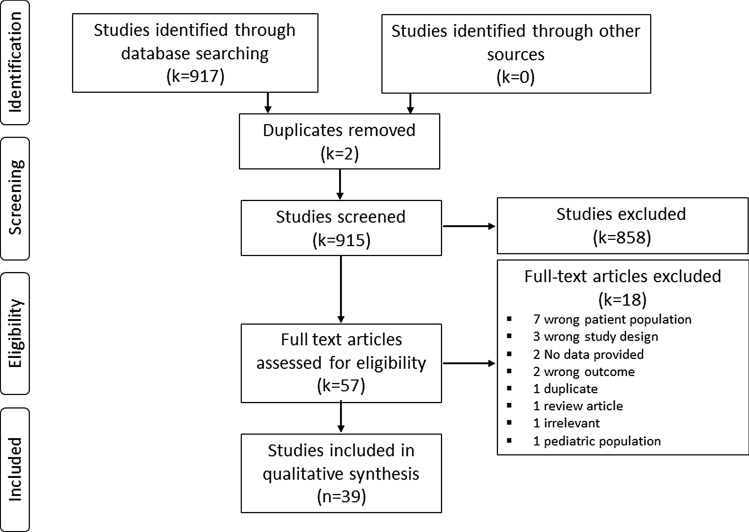
Thirty-nine studies were identified: 30 evaluated serum eosinophil count in sepsis, one evaluated eosinophil activity in sepsis, three assessed bronchoalveolar lavage (BAL) eosinophil count in ARDS, four assessed eosinophil activity in ARDS, and one assessed peripheral eosinophil count in ARDS. Eleven studies showed an association between eosinopenia and sepsis, and eight studies found persistent eosinopenia at > 48 hr of intensive care unit admission to predict mortality and readmission in septic patients. Three studies found BAL eosinophil count to be low in ARDS, although one found that levels rose in late-phase ARDS. Three studies found eosinophil activity markers in BAL to be high in ARDS and correlate with ARDS severity.
Persistent peripheral eosinopenia is a marker of bacterial sepsis and is independently associated with poor outcomes. Bronchoalveolar lavage eosinophil counts are low in early-phase ARDS, but increase in late-phase ARDS, while elevated markers of eosinophil activity correlate with ARDS severity. Further studies understanding the mechanisms leading to eosinopenia in sepsis and increased eosinophil activity in ARDS are needed.
脓毒症性休克和急性呼吸窘迫综合征(ARDS)的特征是免疫宿主反应失调,可能对类固醇治疗有反应。嗜酸性粒细胞有助于 2 型炎症,通常对类固醇治疗有反应;其在脓毒症和 ARDS 中的免疫失调和结局中的作用尚不清楚。
系统检索 Cochrane 图书馆、MEDLINE 和 EMBASE 从成立到 2020 年 9 月 9 日。检索包括以下术语:嗜酸性粒细胞、脓毒症、脓毒性休克和 ARDS。两名审查员独立筛选摘要和文本,并提取疾病严重程度和临床结局的数据。
确定了 39 项研究:30 项评估了脓毒症中的血清嗜酸性粒细胞计数,1 项评估了脓毒症中的嗜酸性粒细胞活性,3 项评估了 ARDS 中的支气管肺泡灌洗(BAL)嗜酸性粒细胞计数,4 项评估了 ARDS 中的嗜酸性粒细胞活性,1 项评估了 ARDS 中的外周嗜酸性粒细胞计数。11 项研究表明嗜酸性粒细胞减少与脓毒症有关,8 项研究发现重症监护病房入院后 >48 小时持续嗜酸性粒细胞减少可预测脓毒症患者的死亡率和再入院率。三项研究发现 ARDS 中的 BAL 嗜酸性粒细胞计数较低,尽管一项研究发现晚期 ARDS 中水平升高。三项研究发现 ARDS 中 BAL 中的嗜酸性粒细胞活性标志物较高,与 ARDS 严重程度相关。
持续性外周嗜酸性粒细胞减少是细菌脓毒症的标志物,与不良结局独立相关。早期 ARDS 的支气管肺泡灌洗嗜酸性粒细胞计数较低,但晚期 ARDS 增加,而嗜酸性粒细胞活性标志物升高与 ARDS 严重程度相关。需要进一步研究以了解导致脓毒症中嗜酸性粒细胞减少和 ARDS 中嗜酸性粒细胞活性增加的机制。