Penkert Rhiannon R, Patel Nehali, Webby Richard J, Ross Ted M, Hurwitz Julia L
Department of Infectious Diseases, St. Jude Children's Research Hospital, Memphis, TN 38105, USA.
Department of Microbiology, Immunology and Biochemistry University of Tennessee Health Science Center, Memphis, TN 38163, USA.
Vaccines (Basel). 2021 Jan 20;9(2):68. doi: 10.3390/vaccines9020068.
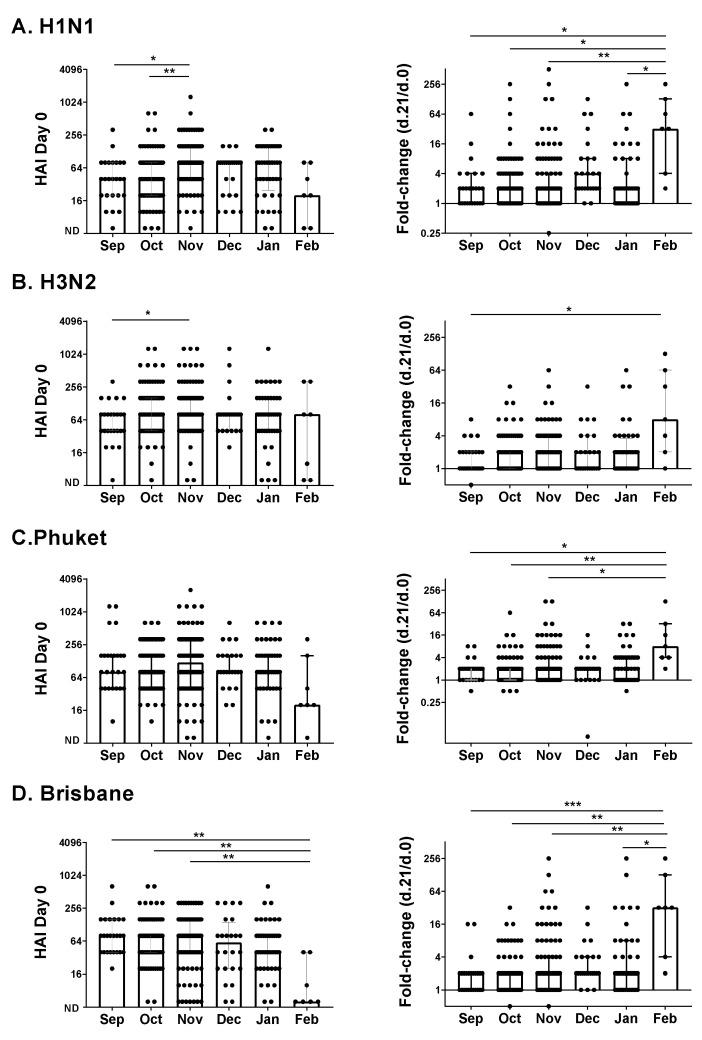
The improvement of influenza virus vaccines and the development of a universal product have been long-standing goals in pre-clinical and clinical research. To meet these goals and to understand the strengths and weaknesses of current vaccine strategies, scientists routinely study human responses toward seasonal influenza vaccines. This research is frequently performed with clinical samples taken throughout an influenza season, often without strict attention to the month of inoculation for each study participant. Here, we ask how the timing of vaccination affects outcomes. Results demonstrate significant influences of inoculation month on the immune response. During the progression from fall to winter months, there are changes in host lifestyles and in the frequencies of clinical/sub-clinical viral infections that can significantly alter vaccine immunogenicity. We now recommend routine assessment of inoculation month during clinical studies to inform data interpretation and expedite the development of successful vaccines. This recommendation is pertinent to numerous vaccine development efforts within and outside the influenza virus field.
流感病毒疫苗的改进以及通用产品的研发一直是临床前和临床研究的长期目标。为了实现这些目标并了解当前疫苗策略的优缺点,科学家们经常研究人类对季节性流感疫苗的反应。这项研究通常使用在整个流感季节采集的临床样本进行,往往没有严格关注每个研究参与者的接种月份。在此,我们探讨接种时间如何影响结果。结果表明接种月份对免疫反应有显著影响。在从秋季到冬季的过程中,宿主生活方式以及临床/亚临床病毒感染频率会发生变化,这可能会显著改变疫苗的免疫原性。我们现在建议在临床研究期间对接种月份进行常规评估,以便为数据解读提供信息并加速成功疫苗的研发。这一建议适用于流感病毒领域内外的众多疫苗研发工作。