Wang Zening, Barrow Colin J, Dunshea Frank R, Suleria Hafiz A R
School of Agriculture and Food, Faculty of Veterinary and Agricultural Sciences, The University of Melbourne, Parkville, VIC 3052, Australia.
Centre for Chemistry and Biotechnology, School of Life and Environmental Sciences, Deakin University, Waurn Ponds, VIC 3217, Australia.
Antioxidants (Basel). 2021 Jan 20;10(2):151. doi: 10.3390/antiox10020151.
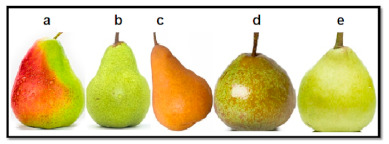
Pear ( L.) is widely spread throughout the temperate regions of the world, such as China, America and Australia. This fruit is popular among consumers due to its excellent taste and perceived health benefits. Various bioactive compounds, which contribute to these health benefits, have been detected in the pear fruits, including a range of phenolic compounds. Five Australian grown pear varieties, which include Packham's Triumph, Josephine de Malines, Beurre Bosc, Winter Nelis and Rico were selected for this study to examine the phenolic compounds in pears. Beurre Bosc exhibited the highest total polyphenol content (TPC) (3.14 ± 0.02 mg GAE/g), total tannin content (TTC) (1.43 ± 0.04 mg CE/g) and 2,2'-diphenyl-1-picrylhydrazyl (DPPH) (5.72 ± 0.11 mg AAE/g), while the Josephine de Malines variety was high in total flavonoid content (TFC) (1.53 ± 0.09 mg QE/g), ferric reducing antioxidant power (FRAP) (4.37 ± 0.04 mg AAE/g), 2,2'-azinobis-(3-ethylbenzothiazoline-6-sulfonic acid) (ABTS) (4.44 ± 0.01 mg AAE/g) and total antioxidant capacity (TAC) (5.29 ± 0.09 mg AAE/g). The liquid chromatography coupled with electrospray-ionization quadrupole time-of-flight mass spectrometry (LC-ESI-QTOF-MS/MS) data indicate that a total of 73 phenolic compounds were detected in Beurre Bosc (37 compounds), Josephine de Malines (34), Rico (22), Packham's Triumph (15) and Winter Nelis (9), respectively. From HPLC-PDA quantification, the Beurre Bosc pear variety showed significantly higher in phenolic acids (chlorogenic acid; 17.58 ± 0.88 mg/g) and while flavonoids were significantly higher in Josephine de Malines (catechin; 17.45 ± 1.39 mg/g), as compared to other pear varieties. The analyses suggest that the Australian grown pears might contain an ideal source of phenolic compounds which benefit human health. The information provided by the present work can serve as practical supporting data for the use of pears in the nutraceutical, pharmaceutical and food industries.
梨(蔷薇科梨属)广泛分布于世界温带地区,如中国、美国和澳大利亚。这种水果因其绝佳的口感和公认的健康益处而深受消费者喜爱。梨果实中已检测出多种对健康有益的生物活性化合物,包括一系列酚类化合物。本研究选取了五个澳大利亚种植的梨品种,分别是帕卡姆胜利梨、约瑟芬·德·马利纳梨、布瑞·博斯梨、冬妮梨和瑞可梨,以检测梨中的酚类化合物。布瑞·博斯梨的总多酚含量(TPC)最高(3.14±0.02毫克没食子酸当量/克)、总单宁含量(TTC)最高(1.43±0.04毫克儿茶素当量/克)以及2,2'-二苯基-1-苦基肼(DPPH)自由基清除能力最高(5.72±0.11毫克抗坏血酸当量/克),而约瑟芬·德·马利纳梨品种的总黄酮含量(TFC)较高(1.53±0.09毫克芦丁当量/克)、铁离子还原抗氧化能力(FRAP)较高(4.37±0.04毫克抗坏血酸当量/克)、2,2'-联氮-双-(3-乙基苯并噻唑啉-6-磺酸)(ABTS)自由基清除能力较高(4.44±0.01毫克抗坏血酸当量/克)以及总抗氧化能力(TAC)较高(5.29±0.09毫克抗坏血酸当量/克)。液相色谱-电喷雾电离四极杆飞行时间质谱联用(LC-ESI-QTOF-MS/MS)数据表明,在布瑞·博斯梨(37种化合物)、约瑟芬·德·马利纳梨(34种)、瑞可梨(22种)、帕卡姆胜利梨(15种)和冬妮梨(9种)中分别检测到了总共73种酚类化合物。通过高效液相色谱-光电二极管阵列检测(HPLC-PDA)定量分析,与其他梨品种相比,布瑞·博斯梨品种的酚酸(绿原酸;17.58±0.88毫克/克)含量显著更高,而约瑟芬·德·马利纳梨的黄酮类化合物(儿茶素;17.45±1.39毫克/克)含量显著更高。分析表明,澳大利亚种植的梨可能含有对人体健康有益的理想酚类化合物来源。本研究提供的信息可为梨在营养保健品、制药和食品工业中的应用提供实际支持数据。