Systems Biology of Aging Group, Institute of Biochemistry of the Romanian Academy, 060031 Bucharest, Romania.
International Longevity Alliance, 92330 Sceaux, France.
Int J Mol Sci. 2021 Jan 22;22(3):1073. doi: 10.3390/ijms22031073.
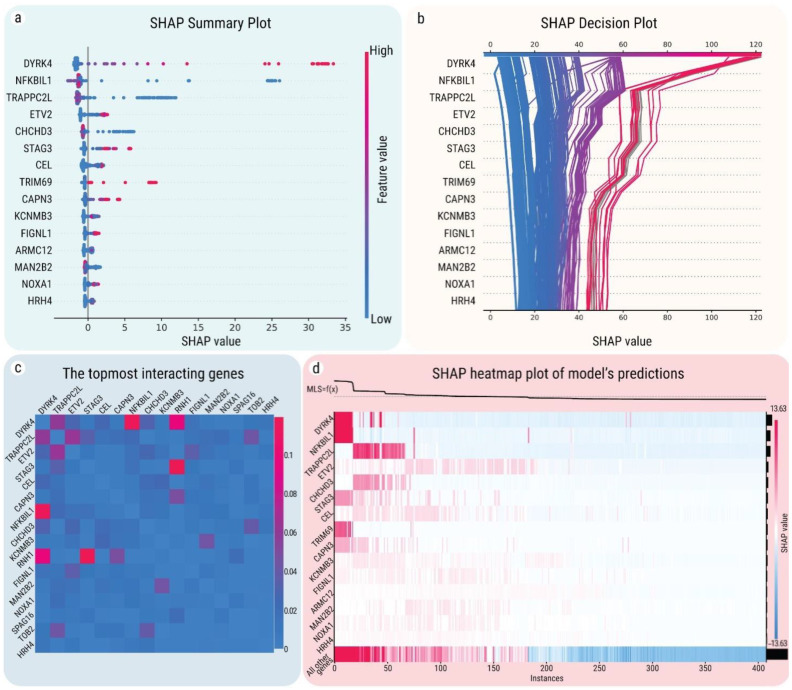
One of the important questions in aging research is how differences in transcriptomics are associated with the longevity of various species. Unfortunately, at the level of individual genes, the links between expression in different organs and maximum lifespan (MLS) are yet to be fully understood. Analyses are complicated further by the fact that MLS is highly associated with other confounding factors (metabolic rate, gestation period, body mass, etc.) and that linear models may be limiting. Using gene expression from 41 mammalian species, across five organs, we constructed gene-centric regression models associating gene expression with MLS and other species traits. Additionally, we used SHapley Additive exPlanations and Bayesian networks to investigate the non-linear nature of the interrelations between the genes predicted to be determinants of species MLS. Our results revealed that expression patterns correlate with MLS, some across organs, and others in an organ-specific manner. The combination of methods employed revealed gene signatures formed by only a few genes that are highly predictive towards MLS, which could be used to identify novel longevity regulator candidates in mammals.
衰老研究中的一个重要问题是,转录组学的差异如何与各种物种的长寿相关联。不幸的是,就单个基因而言,不同器官中的表达与最大寿命(MLS)之间的联系尚未得到充分理解。分析还因以下事实而变得更加复杂:MLS 与其他混杂因素(代谢率、妊娠期、体重等)高度相关,并且线性模型可能具有局限性。我们使用来自 41 种哺乳动物的 5 种器官的基因表达数据,构建了基因中心回归模型,将基因表达与 MLS 和其他物种特征联系起来。此外,我们使用 SHapley Additive exPlanations 和贝叶斯网络来研究预测为决定物种 MLS 的基因之间相互关系的非线性性质。我们的结果表明,表达模式与 MLS 相关,有些是跨器官的,有些是特定于器官的。所采用的方法组合揭示了由少数几个高度预测 MLS 的基因组成的基因特征,这些特征可用于鉴定哺乳动物中新型的长寿调节剂候选物。