Farthing Trevor S, Lanzas Cristina
North Carolina State University, Raleigh, North Carolina, USA.
medRxiv. 2021 Jan 22:2021.01.21.21250240. doi: 10.1101/2021.01.21.21250240.
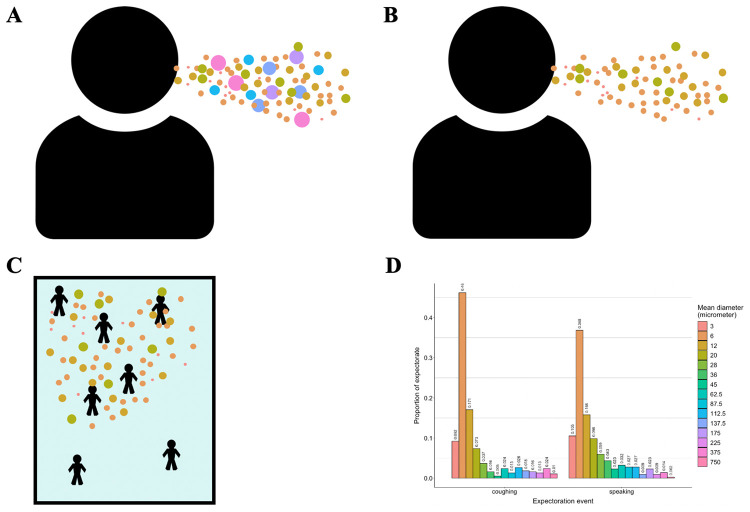
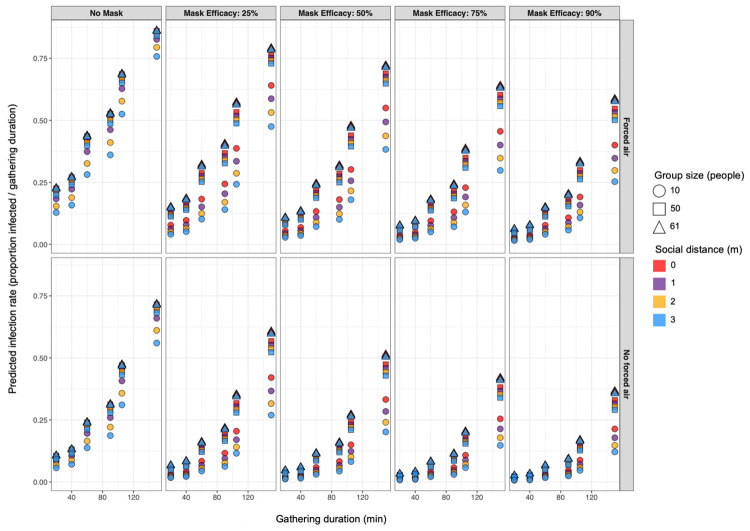
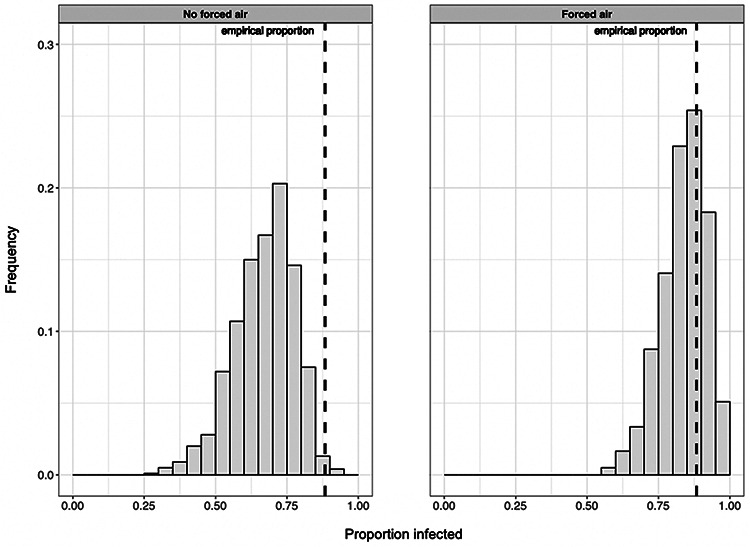
Intervention strategies for minimizing indoor SARS-CoV-2 transmission are often based on anecdotal evidence because there is little evidence-based research to support them. We developed a spatially-explicit agent-based model for simulating indoor respiratory pathogen transmission, and used it to compare effects of four interventions on reducing individual-level SARS-CoV-2 transmission risk by simulating a well-known case study. We found that imposing movement restrictions and efficacious mask usage appear to have the greatest effects on reducing infection risk, but multiple concurrent interventions are required to minimize the proportion of susceptible individuals infected. Social distancing had little effect on reducing transmission if individuals move during the gathering. Furthermore, our results suggest that there is potential for ventilation airflow to expose susceptible people to aerosolized pathogens even if they are relatively far from infectious individuals. Maximizing rates of aerosol removal is the key to successful transmission-risk reduction when using ventilation systems as intervention tools.
Imposing mask usage requirements, group size restrictions, duration limits, and social distancing policies can have additive, and in some cases multiplicative protective effects on SARS-CoV-2 infection risk during indoor events.
用于最小化室内严重急性呼吸综合征冠状病毒2(SARS-CoV-2)传播的干预策略通常基于轶事证据,因为几乎没有循证研究来支持这些策略。我们开发了一种基于空间显式智能体的模型来模拟室内呼吸道病原体传播,并通过模拟一个著名的案例研究,用它来比较四种干预措施对降低个体层面SARS-CoV-2传播风险的效果。我们发现,实施行动限制和有效使用口罩似乎对降低感染风险有最大效果,但需要多种干预措施同时实施,以将易感个体被感染的比例降至最低。如果个体在聚集期间移动,保持社交距离对减少传播几乎没有效果。此外,我们的结果表明,即使易感人群相对远离感染个体,通风气流仍有可能使他们暴露于雾化病原体。当使用通风系统作为干预工具时,最大化气溶胶清除率是成功降低传播风险的关键。
在室内活动期间,实施口罩使用要求、限制群体规模、限制持续时间和保持社交距离政策,对SARS-CoV-2感染风险可能具有累加作用,在某些情况下还具有相乘的保护作用。