Department of Gerontology, Neuromed Campus, Kepler University Clinic, Linz A-4020, Austria.
Institute of Biological Chemistry, Biocenter, Medical University of Innsbruck, Innsbruck A-6020, Austria.
Nutrients. 2021 Jan 25;13(2):361. doi: 10.3390/nu13020361.
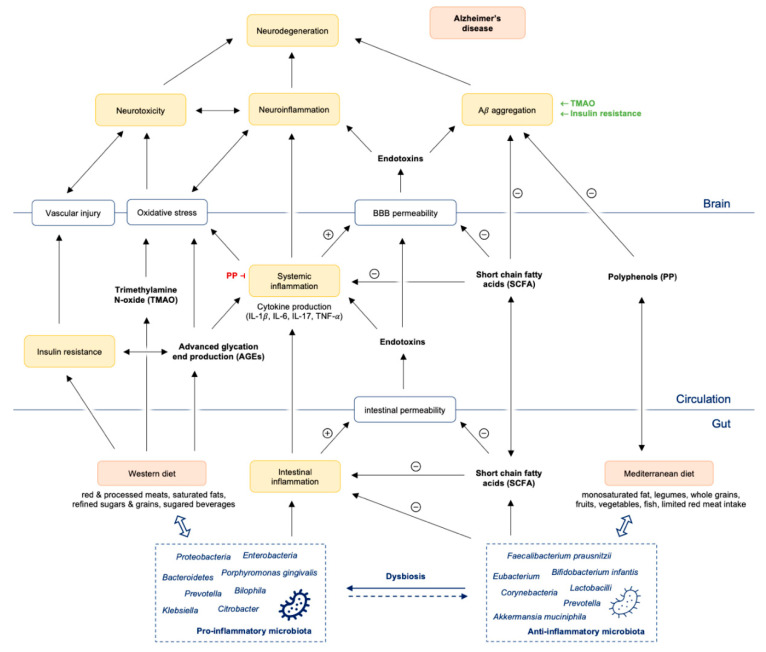
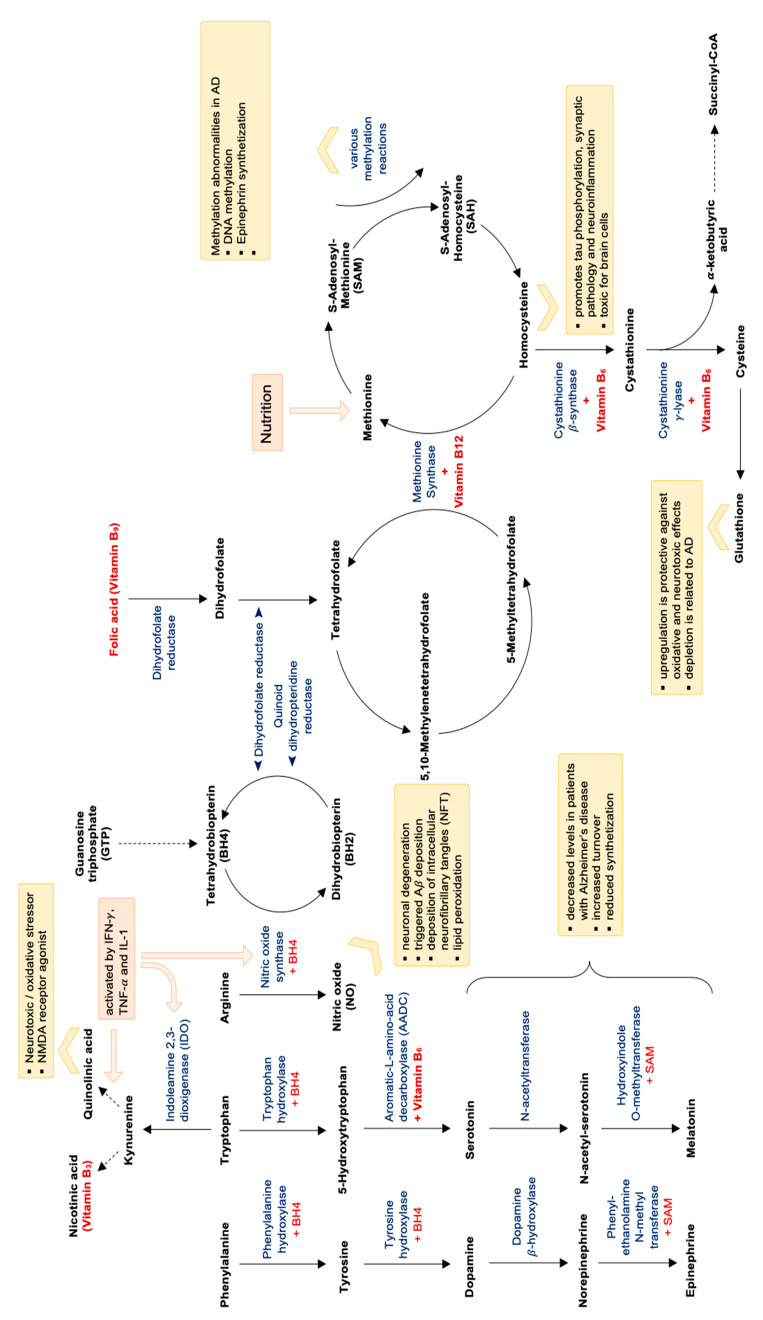
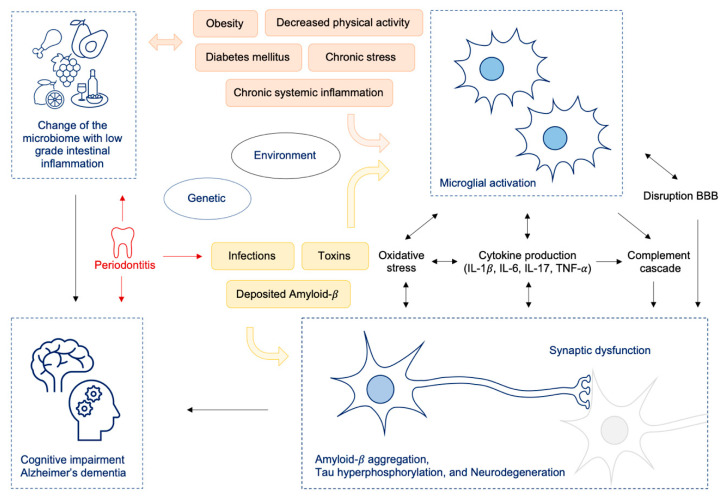
The microbiota-gut-brain axis plays an important role in the development of neurodegenerative diseases. Commensal and pathogenic enteric bacteria can influence brain and immune system function by the production of lipopolysaccharides and amyloid. Dysbiosis of the intestinal microbiome induces local and consecutively systemic immune-mediated inflammation. Proinflammatory cytokines then trigger neuroinflammation and finally neurodegeneration. Immune-mediated oxidative stress can lead to a deficiency of vitamins and essential micronutrients. Furthermore, the wrong composition of gut microbiota might impair the intake and metabolization of nutrients. In patients with Alzheimer's disease (AD) significant alterations of the gut microbiota have been demonstrated. Standard Western diet, infections, decreased physical activity and chronic stress impact the composition and diversity of gut microbiota. A higher abundancy of "pro-inflammatory" gut microbiota goes along with enhanced systemic inflammation and neuroinflammatory processes. Thus, AD beginning in the gut is closely related to the imbalance of gut microbiota. Modulation of gut microbiota by Mediterranean diet, probiotics and curcumin can slow down cognitive decline and alter the gut microbiome significantly. A multi-domain intervention approach addressing underlying causes of AD (inflammation, infections, metabolic alterations like insulin resistance and nutrient deficiency, stress) appears very promising to reduce or even reverse cognitive decline by exerting positive effects on the gut microbiota.
肠道微生物群-肠-脑轴在神经退行性疾病的发展中起着重要作用。共生和致病性肠道细菌可以通过产生脂多糖和淀粉样蛋白来影响大脑和免疫系统功能。肠道微生物组的失调会引起局部和随后的全身免疫介导的炎症。促炎细胞因子继而引发神经炎症,最终导致神经退行性变。免疫介导的氧化应激可导致维生素和必需微量营养素的缺乏。此外,肠道微生物群的组成错误可能会损害营养物质的摄入和代谢。在阿尔茨海默病(AD)患者中已经证明了肠道微生物群的显著改变。标准的西方饮食、感染、体力活动减少和慢性应激会影响肠道微生物群的组成和多样性。“促炎”肠道微生物群的丰度增加伴随着全身炎症和神经炎症过程的增强。因此,从肠道开始的 AD 与肠道微生物群失衡密切相关。通过地中海饮食、益生菌和姜黄素来调节肠道微生物群,可以减缓认知能力下降,并显著改变肠道微生物群。通过对 AD 的潜在原因(炎症、感染、代谢改变,如胰岛素抵抗和营养缺乏、应激)进行多领域干预,可以通过对肠道微生物群产生积极影响来降低甚至逆转认知能力下降。