Department of Microbiology and Immunology, University of Michigan Medical School, Ann Arbor, Michigan, USA.
Medical Scientist Training Program, University of Michigan Medical School, Ann Arbor, Michigan, USA.
mSphere. 2021 Jan 27;6(1):e00934-20. doi: 10.1128/mSphere.00934-20.
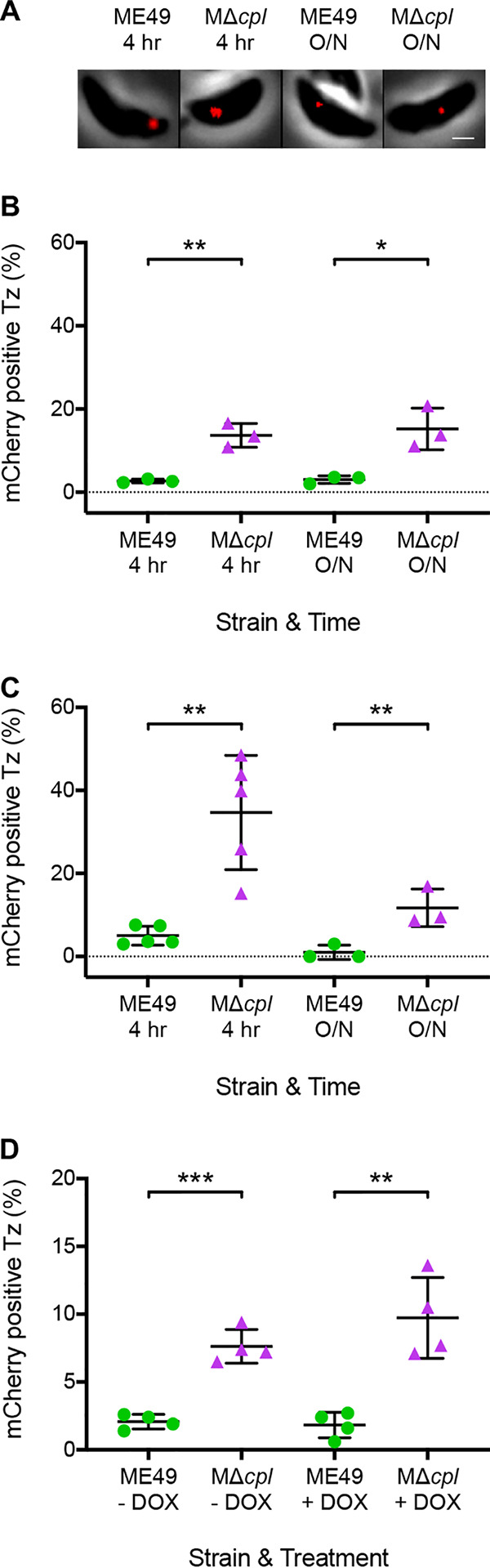
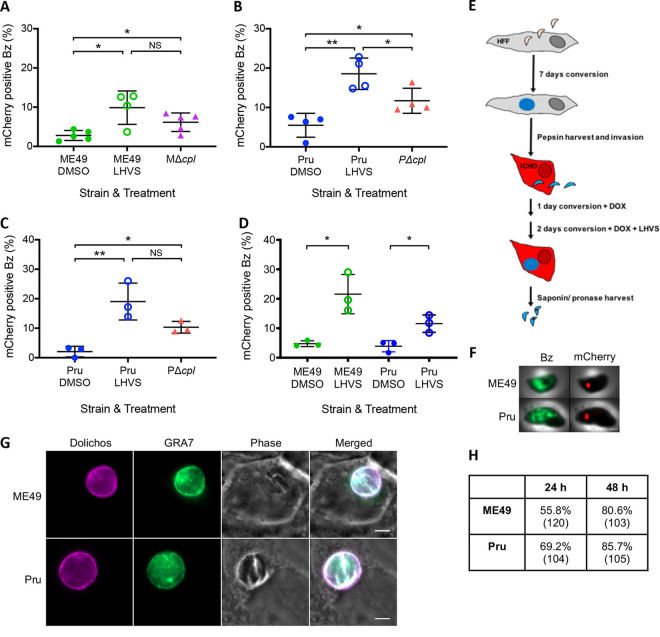
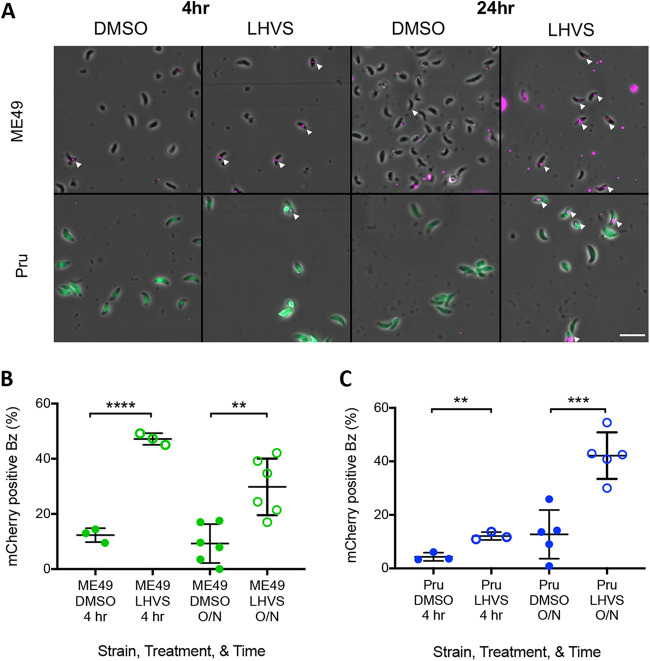
is a protozoan parasite that persists in the central nervous system as intracellular chronic-stage bradyzoites that are encapsulated by a thick cyst wall. While the cyst wall separates bradyzoites from the host cytosol, it has been posited that small solutes can traverse the cyst wall to sustain bradyzoites. Recently, it was found that host cytosolic macromolecules can cross the parasitophorous vacuole and are ingested and digested by actively replicating acute-stage tachyzoites. However, the extent to which bradyzoites have an active ingestion pathway remained unknown. To interrogate this, we modified previously published protocols that look at tachyzoite acquisition and digestion of host proteins by measuring parasite accumulation of a host-expressed reporter protein after impairment of an endolysosomal protease (cathepsin protease L [CPL]). Using two cystogenic parasite strains (ME49 and Pru), we demonstrate that bradyzoites can ingest host-derived cytosolic mCherry. Bradyzoites acquire host mCherry within 4 h of invasion and after cyst wall formation. This study provides direct evidence that host macromolecules can be internalized by bradyzoites across the cyst wall in infected cells. Chronic infection of humans with is common, but little is known about how this intracellular parasite obtains the resources that it needs to persist indefinitely inside neurons and muscle cells. Here, we provide evidence that the chronic-stage form of can internalize proteins from the cytosol of infected cells despite residing within an intracellular cyst that is surrounded by a cyst wall. We also show that accumulation of host-derived protein within the chronic-stage parasites is enhanced by disruption of a parasite protease, suggesting that such protein is normally degraded to generate peptides and amino acids. Taken together, our findings imply that chronic-stage can ingest and digest host proteins, potentially to support its persistence.
是一种原生动物寄生虫,它以厚囊壁包裹的细胞内慢性期缓殖子形式存在于中枢神经系统中。虽然囊壁将缓殖子与宿主细胞质隔开,但有人认为小分子溶质可以穿过囊壁来维持缓殖子的生存。最近发现,宿主细胞质中的大分子可以穿过滋养体空泡,并被活跃复制的急性阶段速殖子吞噬和消化。然而,缓殖子是否具有主动摄取途径尚不清楚。为了研究这一点,我们修改了先前发表的研究速殖子获取和消化宿主蛋白的方案,方法是测量在一种内溶酶体蛋白酶(组织蛋白酶 L [CPL])受损后,宿主表达的报告蛋白被寄生虫积累的程度。使用两种囊生成寄生虫株(ME49 和 Pru),我们证明缓殖子可以摄取宿主来源的细胞质 mCherry。缓殖子在入侵后 4 小时内并在囊壁形成后摄取宿主 mCherry。这项研究提供了直接证据,证明宿主大分子可以穿过感染细胞中的囊壁被缓殖子内化。人类感染 是很常见的,但对于这种细胞内寄生虫如何获得它在神经元和肌肉细胞内无限期生存所需的资源知之甚少。在这里,我们提供的证据表明,尽管缓殖子存在于被囊壁包围的细胞内囊中,但慢性期的 可以从感染细胞的细胞质中内化蛋白质。我们还表明,破坏寄生虫蛋白酶会增强宿主来源蛋白在慢性期寄生虫中的积累,这表明这种蛋白通常被降解以产生肽和氨基酸。总之,我们的发现意味着慢性期的 可以摄取和消化宿主蛋白,这可能有助于其生存。