Killingsworth Jessica, Sawmiller Darrell, Shytle R Douglas
Department of Neurosurgery and Brain Repair, Morsani College of Medicine, University of South Florida, Tampa, FL, United States.
Front Aging Neurosci. 2021 Jan 11;12:580001. doi: 10.3389/fnagi.2020.580001. eCollection 2020.
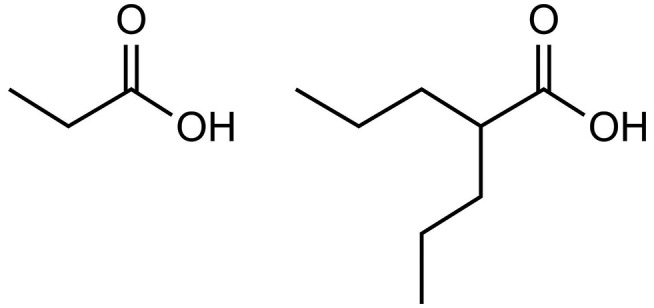
Propionate, a short-chain fatty acid, serves important roles in the human body. However, our review of the current literature suggests that under certain conditions, excess levels of propionate may play a role in Alzheimer's disease (AD). The cause of the excessive levels of propionate may be related to the phylum, which are the primary producers of propionate in the human gut. Studies have shown that the relative abundance of the phylum is significantly increased in older adults. Other studies have shown that levels of the phylum are increased in persons with AD. Studies on the diet, medication use, and propionate metabolism offer additional potential causes. There are many different mechanisms by which excess levels of propionate may lead to AD, such as hyperammonemia. These mechanisms offer potential points for intervention.
丙酸是一种短链脂肪酸,在人体中发挥着重要作用。然而,我们对当前文献的综述表明,在某些情况下,过量的丙酸可能在阿尔茨海默病(AD)中起作用。丙酸水平过高的原因可能与门有关,门是人体肠道中丙酸的主要产生者。研究表明,老年人中门的相对丰度显著增加。其他研究表明,AD患者体内门的水平升高。关于饮食、药物使用和丙酸代谢的研究提供了其他潜在原因。过量的丙酸可能通过多种不同机制导致AD,如高氨血症。这些机制提供了潜在的干预点。