Wang Yahui, Xu Yong, Zhou Guangdong, Liu Yu, Cao Yilin
Research Institute of Plastic Surgery, Wei Fang Medical College, Weifang, China.
National Tissue Engineering Center of China, Shanghai, China.
Front Cell Dev Biol. 2021 Jan 11;8:624337. doi: 10.3389/fcell.2020.624337. eCollection 2020.
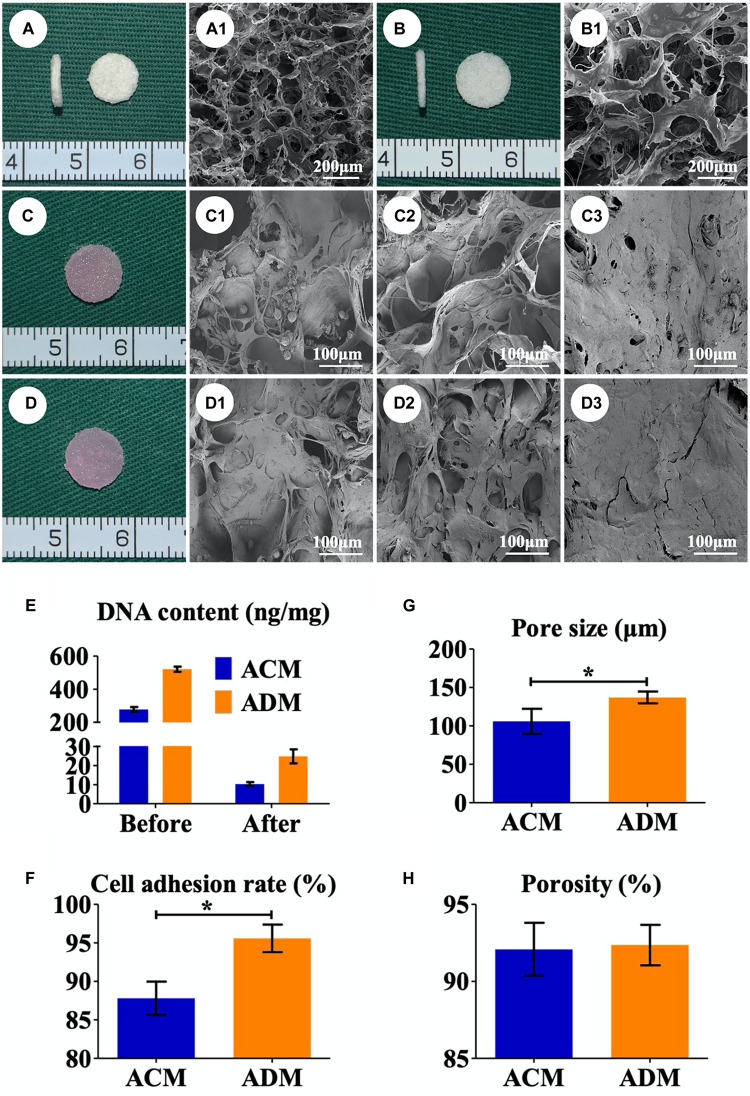
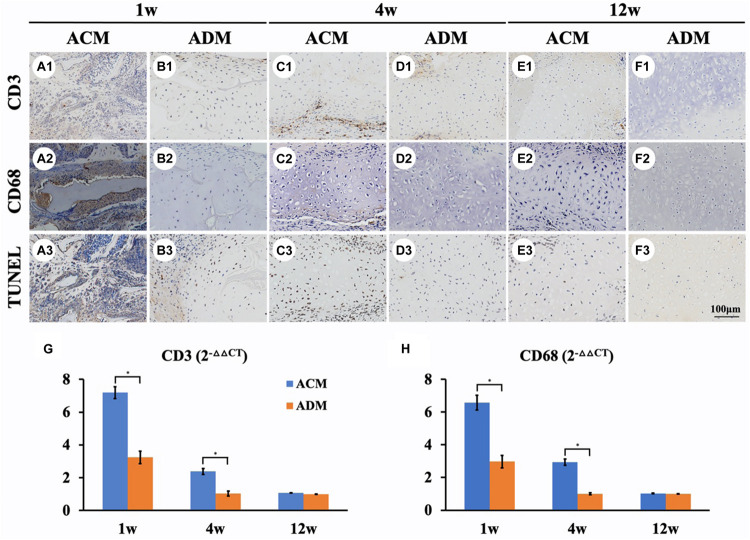
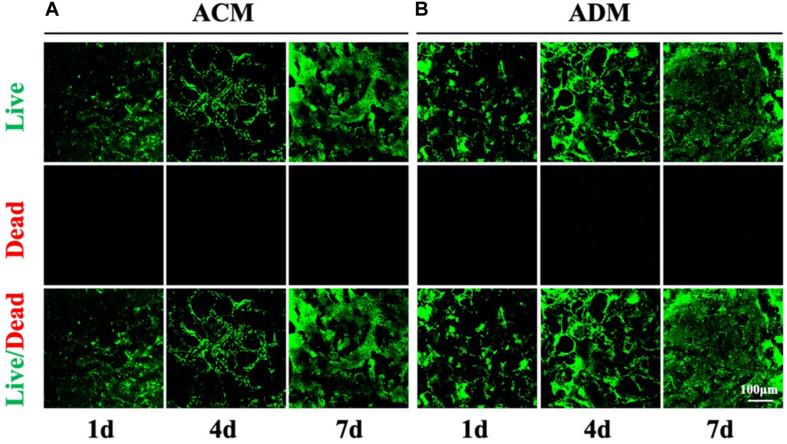
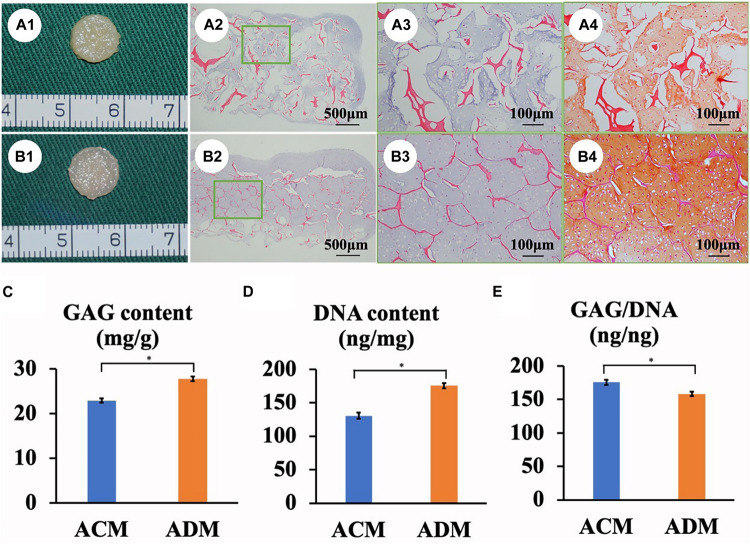
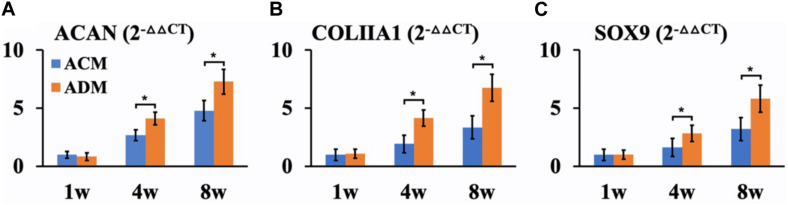
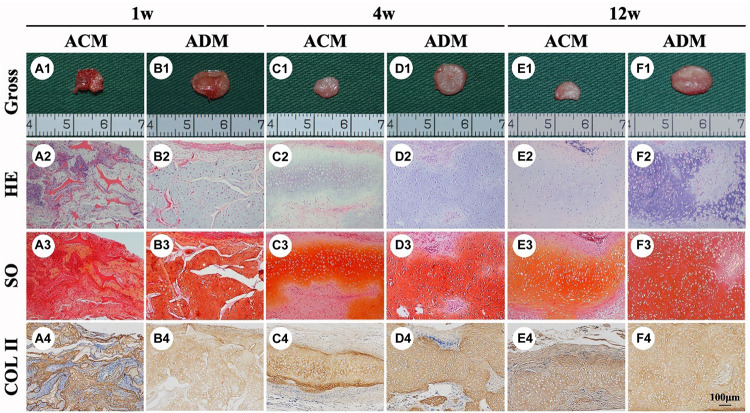
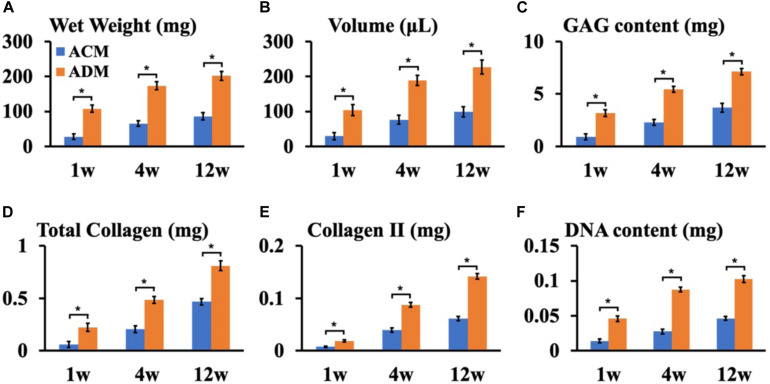
An acellular matrix (AM) as a kind of natural biomaterial is gaining increasing attention in tissue engineering applications. An acellular cartilaginous matrix (ACM) and acellular dermal matrix (ADM) are two kinds of the most widely used AMs in cartilage tissue engineering. However, there is still debate over which of these AMs achieves optimal cartilage regeneration, especially in immunocompetent large animals. In the current study, we fabricated porous ADM and ACM scaffolds by a freeze-drying method and confirmed that ADM had a larger pore size than ACM. By recolonization with goat auricular chondrocytes and culture, ADM scaffolds exhibited a higher cell adhesion rate, more homogeneous chondrocyte distribution, and neocartilage formation compared with ACM. Additionally, quantitative polymerase chain reaction (qPCR) indicated that expression of cartilage-related genes, including ACAN, COLIIA1, and SOX9, was significantly higher in the ADM group than the ACM group. Furthermore, after subcutaneous implantation in a goat, histological evaluation showed that ADM achieved more stable and matured cartilage compared with ACM, which was confirmed by quantitative data including the wet weight, volume, and contents of DNA, GAG, total collagen, and collagen II. Additionally, immunological assessment suggested that ADM evoked a low immune response compared with ACM as evidenced by qPCR and immunohistochemical analyses of CD3 and CD68, and TUNEL. Collectively, our results indicate that ADM is a more suitable AM for cartilage regeneration, which can be used for cartilage regeneration in immunocompetent large animals.
脱细胞基质(AM)作为一种天然生物材料,在组织工程应用中越来越受到关注。脱细胞软骨基质(ACM)和脱细胞真皮基质(ADM)是软骨组织工程中使用最广泛的两种AM。然而,关于哪种AM能实现最佳软骨再生仍存在争议,尤其是在具有免疫活性的大型动物中。在本研究中,我们通过冷冻干燥法制备了多孔ADM和ACM支架,并证实ADM的孔径大于ACM。通过用山羊耳廓软骨细胞重新定植和培养,与ACM相比,ADM支架表现出更高的细胞黏附率、更均匀的软骨细胞分布和新软骨形成。此外,定量聚合酶链反应(qPCR)表明,包括ACAN、COLIIA1和SOX9在内的软骨相关基因在ADM组中的表达明显高于ACM组。此外,在山羊皮下植入后,组织学评估显示,与ACM相比,ADM形成的软骨更稳定、更成熟,这通过包括湿重、体积以及DNA、糖胺聚糖、总胶原蛋白和胶原蛋白II含量在内的定量数据得到证实。此外,免疫评估表明,与ACM相比,ADM引发的免疫反应较低,qPCR以及CD3、CD68和TUNEL的免疫组织化学分析证明了这一点。总的来说,我们的结果表明,ADM是一种更适合用于软骨再生的AM,可用于具有免疫活性的大型动物的软骨再生。