Research Institute for Future Medicine, Samsung Medical Center, Sungkyunkwan University School of Medicine, Seoul, Korea.
Division of Hematology-Oncology, Department of Medicine, Samsung Changwon Hospital, Sungkyunkwan University School of Medicine, Changwon, Korea.
Eur J Immunol. 2021 Apr;51(4):956-964. doi: 10.1002/eji.202048966. Epub 2021 Feb 22.
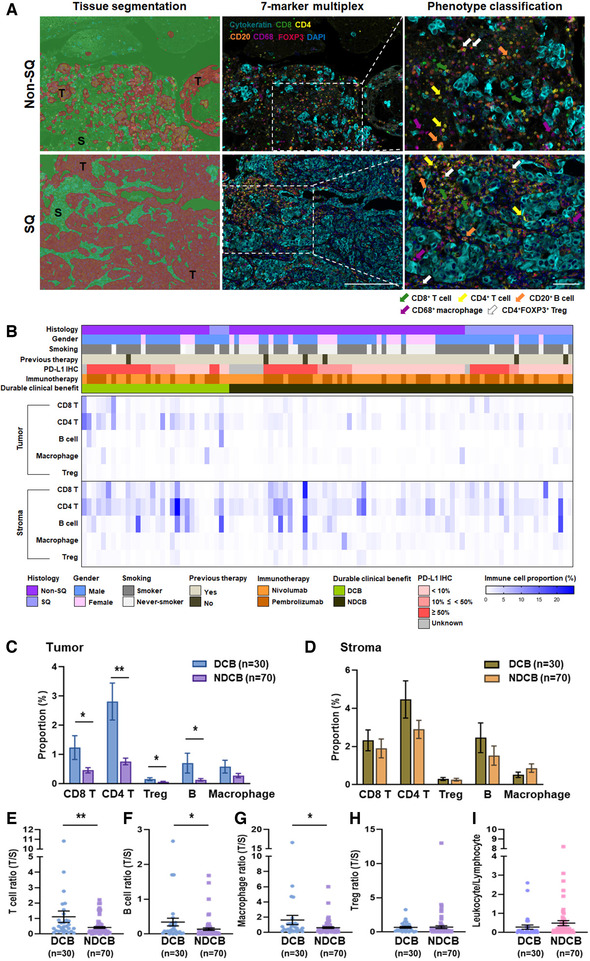
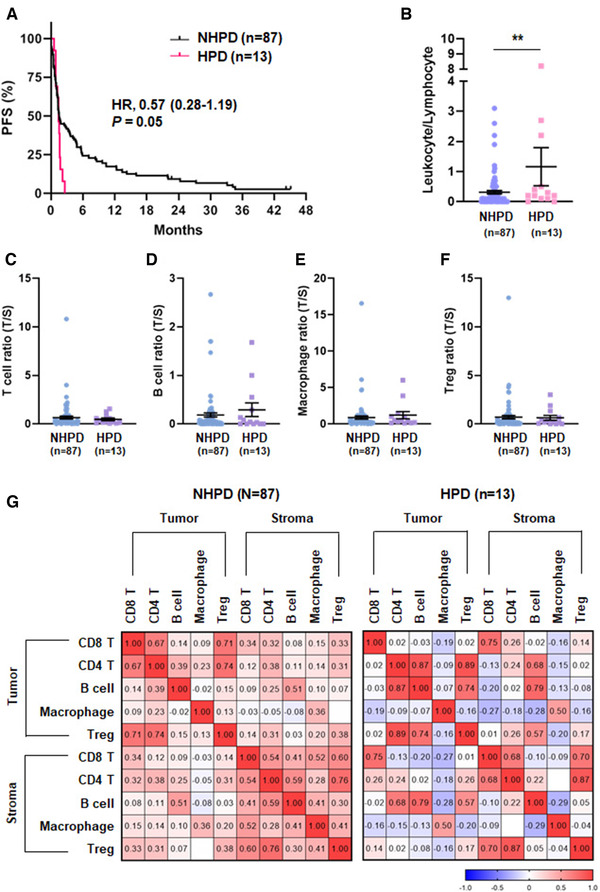
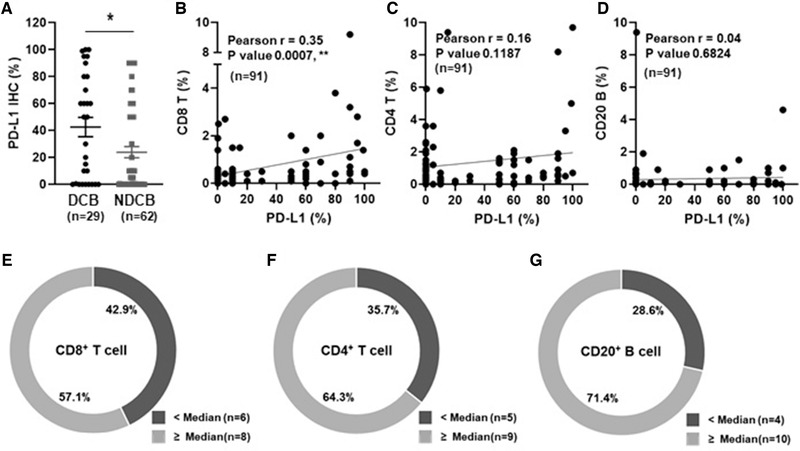
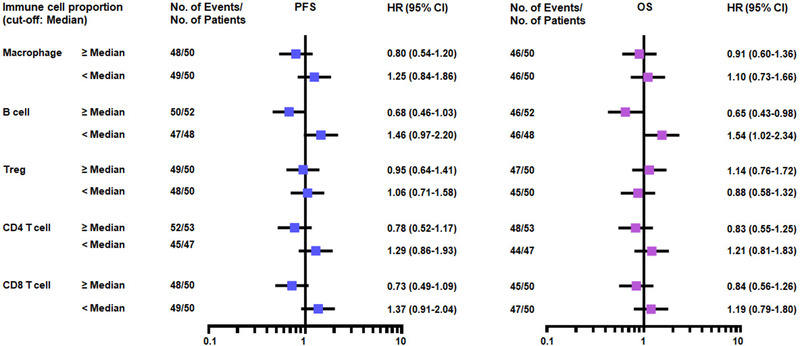
The evaluation of PD-L1 expression alone has limitations in predicting clinical outcome in immune-checkpoint inhibitors (ICI). This study aimed to evaluate the predictive and prognostic effects of the presence of various immune cells in pretreatment tissue samples and to identify determinants associated with response in patients with advanced non-small cell lung cancer (NSCLC) treated with PD-1 blockade. Immune cell distribution was heterogeneous and the most dominant immune cell type was T cells. Patients with durable clinical benefit (DCB) showed significantly higher PD-L1 expression. The ratio of tumor/stroma region of T cell, B cell, and macrophage was significantly higher in patient with DCB. High intratumoral T- and B-cell density (≥median) was associated with DCB in the low PD-L1 expression (<50%) group. In univariate analyses, the overall survival (OS) benefit was shown according to intratumoral B-cell density (p = 0.0337). The incidence of hyperprogressive disease (HPD) was 13.0%. The Chi-square test revealed that HPD was significantly associated with intratumoral B-cell density but not T-cell or macrophage density. Our results demonstrate different predictive and prognostic values for infiltrating immune cells in tumor tissue, which may help in selecting patients for ICI.
单独评估 PD-L1 表达在预测免疫检查点抑制剂 (ICI) 的临床结果方面存在局限性。本研究旨在评估预处理组织样本中各种免疫细胞的存在对接受 PD-1 阻断治疗的晚期非小细胞肺癌 (NSCLC) 患者的预测和预后影响,并确定与反应相关的决定因素。免疫细胞分布不均,最主要的免疫细胞类型是 T 细胞。具有持久临床获益 (DCB) 的患者 PD-L1 表达明显更高。在 DCB 患者中,肿瘤/基质区域的 T 细胞、B 细胞和巨噬细胞的比例明显更高。低 PD-L1 表达(<50%)组中,高肿瘤内 T 细胞和 B 细胞密度(≥中位数)与 DCB 相关。单因素分析显示,根据肿瘤内 B 细胞密度,总生存期 (OS) 获益(p=0.0337)。超进展性疾病 (HPD) 的发生率为 13.0%。卡方检验显示,HPD 与肿瘤内 B 细胞密度显著相关,而与 T 细胞或巨噬细胞密度无关。我们的研究结果表明,肿瘤组织中浸润性免疫细胞具有不同的预测和预后价值,这可能有助于为 ICI 选择患者。