Katiyar Neeraj, Raju Gayathri, Madhusudanan Pallavi, Gopalakrishnan-Prema Vignesh, Shankarappa Sahadev A
Center for Nanosciences and Molecular Medicine, Amrita Institute of Medical Sciences and Research Center, Amrita Vishwa Vidyapeetham University, Kochi, 682041, Kerala, India.
Sci Rep. 2021 Jan 28;11(1):2566. doi: 10.1038/s41598-021-81995-x.
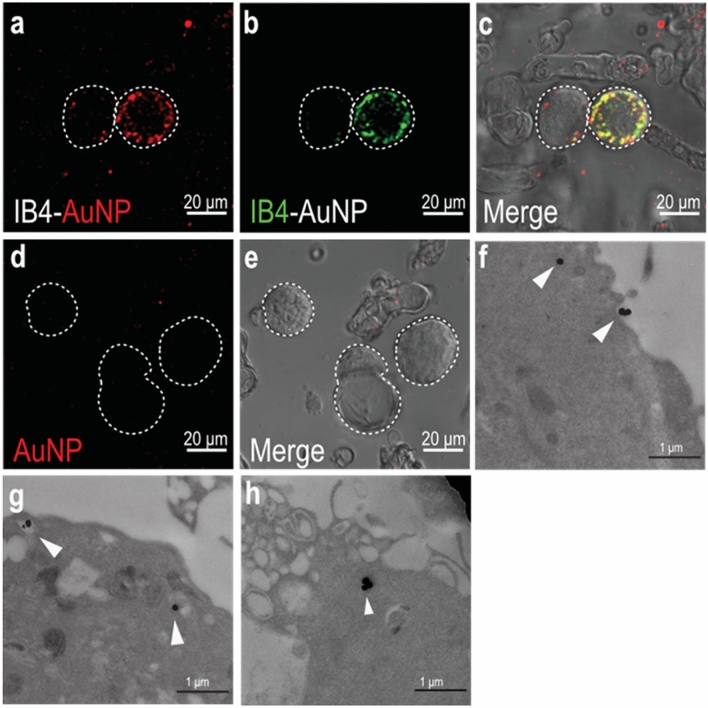
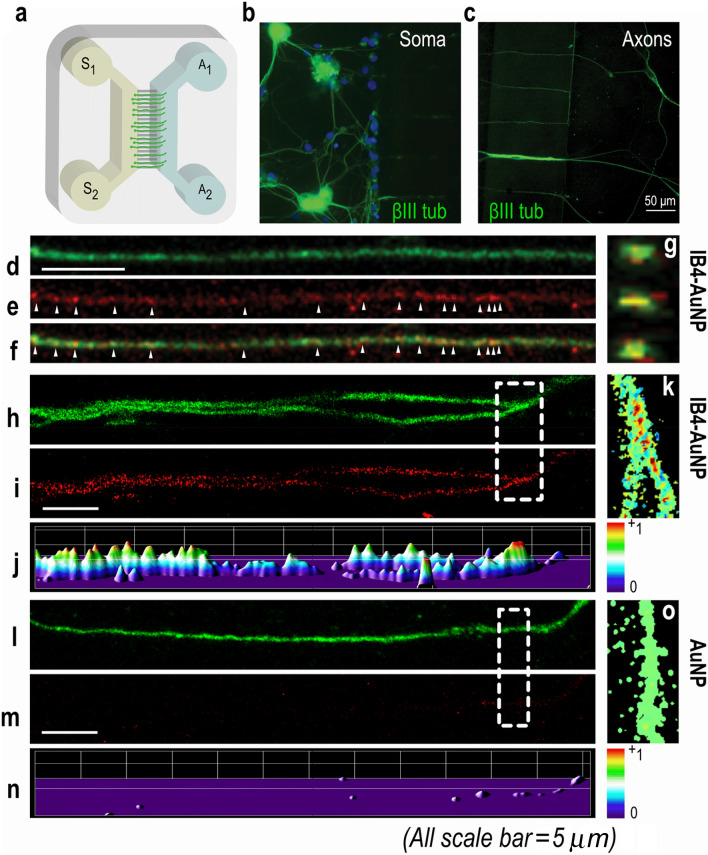
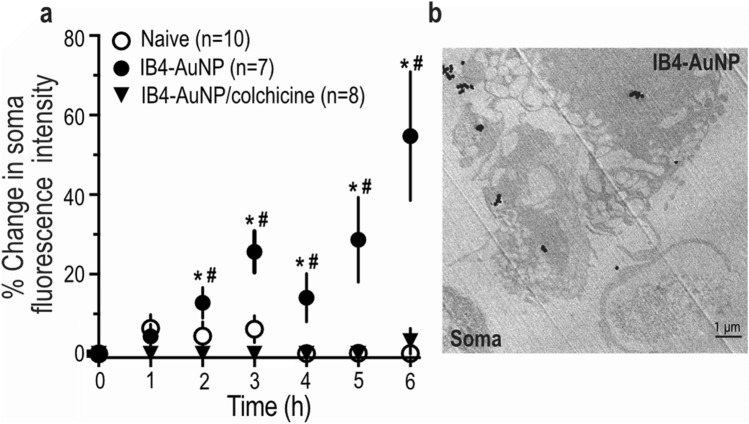
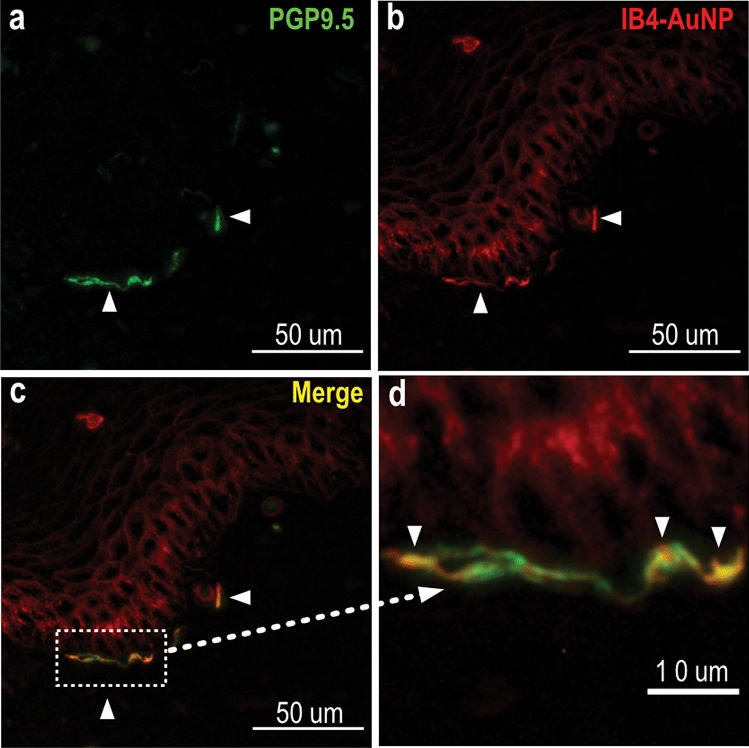
Accessing the peripheral nervous system (PNS) by topically applied nanoparticles is a simple and novel approach with clinical applications in several PNS disorders. Skin is richly innervated by long peripheral axons that arise from cell bodies located distally within ganglia. In this study we attempt to target dorsal root ganglia (DRG) neurons, via their axons by topical application of lectin-functionalized gold nanoparticles (IB4-AuNP). In vitro, 140.2 ± 1.9 nm IB4-AuNP were found to bind both axons and cell bodies of DRG neurons, and AuNP applied at the axonal terminals were found to translocate to the cell bodies. Topical application of IB4-AuNP on rat hind-paw resulted in accumulation of three to fourfold higher AuNP in lumbar DRG than in contralateral control DRGs. Results from this study clearly suggest that topically applied nanoparticles with neurotropic targeting ligands can be utilized for delivering nanoparticles to neuronal cell bodies via axonal transport mechanisms.
通过局部应用纳米颗粒进入外周神经系统(PNS)是一种简单且新颖的方法,在多种PNS疾病的临床应用中具有潜力。皮肤由长的外周轴突丰富地支配,这些轴突起源于位于神经节远端的细胞体。在本研究中,我们试图通过局部应用凝集素功能化的金纳米颗粒(IB4-AuNP),经由轴突靶向背根神经节(DRG)神经元。在体外,发现140.2±1.9纳米的IB4-AuNP能与DRG神经元的轴突和细胞体结合,并且在轴突末端应用的AuNP能转运至细胞体。在大鼠后爪局部应用IB4-AuNP导致腰段DRG中AuNP的积累比同侧对照DRG高3至4倍。本研究结果清楚地表明,带有向神经靶向配体的局部应用纳米颗粒可通过轴突运输机制用于将纳米颗粒递送至神经元细胞体。